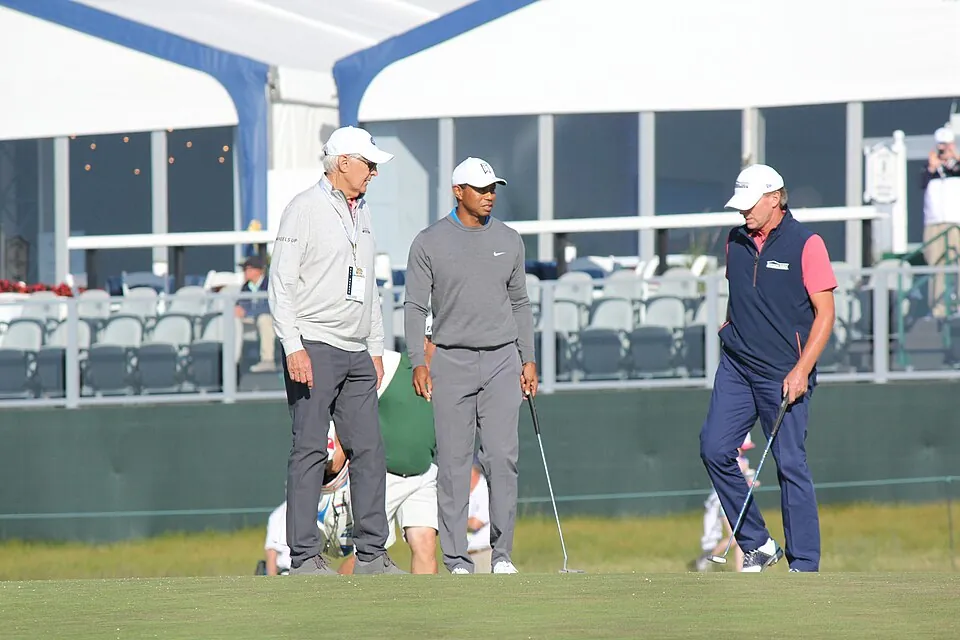
Tiger Woods won the Masters in 1997 and returned to win the event again in 2019. Those landmarks frame part of a career with numerous major achievements. His game is best approached through its breadth: distance matters, but so do iron play, control around the green and the decisions connecting one stroke to another.
Distance needs a useful landing position
A longer drive may leave a shorter club for the approach, but rough or an awkward angle can offset that advantage. Watch where the ball finishes and what that location permits next. Woods's matches offer examples of why the longest shot and the most useful shot are not necessarily the same.
Approaches create the scoring opportunity
Wind, terrain, flag position and the expected behaviour after landing all influence an approach. Attacking the flag is not always the best option; leaving a manageable putt can be more valuable. Compare the intended landing area with the surrounding danger to understand the balance between gaining a chance and controlling the consequence of a miss.
Assess the structure of the round
A memorable recovery or long putt attracts attention, but ordinary holes handled consistently also build a score. Watch how Woods manages a hole without an obvious opportunity and when he chooses to pursue a birdie. This connects technical capability with the allocation of risk throughout the round.