 Football
Offside: Position Is Only the First Question
Timing, position and involvement must be considered together when interpreting an offside decision in eleven-a-side football.
How is a contest won? What do officials look for? Start with the rules and see more of the game.
Explore the collection
FootballTiming, position and involvement must be considered together when interpreting an offside decision in eleven-a-side football.
 Basketball
Use the game clock, shot clock and changes of possession to understand the structure beneath basketball's continuous movement.
 Volleyball
Rotation establishes order and front-row or back-row status, while tactical movement changes where players work during the rally.
 Volleyball
A contrasting jersey identifies the libero, but reception quality and defensive decisions explain the role's importance.
 Tennis
Understand deuce, advantage and tiebreaks by separating the three levels of the tennis scoreboard.
 Badminton
Identify the format and the stage of the rally before deciding which boundary applies.
 Badminton
This guide explains the BWF 2025 scoring framework and distinguishes it from event-specific or later rule versions.
 Table Tennis
Toss, position, visibility and the order of bounces explain serving rules more accurately than the appearance of the action alone.
 Table Tennis
The required hitting order makes movement and leaving space for a partner central to every doubles rally.
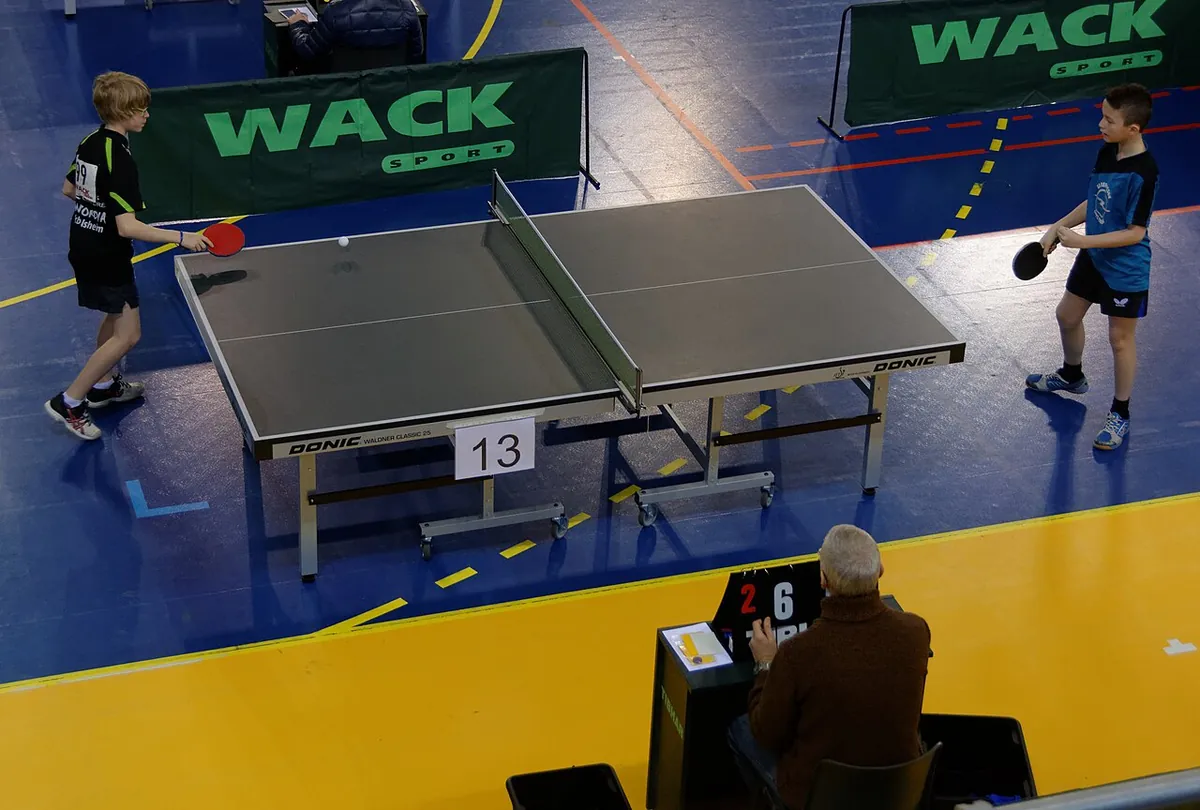 Table Tennis
Two-point service turns, the change at ten-all and the deciding-game end switch help explain the scoreboard.
 Baseball
 advances through outs and alternating half-innings, giving each offensive sequence a changing number of remaining opportunities.
 Baseball
The runner's obligation to advance determines whether a defender can record an out at the base or must tag the runner.
Try a sport, an athlete’s name or a shorter keyword. You can also reset the filters.