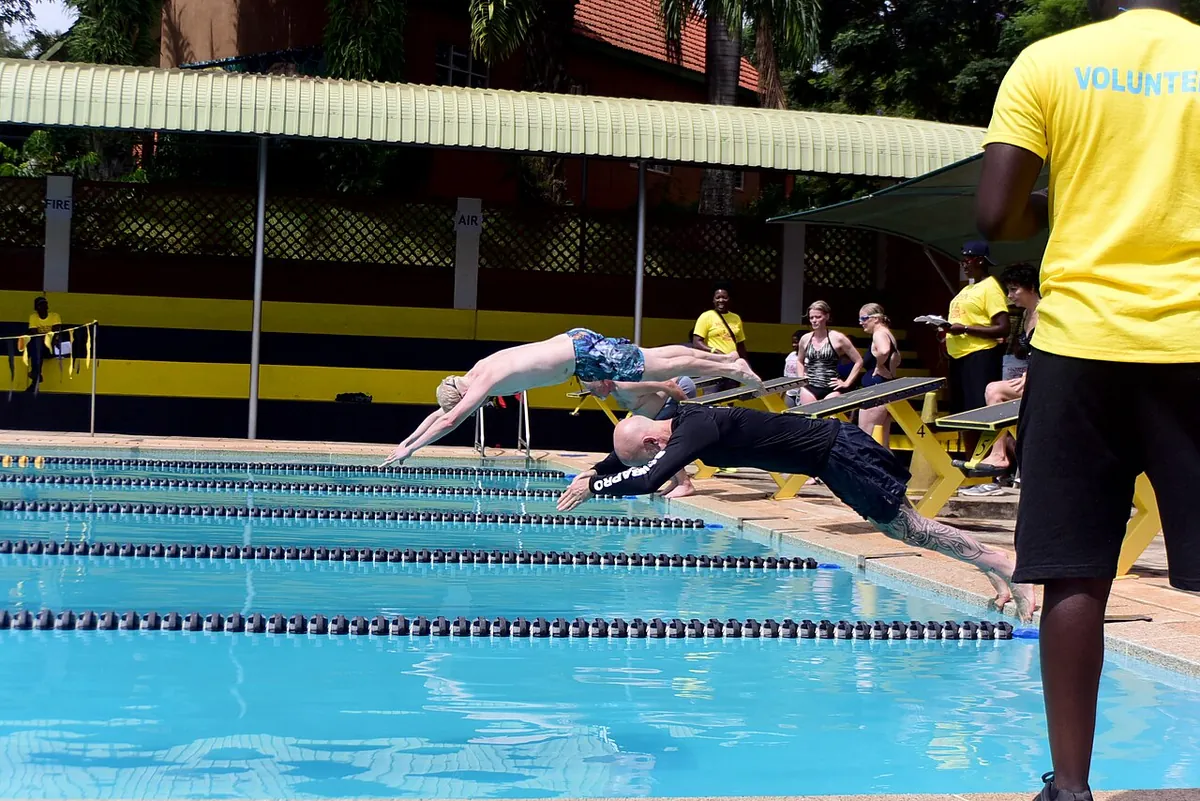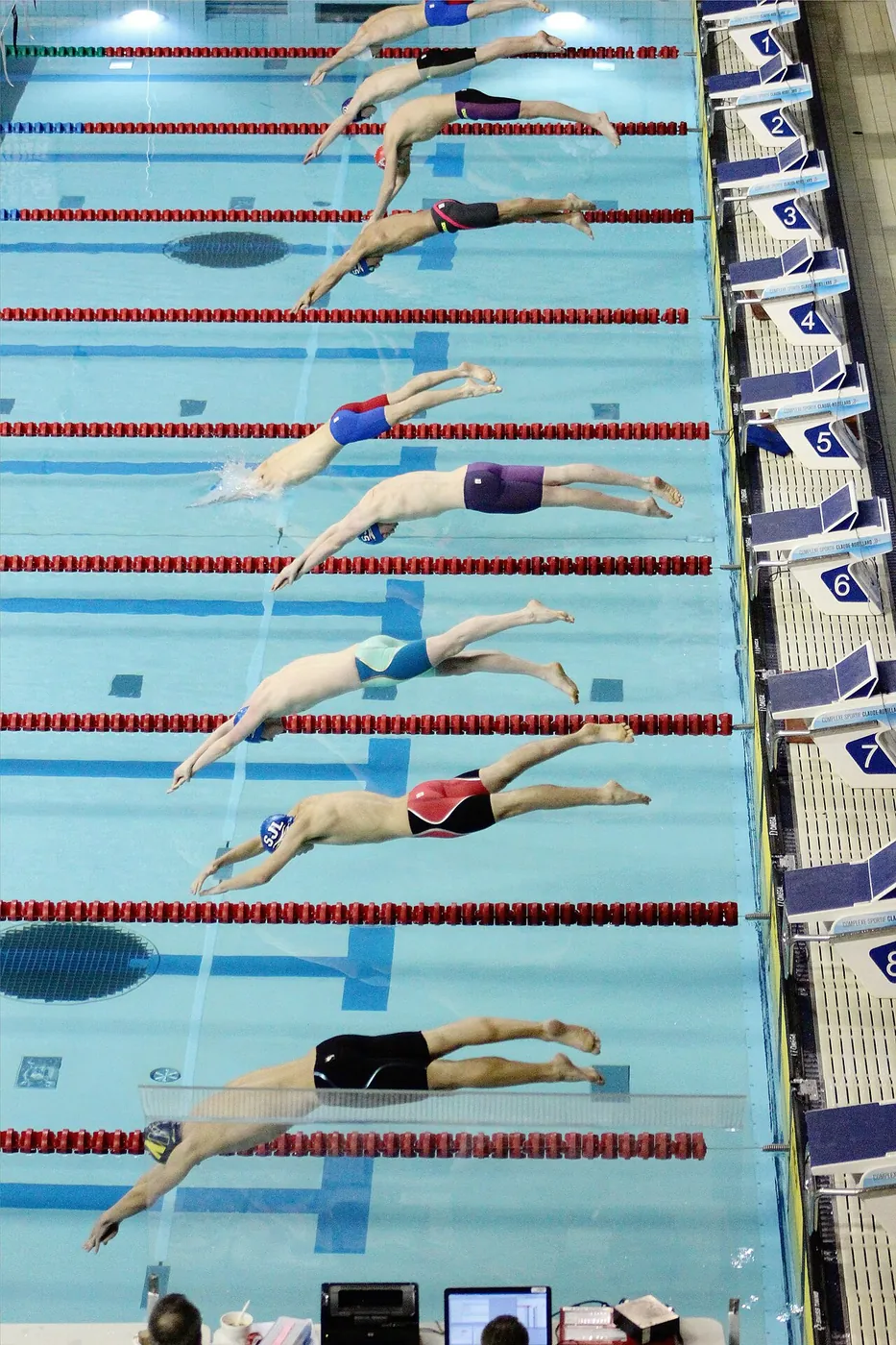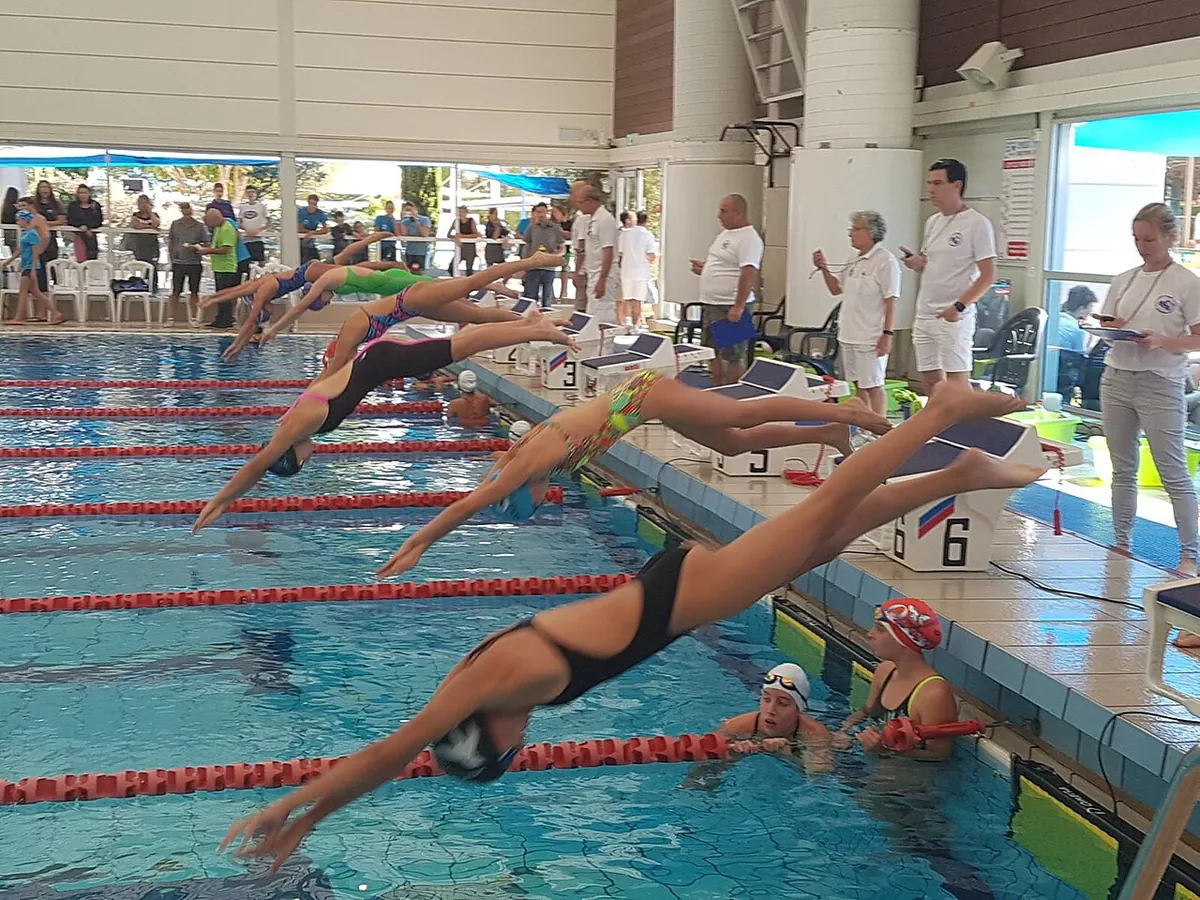
A swimming start is more than reacting to a signal and leaving the block. Entry angle, body alignment, underwater movement and the transition to surface swimming must connect. Backstroke begins in the water; other familiar pool events generally begin from a starting platform. The relevant stroke rules determine what is permitted afterwards.
Preserving the initial speed
A streamlined entry helps carry forward the speed created at the start. The underwater phase must then lead into effective surface swimming. Watch whether the swimmer's first visible strokes continue the movement smoothly or introduce an obvious interruption. Spending longer underwater is not automatically an advantage if the transition sacrifices the speed already gained.
Different strokes have different limits
Freestyle, backstroke and butterfly have corresponding limits on underwater travel. Breaststroke has its own permitted sequence after starts and turns. To assess a possible infringement, identify the event and rule version before interpreting the footage. A swimmer surfacing later than a neighbour does not, by itself, establish that anything illegal happened.
Follow the full entry-to-surface sequence
A side view can connect the dive, streamlined position, legal underwater actions and first surface stroke. Looking at these stages together explains more than measuring underwater distance alone. Entering surface swimming too early or too late may affect continuity, but visual timing needs context. The best comparison is between swimmers completing the same stroke under the same event conditions.