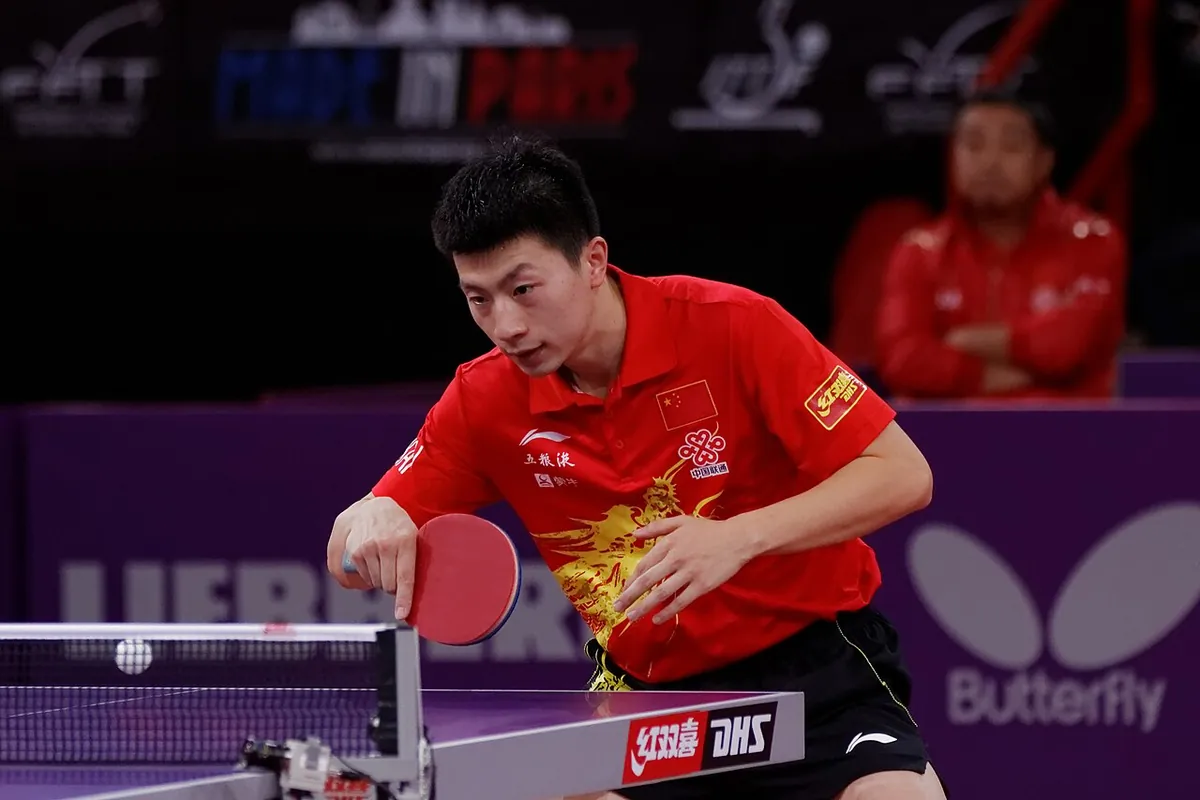
Unlike some other racket doubles formats, table tennis requires partners to strike alternately. Each player must therefore handle the present ball and make room for the teammate who takes the next one. Under the ITTF framework, understanding the service and hitting order is the first step towards reading the partnership.
The serve establishes a sequence
Doubles service travels from the server's right half-court to the receiver's right half-court, after which the prescribed order continues. Changes of service also alter receiving relationships according to the rules. Identify the current server and receiver first, then follow the other two players rather than inferring the order from their temporary positions.
Clear the next player's route
After striking, a player should not remain in the space the partner needs. Handedness, ball location and the chosen pattern influence the appropriate movement. A missed stroke may originate in an earlier failure to clear the route, leaving the partner forced to play from a constrained or unbalanced position.
Attack the opponents' movement relationship
The other pair must also alternate, making placement towards the next player's difficult position potentially valuable. The largest visible angle is not always the most disruptive shot. Follow both opponents through a full rally to see how a well-chosen direction can interrupt their coordination and complicate the next contact.