Volleyball defence is not simply a failed block followed by a rescue in the back court. The two parts often form a coordinated plan: blockers limit certain routes and defenders protect others. Every decision at the net changes the area that teammates behind must cover, making a wider view especially useful.
Read the movement before the jump
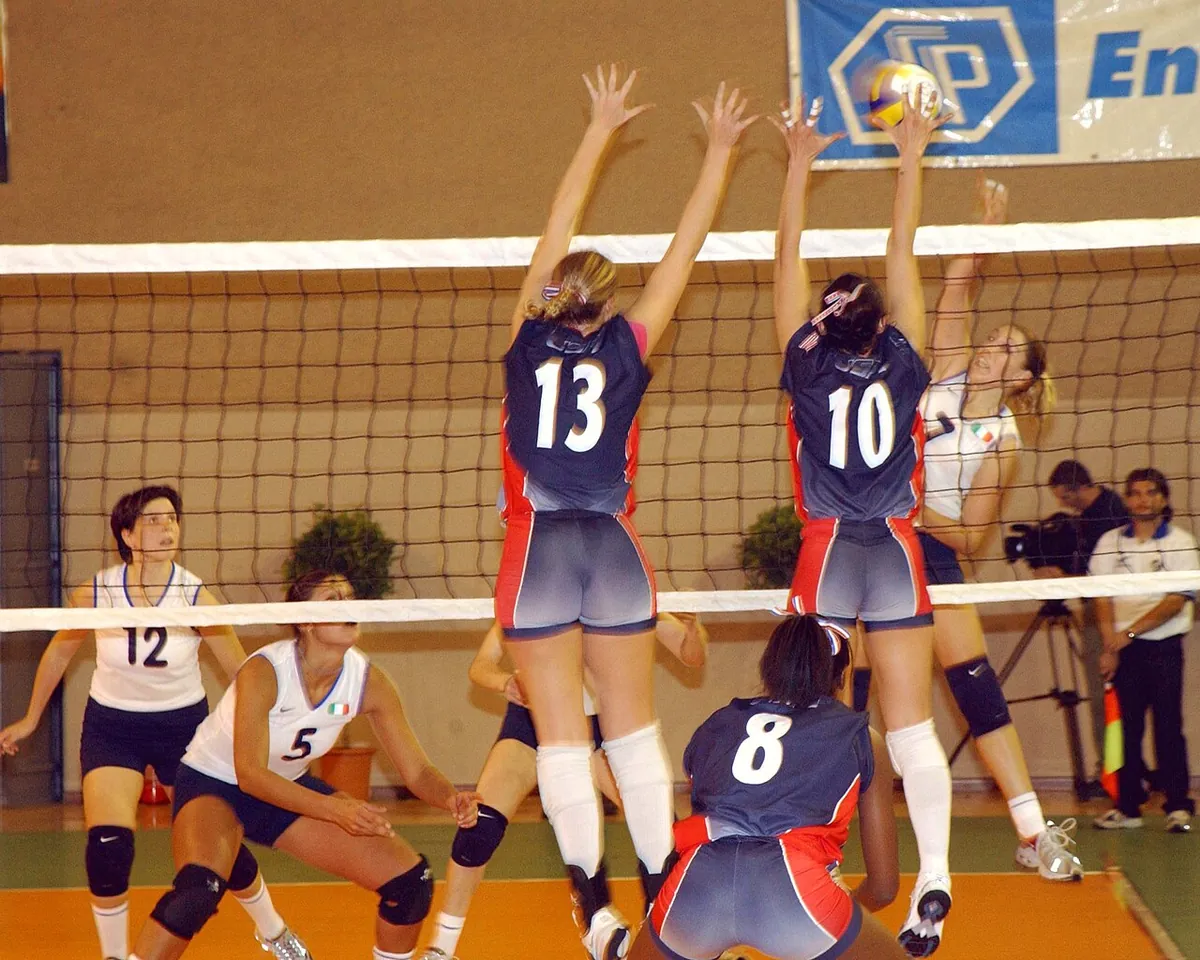
Blockers use information from reception and the setter to judge where the attack is going. Guessing early may save time or expose them to a different choice. In a two-player block, the gap between the hands and the timing of the jumps can matter more than either player's individual reach.
A touch can improve defensive control
A block touch that slows the ball into a playable area can help the team organise a counterattack. It need not produce an immediate point to succeed. Under indoor rules, a block contact generally does not count towards the team's three contacts, connecting the net action with the following defensive sequence.
Position behind the intended coverage
If the block prioritises the line, defenders need to understand the resulting cross-court and tip risks. They read the hitter's orientation alongside the block rather than reacting only after contact. Follow one defender before and after the opposing set to see how the coverage is progressively established.