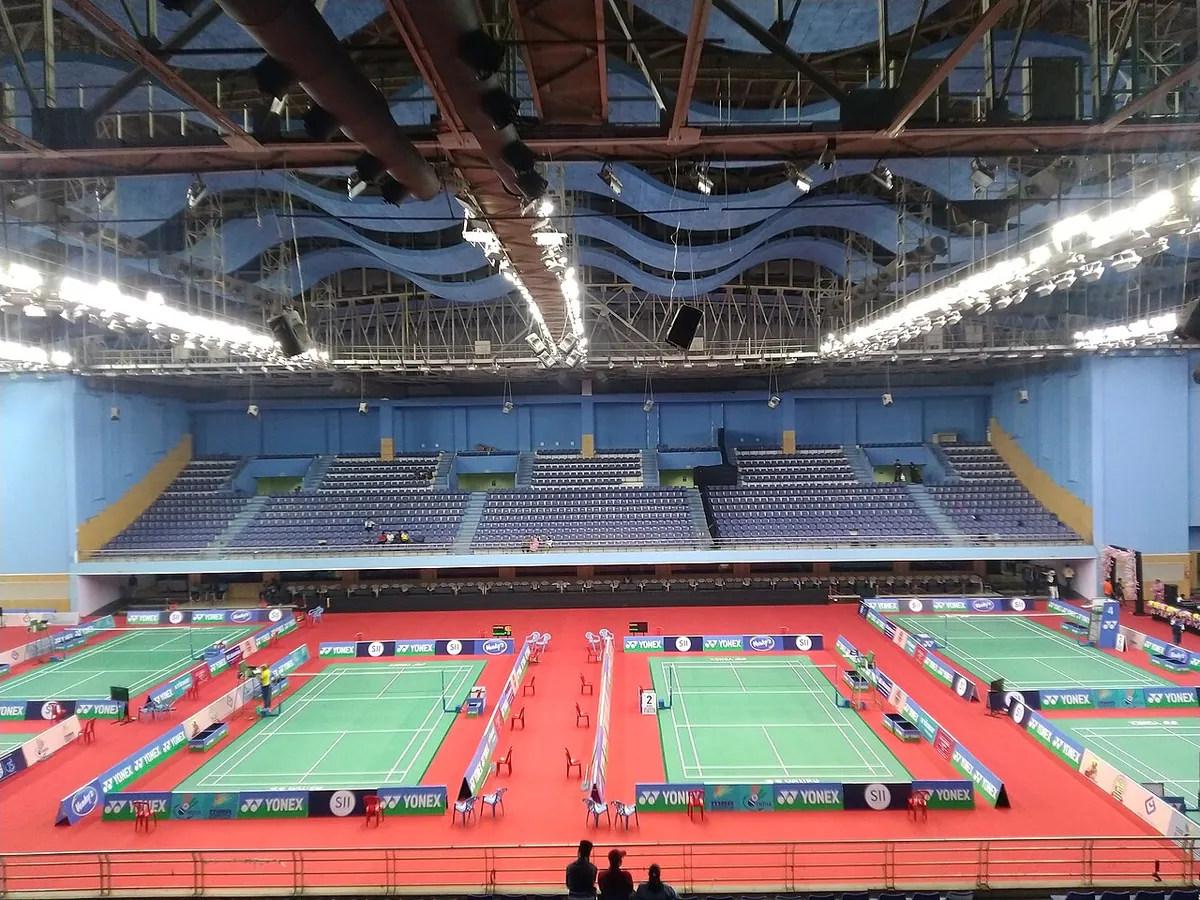
A badminton court carries overlapping singles and doubles markings, which can make the first viewing confusing. This guide follows the ordinary BWF court framework. A shuttle landing on the relevant boundary is generally in, but the crucial preliminary question is whether that particular line defines the area in use at that moment.
Singles uses the narrower width
The inner sidelines define singles play, while the outer rear boundary remains the back line. One player must cover the full length, making front-to-back movement especially significant. Temporarily ignore the outer doubles sidelines when watching singles to avoid treating a shuttle beyond the narrower court as a successful placement.
Doubles changes the service boundary
Doubles rallies use the outer sidelines and the full rear boundary. During service, however, the doubles back service line sits inside that rear boundary. A deep serve can therefore be out even though a later shot to the same spot would be in. The service phase must be distinguished from the continuing rally.
Use the score to identify the service court
Server and receiver occupy diagonally opposite service courts, with the serving side's score determining the appropriate left or right court. To judge a serve, establish the correct court as well as the relevant boundaries. Working through format, phase and line is more reliable than trying to memorise the court as one fixed rectangle.