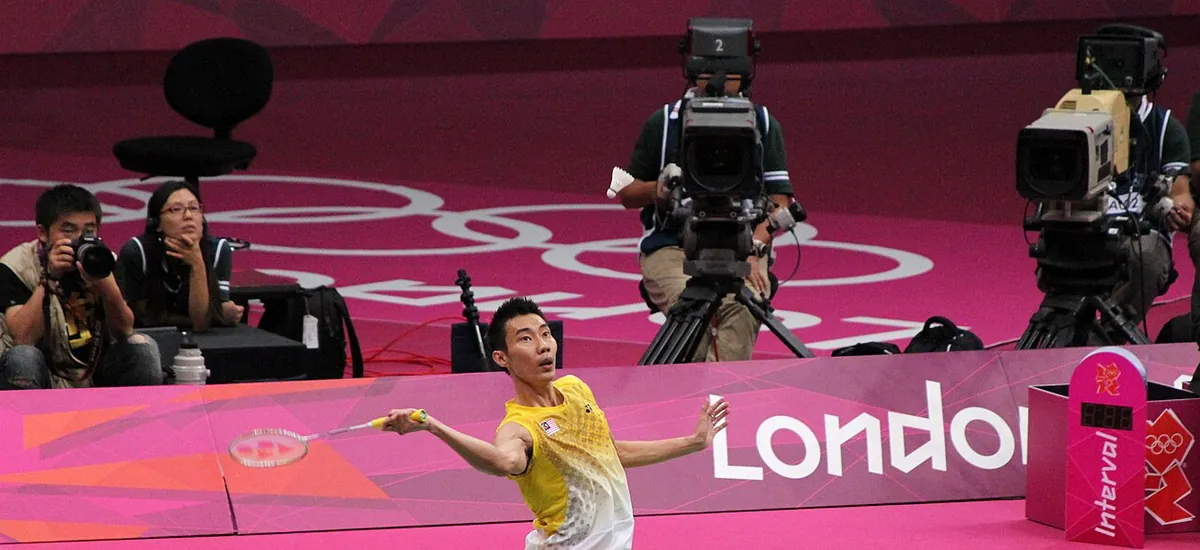
Lin Dan won Olympic men's singles gold for China in Beijing in 2008 and London in 2012. In 2023, he entered the BWF Hall of Fame alongside Lee Chong Wei. His game offers more than powerful smashing: different passages reveal how speed, control and patience can work within the same tactical structure.
Create the conditions for acceleration
A rear-court attack requires early movement to a useful contact point if several directions are to remain available. Lin Dan's left-handed play also changes the geometry against a right-handed opponent. Trace the shot before a sudden attack to see how the opponent was persuaded to lift and surrender a more favourable ball.
Change rhythm without announcing the choice
Similar preparation can lead to a smash, drop or clear, making early anticipation risky for the opponent. Speed includes the timing of acceleration, not only the shuttle's flight. Follow the differences between successive strokes to understand how a sudden injection of pace fits the construction of a rally.
Connect defence with the next attack
Retrieving an attacking shot is only the beginning of recovery. A player must restore position and find a way to regain control of the trajectory. A deep reply or a precise net shot can bring a difficult rally back towards balance, from which another attacking opportunity can eventually be created.