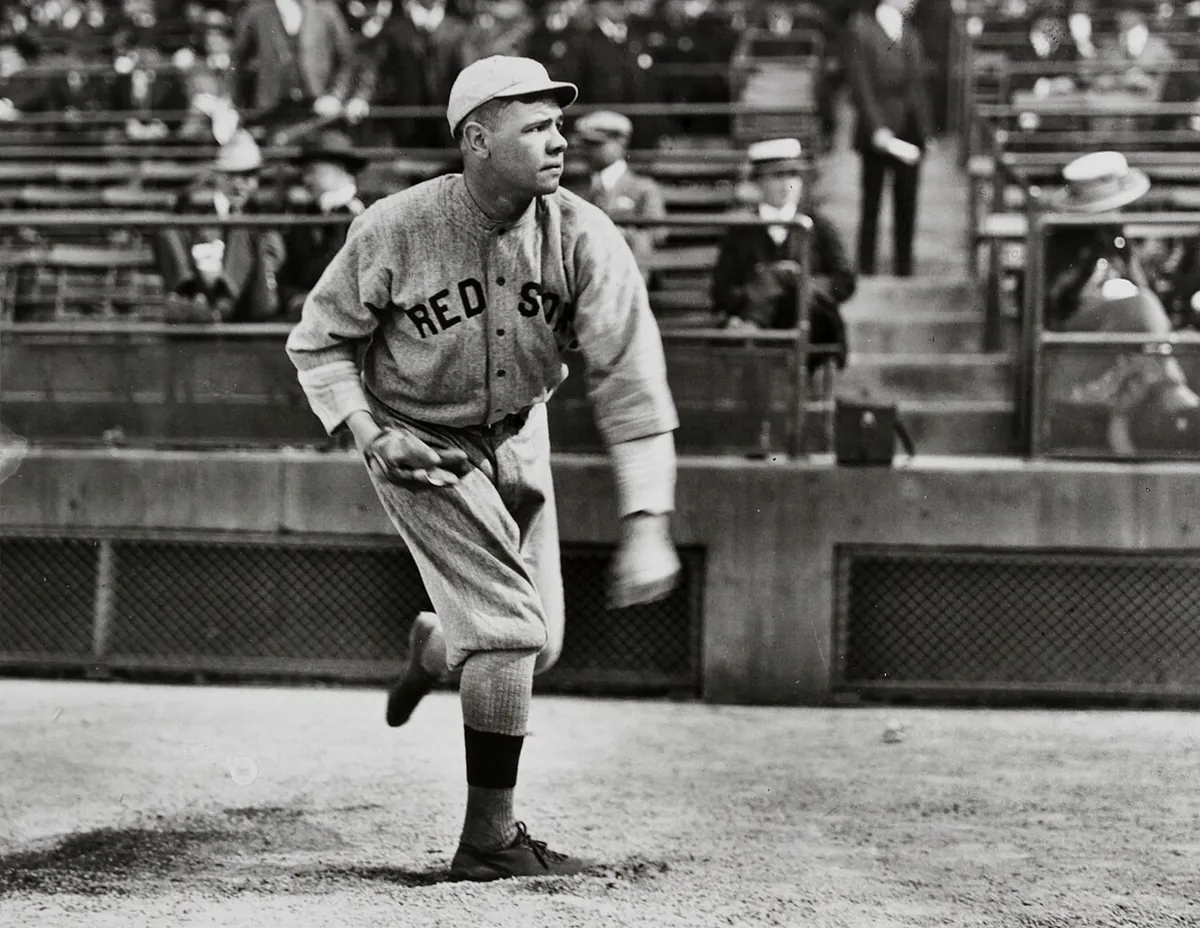
Babe Ruth pitched for the Boston Red Sox before becoming a defining power hitter with the New York Yankees. He joined the first group elected to the Baseball Hall of Fame in 1936. His career links different playing responsibilities and provides an entry into the growing importance of the home run.
Read the pitching and hitting stages separately
A pitcher manages location and the count, while a hitter tries to recognise that plan and choose when to swing. Ruth experienced both roles professionally. Identifying the responsibility he held in each period produces a more informative biography than applying one power-hitting label to the whole career.
Extra-base power changes the route to a run
A home run allows the batter and runners already on base to complete the scoring circuit without relying on several further hits. Ruth's influence belongs partly to the attention this offensive approach attracted. Power also carries the possibility of misses and outs, so reaching base and the league environment remain relevant.
Keep historical statistics in their setting
Baseball preserves extensive numerical records, but equipment, ballparks, schedules and competition change across eras. Comparing totals alone can conceal those differences. Connect Hall of Fame material with team history and individual seasons to understand the actual career. A familiar legend becomes more meaningful when the documented circumstances remain visible.