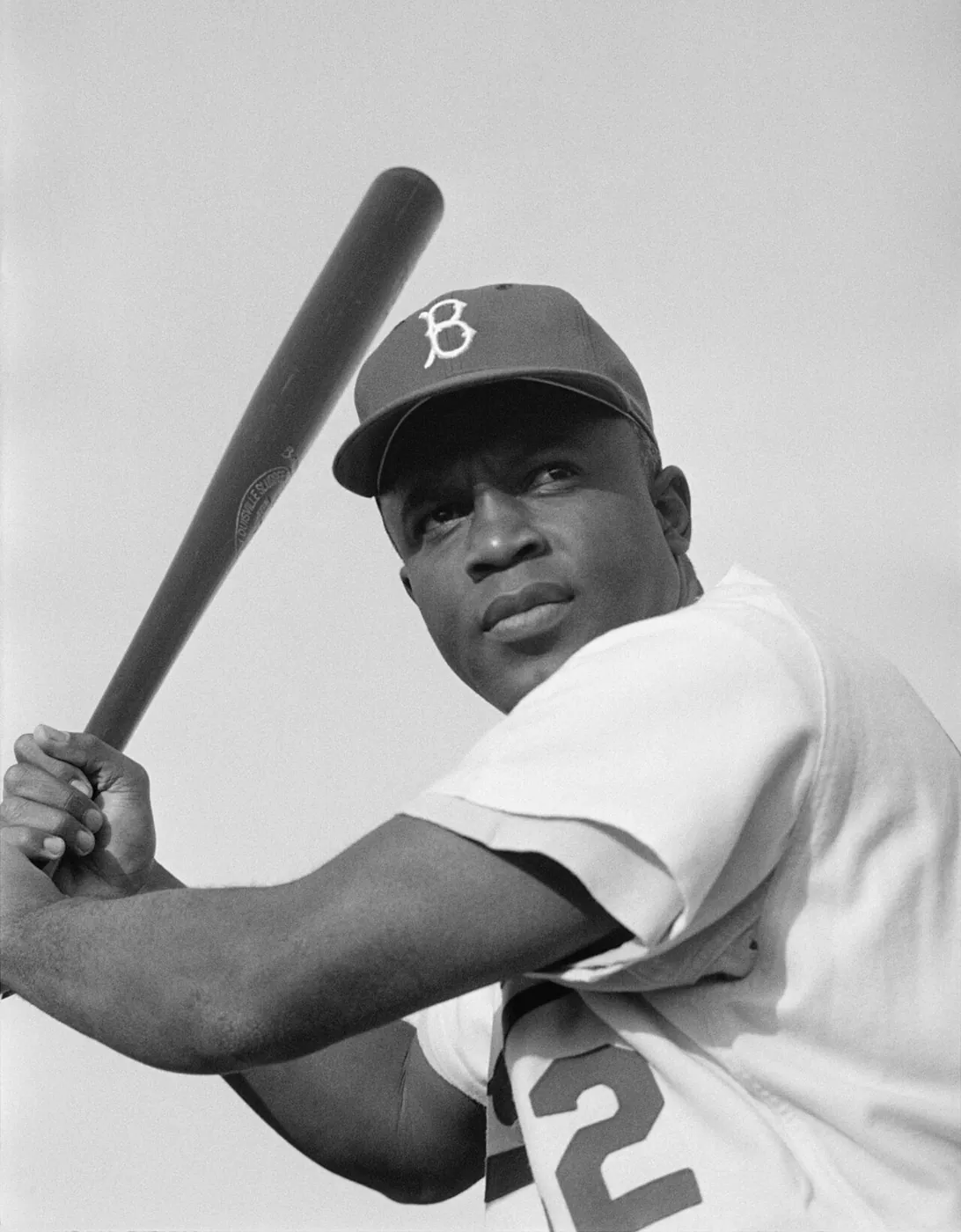
Jackie Robinson joined the Brooklyn Dodgers in 1947, breaking the long-standing racial barrier in modern Major League Baseball. He was elected to the Baseball Hall of Fame in 1962. His story carries major social significance, but an accurate profile should also recognise the competitive ability that sustained his place on the field.
Preserve the historical conditions
The resistance Robinson encountered arose from institutions and the wider society of his period, not simply the ordinary pressure faced by a new player. Dates, team and league context matter. Keeping those conditions visible prevents a complex history from being reduced to a generic message about overcoming adversity.
Baserunning creates another form of pressure
Offence continues beyond the swing. A runner's lead, acceleration and observation of defenders can affect how the pitcher and infield divide their attention. Robinson's active style provides a way to understand that influence. Even without an attempted steal, a credible running threat can alter the defensive preparation for the next pitch.
Read performance and influence together
Honours and team records establish a factual outline, while games and historical accounts reveal how the player contributed. Robinson should be recognised as more than a commemorative symbol. Examining his hitting, fielding and running gives a concrete account of the athlete whose career also became a major historical turning point.