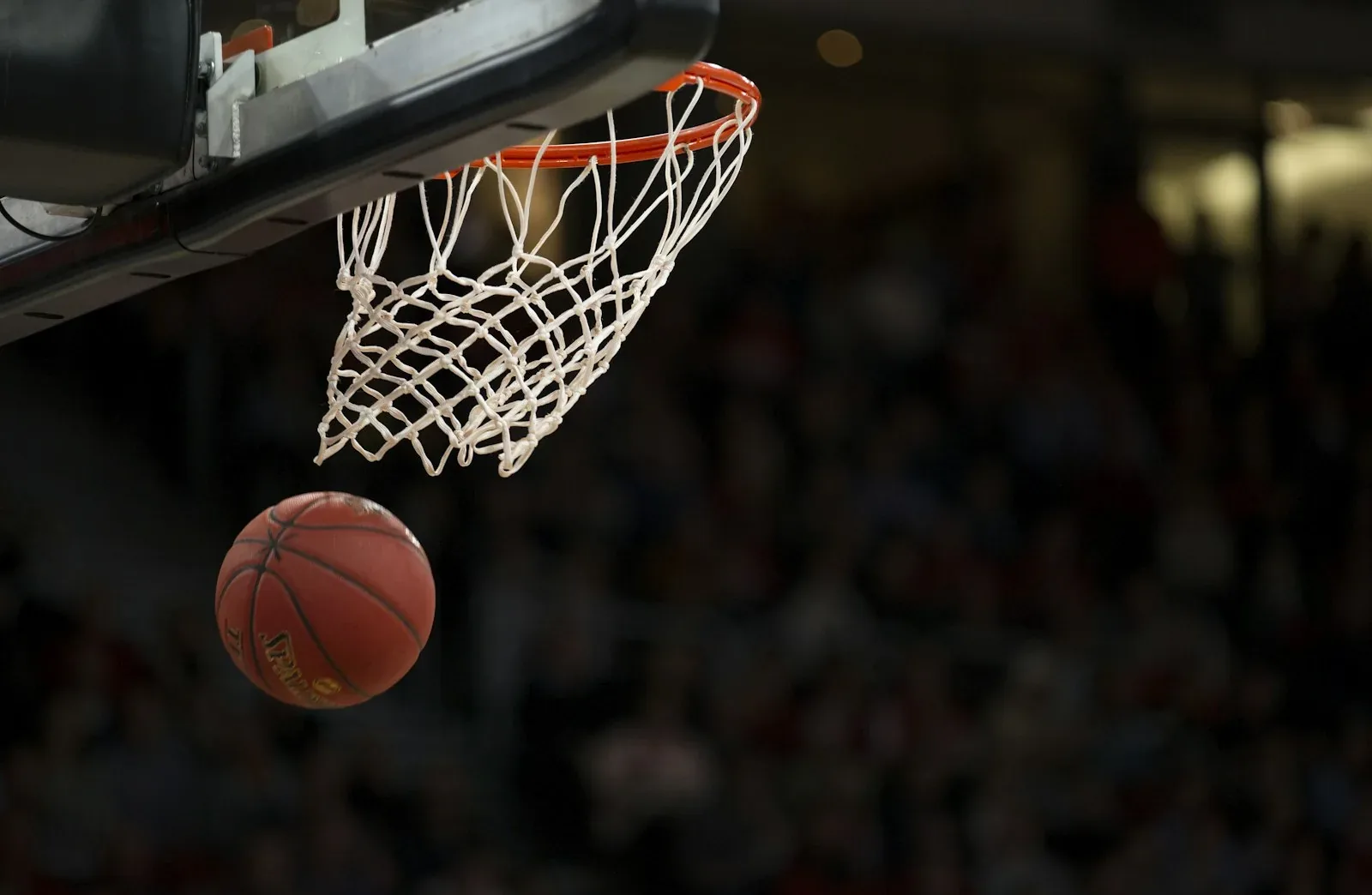
A basket is the most visible ending to a possession, but it is not always the most revealing part to watch again. The decisive action may come earlier: a teammate draws a defender towards the corner, another sets a high screen, and the ball-handler waits for help before passing to an open player. Following only the ball makes these relationships easy to miss. Understanding basketball spacing means watching the ball, the other attackers and the choices imposed on the defence at the same time.
Spacing creates room for choices
Good spacing does not mean putting five players as far apart as possible. Positions must preserve driving lanes, passing angles and useful receiving distances. Two attackers in the same channel can allow one defender to cover both with little movement. A well-placed weak-side teammate, by contrast, can make helping and recovering more difficult. Shift your attention away from the ball occasionally: are the apparently uninvolved players changing the area that defenders must protect?
A pick-and-roll starts a sequence of decisions
A ball screen can lead to much more than a direct drive to the basket. Defenders may negotiate the screen, switch assignments or bring another player forward to delay the ball-handler. The handler reads pressure from different directions while the screener chooses how to continue, perhaps rolling, popping or connecting to another action. Other teammates must keep passing routes available. Start by identifying the defensive response, then watch how the offence adapts. The same initial formation can produce several different outcomes.
Movement without the ball divides attention
Cuts and off-ball screens ask defenders to handle several tasks at once. A weak-side cut may draw a defender’s attention or pull help towards the basket even when the cutter never receives a pass. More movement is not always better, though. A cut that arrives in the same lane as a drive can crowd the possession. Timing matters: when does the teammate move, when can a defender no longer cover both threats, and does the pass arrive while the opportunity remains available?
A made shot does not prove a good decision
A difficult attempt can go in, while an open shot can miss. Judging only the outcome confuses short-term variation with the quality of the decision. Revisit the available options before release. Was there enough time? Was the receiver in a suitable position? Had the defence lost its shape, and was a better pass available? Tactical analysis can recognise individual skill while distinguishing a player’s ability to solve a difficult situation from a team’s ability to create favourable situations repeatedly.
Use three possessions to practise watching
Choose three complete consecutive possessions. Note the starting positions, the way the first screen or drive changes the defence, and where the ball goes next. Ask who draws a second defender towards the ball, whether the receiver can continue the attack, and how the team resets when the first action produces no opening. Put those observations beside the scoring result. The game becomes a sequence of understandable collective choices, rather than only a collection of memorable finishes.