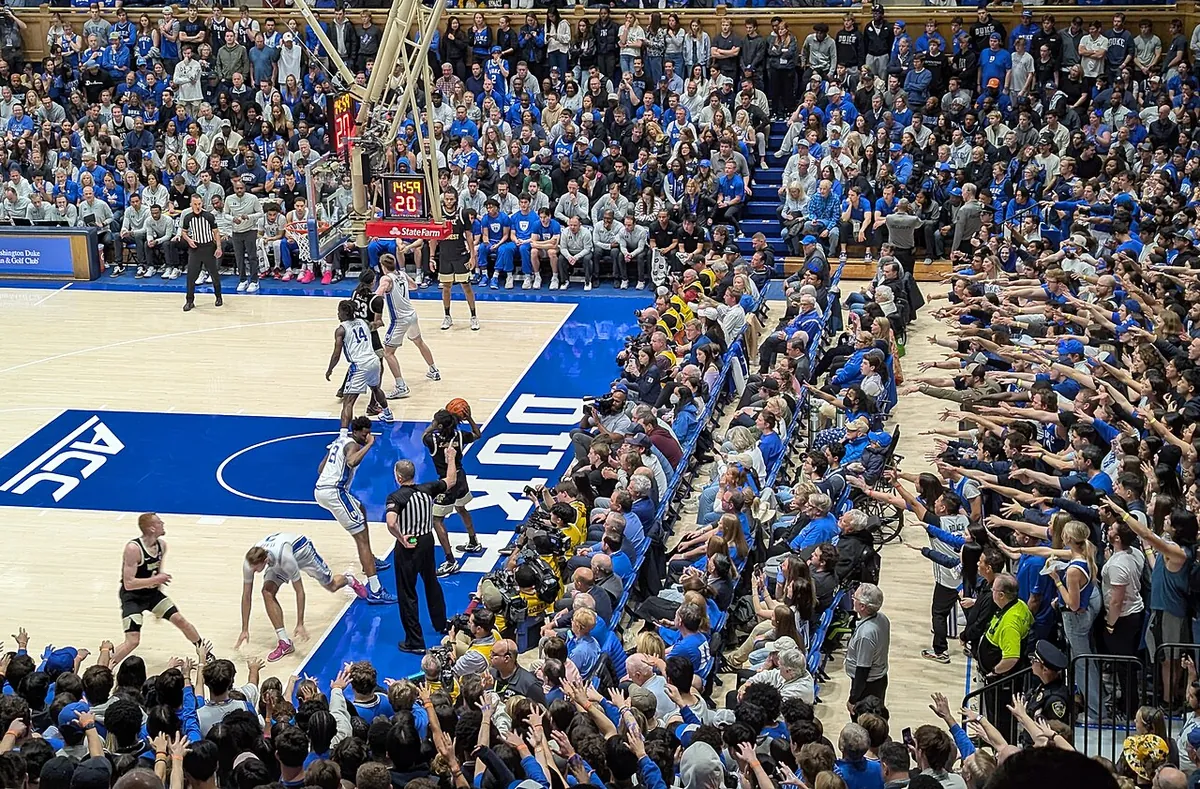
The court's dimensions stay the same, but the usable attacking space changes constantly. A defender's respect for a shooter, a teammate occupying the lane and the angle of a passing option all influence the ballhandler. Good spacing is not simply standing far apart; it creates connections that the offence can exploit.
Shooting threats affect help defence
A credible outside shooter can make it harder for a defender to abandon the perimeter and crowd the basket. That may open a driving lane. Distance alone is insufficient, however: a player hidden behind another defender may be nominally open but difficult to reach. A useful position combines separation with a workable passing angle.
Time the cut rather than merely making one
A cut can exploit a defender turning towards the ball, but several simultaneous cuts may congest the lane. Effective movement fits the ballhandler's view and the positions of other teammates. Pause as a drive begins and notice whether weak-side players cut, move along the baseline or clear a route.
Consider what happens after a miss
Sending more players towards offensive rebounds can leave fewer ready to defend a break. Keeping everyone outside may protect transition space but reduce pressure near the basket. An offensive arrangement includes these trade-offs. Judge both the opportunity it creates and the protection available if the attempt fails.