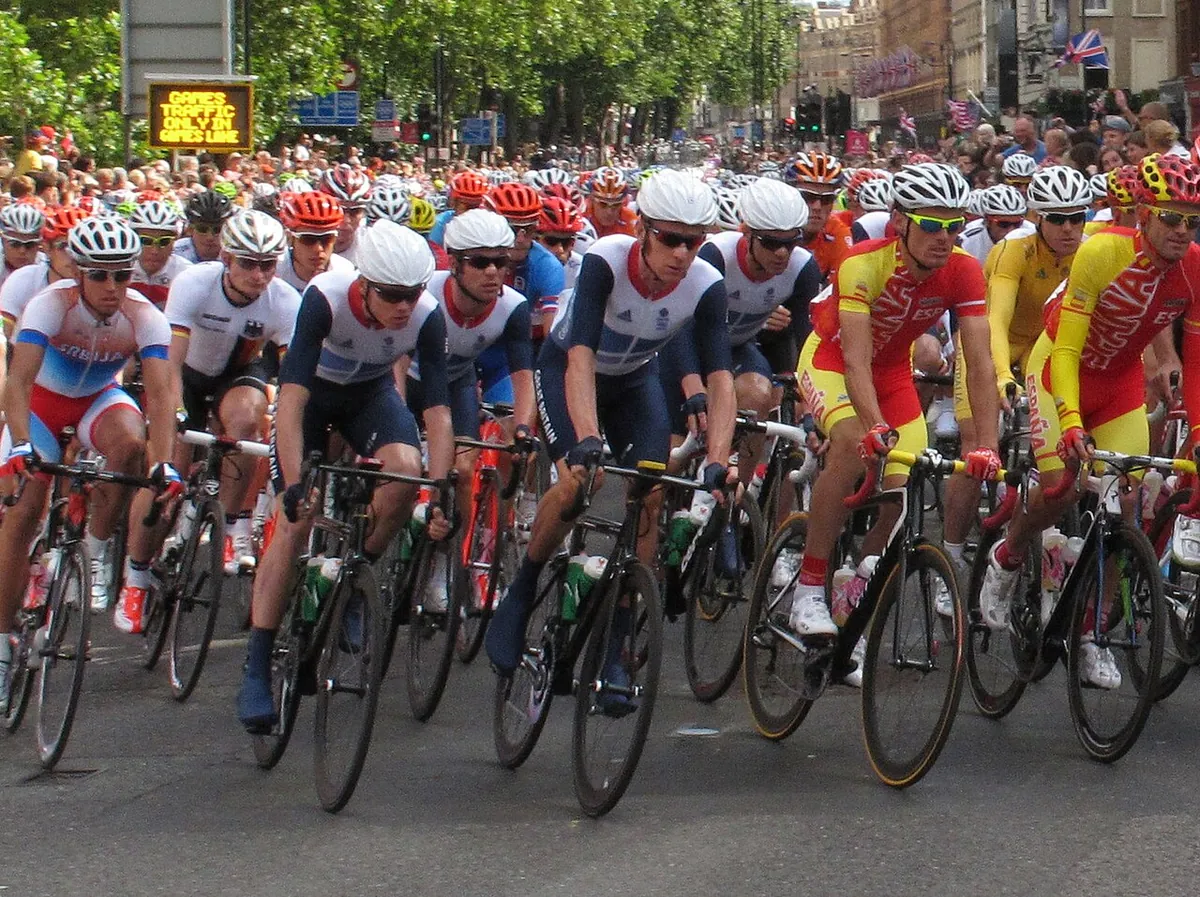
A flat stage is not necessarily a quiet transition between harder days. When wind arrives from the side, the most useful shelter moves away from directly behind the preceding bicycle. Riders may form diagonal echelons, but the road has limited width. That restricted space can divide a field surprisingly quickly.
Shelter changes with direction
A following rider often needs to sit slightly to one side to gain protection in a crosswind. The formation depends on the wind and the road's direction. After a turn, a previously favourable headwind or tailwind section can become exposed side-on. Route knowledge therefore matters alongside the strength of the wind itself.
Why the split grows
Once an echelon fills the available width, riders behind may be unable to find shelter and must work much harder to hold the speed. Continued pressure at the front can then open gaps. A sizeable chasing group may still struggle if its members are dispersed or cannot organise an effective rotation.
Watch before the exposed road
When a team suddenly moves together towards the front, notice whether the road is about to turn or enter open country. Changes in formation and small gaps at the rear can reveal danger before the commentary announces a split. Conditions differ each day, so an exposed location is an opportunity for crosswind racing rather than a guarantee.