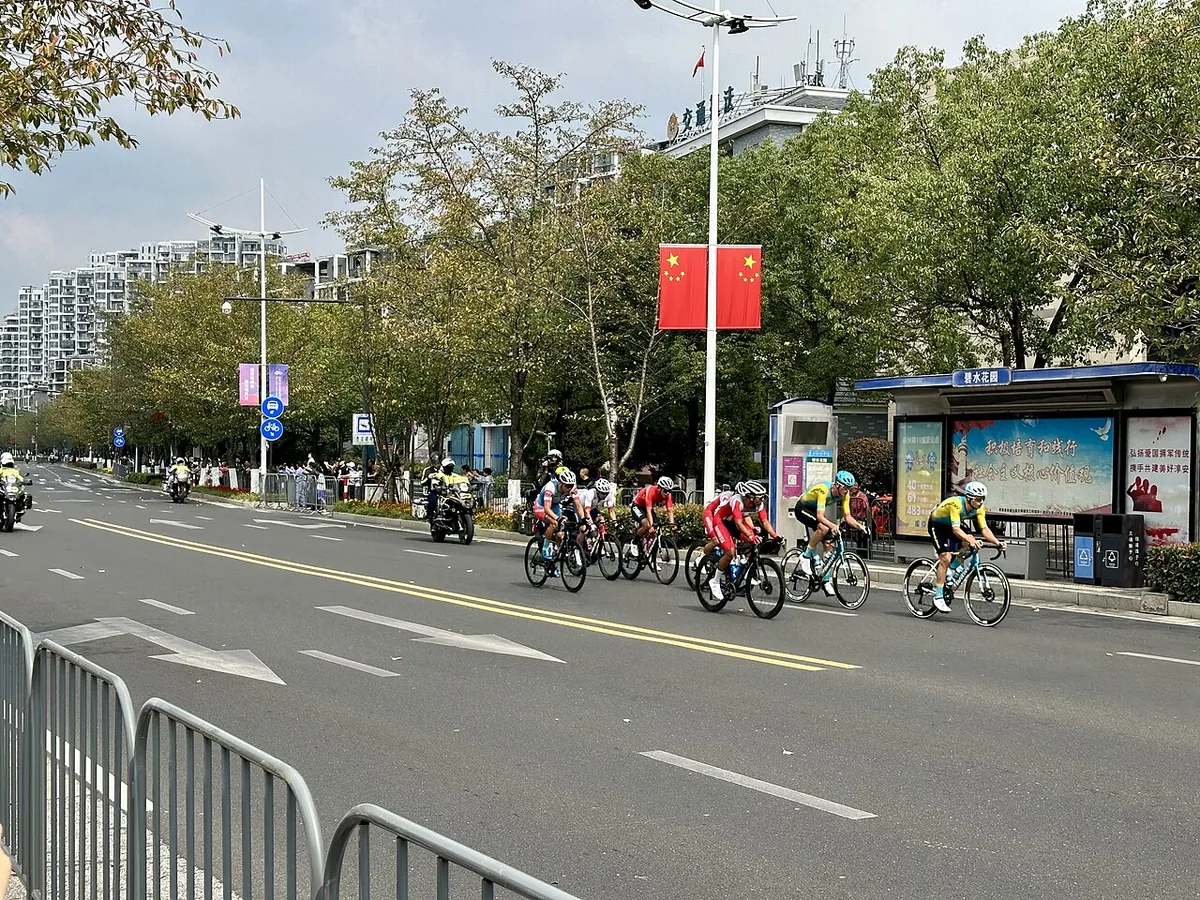
Road racing regularly presents an apparent contradiction: rivals work together, then suddenly stop helping one another. Wind resistance, limited energy and different objectives explain the change. Under the basic UCI road-racing framework, the first eligible rider across the line wins the stage, but the riders sharing that road may be pursuing several different prizes.
Shelter has a value
The rider at the front meets the air directly, while those behind can save energy in the slipstream. A breakaway therefore usually benefits from rotating the lead. Cooperation helps maintain the advantage, but every rider also wants strength for the finish. When too many riders stop contributing, the group becomes easier to catch.
Teams want different outcomes
A sprint team may want the bunch together at the finish. A climber may need difficult terrain to create separation. In a stage race, an overall contender does not have to chase every stage victory. These objectives determine who works, who waits and why greater numbers do not automatically produce an effective pursuit.
Read the gap in context
A time gap means little without the remaining distance, terrain and organisation of the groups. A flat tailwind section differs from a succession of climbs, while late urban corners can interrupt a chase. Watch whether the advantage is growing or shrinking and identify the teams supplying the effort behind.