In an individual road time trial, riders start at intervals and are ranked by the time needed to complete the course. Unlike a bunch race, sustained shelter behind a rival is not part of the intended task. This guide follows the UCI road time-trial context; starting intervals, equipment requirements and procedures depend on the applicable event regulations.
Pace the whole course
A time trial is not an instruction to apply maximum force from start to finish. Climbs, headwinds, descents and sharp corners change the value of additional effort. Riders must avoid spending too much energy early while retaining the ability to accelerate where it matters. Intermediate checks reveal a developing pattern, not a guaranteed final result.
Position serves performance
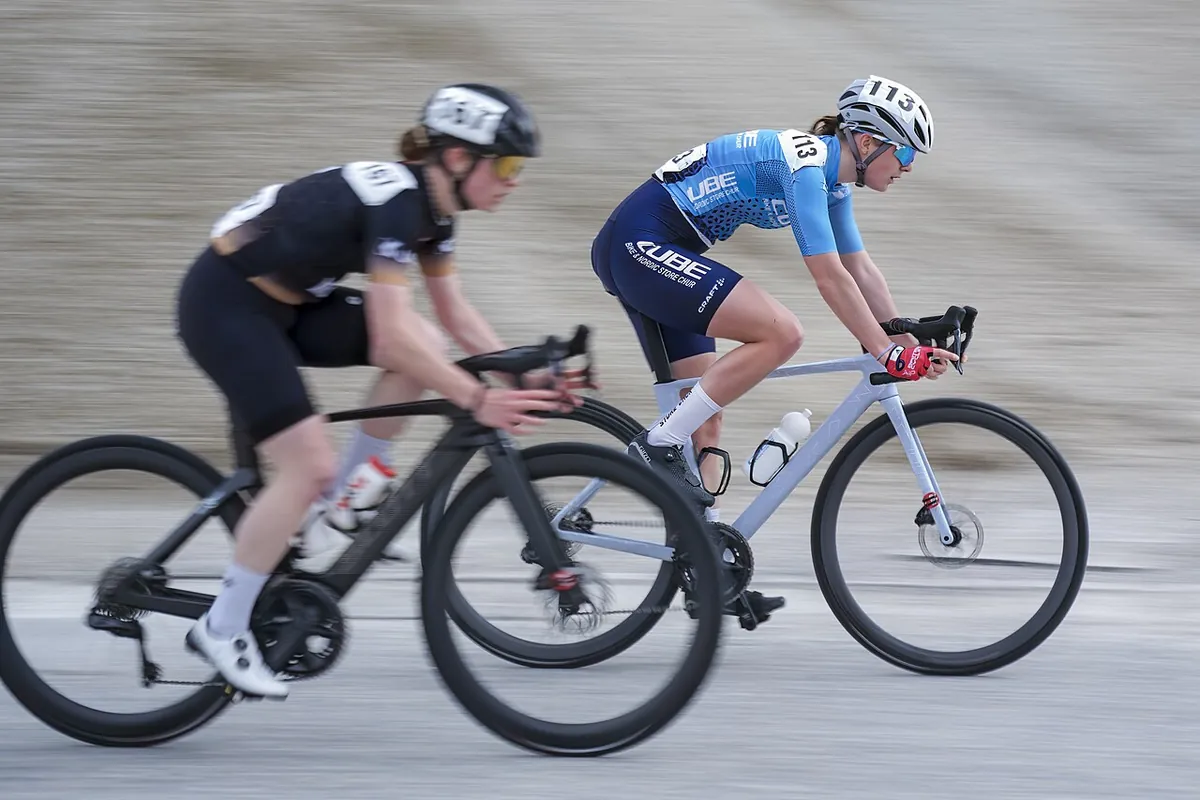
A low position can reduce aerodynamic resistance, but an extreme posture may compromise breathing, control or sustainable power. The rider and bicycle therefore need to function as one system. Front and side camera views help show the transition between a stable aerodynamic position and the more active handling required through corners.
Compare like with like
Average speeds from different routes or days are not directly comparable. Gradient, wind and surface conditions all influence the clock. The most useful evidence comes from the same competition: intermediate times, mistakes and the handling of specific sections. Corner exits and transitions over hilltops can reveal losses that a finishing time alone cannot explain.