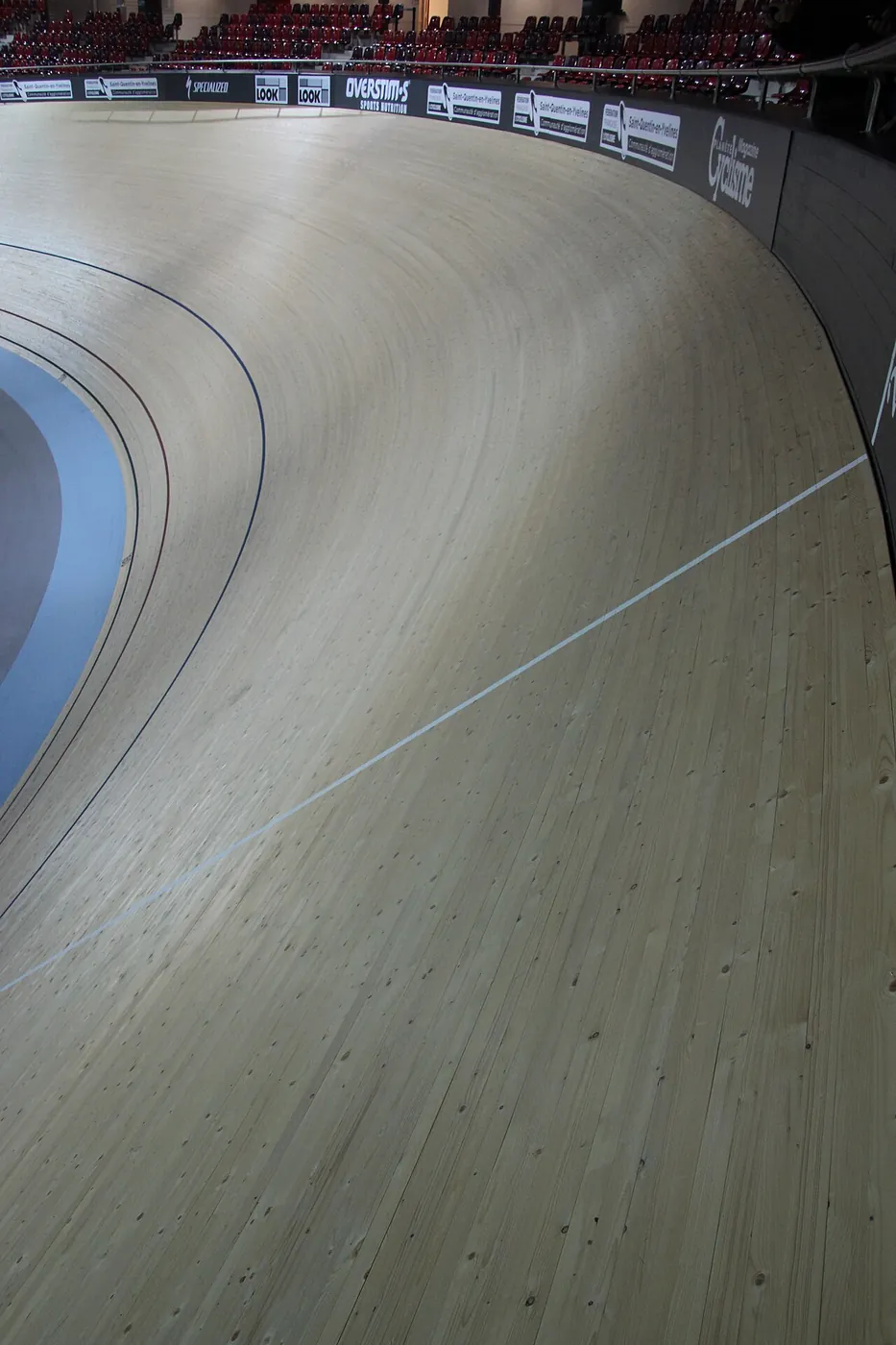
Track sprint races can begin with cautious movement far below finishing speed. Riders are not simply postponing the contest: they are choosing a relative position from which to launch it. UCI track rules define riding areas and legal conduct, and the riders use the space within those limits to shape the decisive acceleration.
Leading has advantages and costs
The front rider can influence the pace and observe some of the opponent's behaviour, but also offers aerodynamic shelter. The rider behind benefits from following yet still needs a clear route past. Movements up and down the banking adjust distance, angle and speed rather than merely serving as a dramatic prelude to the sprint.
Banking changes the opportunity
A higher position can provide room to accelerate down the slope, although it also involves travelling a longer path. The appropriate moment depends on current speed and the opponent's movement. Watching the changing distance between the bicycles is often more informative than noting which rider happens to be marginally ahead.
Speed still has boundaries
Once the sprint develops, riders must respect the rules governing their line and avoid dangerous obstruction. The track markings have specific functions, and officials review the contest accordingly. A close-up replay can omit the positions that existed before an incident, so a judgement about legality should use the full sequence and official decision.