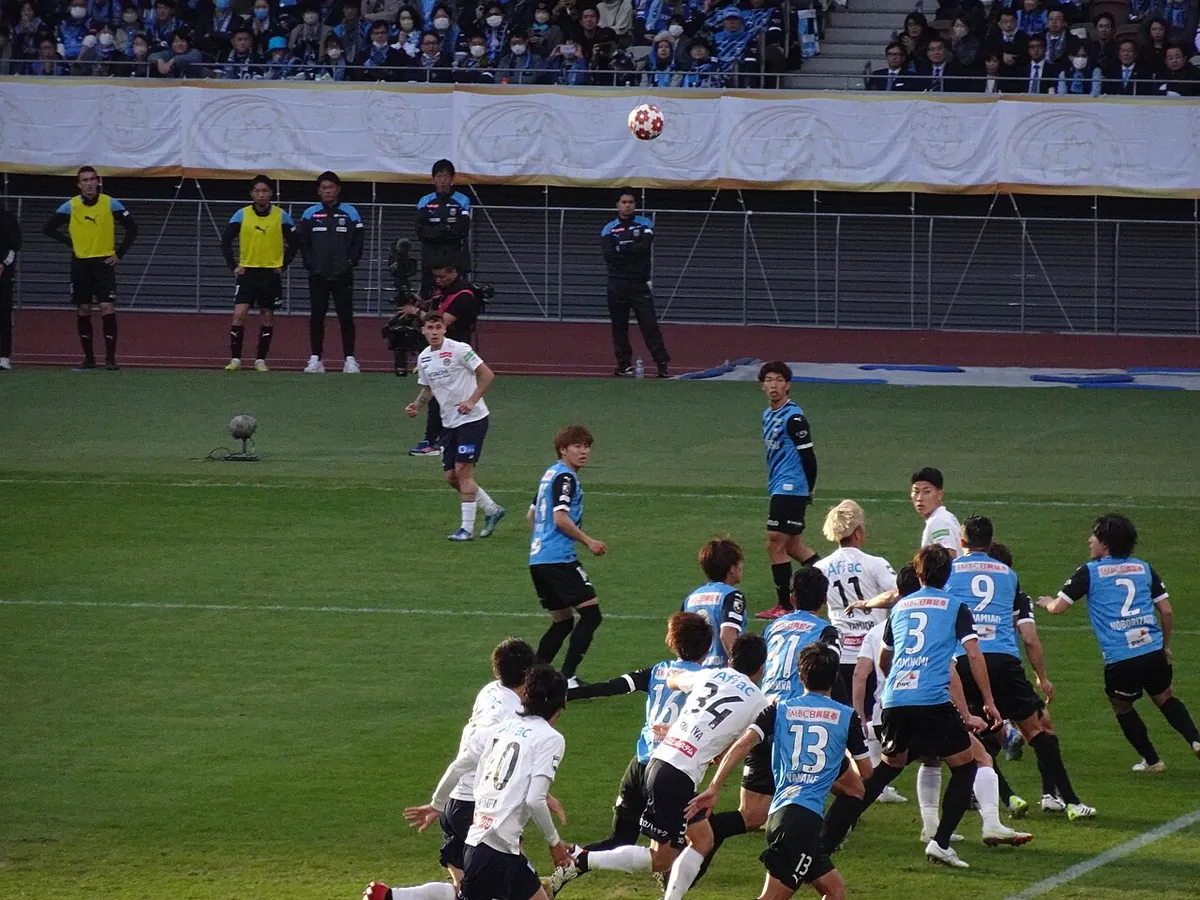
A formation diagram helps identify starting responsibilities, but the shape changes once play begins. A team may organise differently with and without possession. Instead of memorising every numerical label, watch the distances between lines and the spaces that players create for one another throughout an attack.
How width stretches a defence
Players stationed on both sides make opponents choose between covering the flanks and protecting the centre. A wide player does not need to receive immediately to influence the defence. If everyone moves close to the ball, the attack may have plenty of nearby bodies but very few useful passing routes through a crowded area.
How depth changes the choices
Runs behind the back line can discourage defenders from stepping forward. A midfielder dropping towards the ball may draw an opponent out of position. Depth is therefore more than the location of the furthest forward player: staggered positions help the team connect successive passes and threaten different areas at the same time.
Transitions test the structure
An attacking team must still protect the areas where possession could be lost. After a turnover, the nearest player may slow the ball while teammates cover the exposed space. Replay those first few seconds and watch how the defensive relationships reappear. This often reveals more about organisation than the formation announced before kickoff.