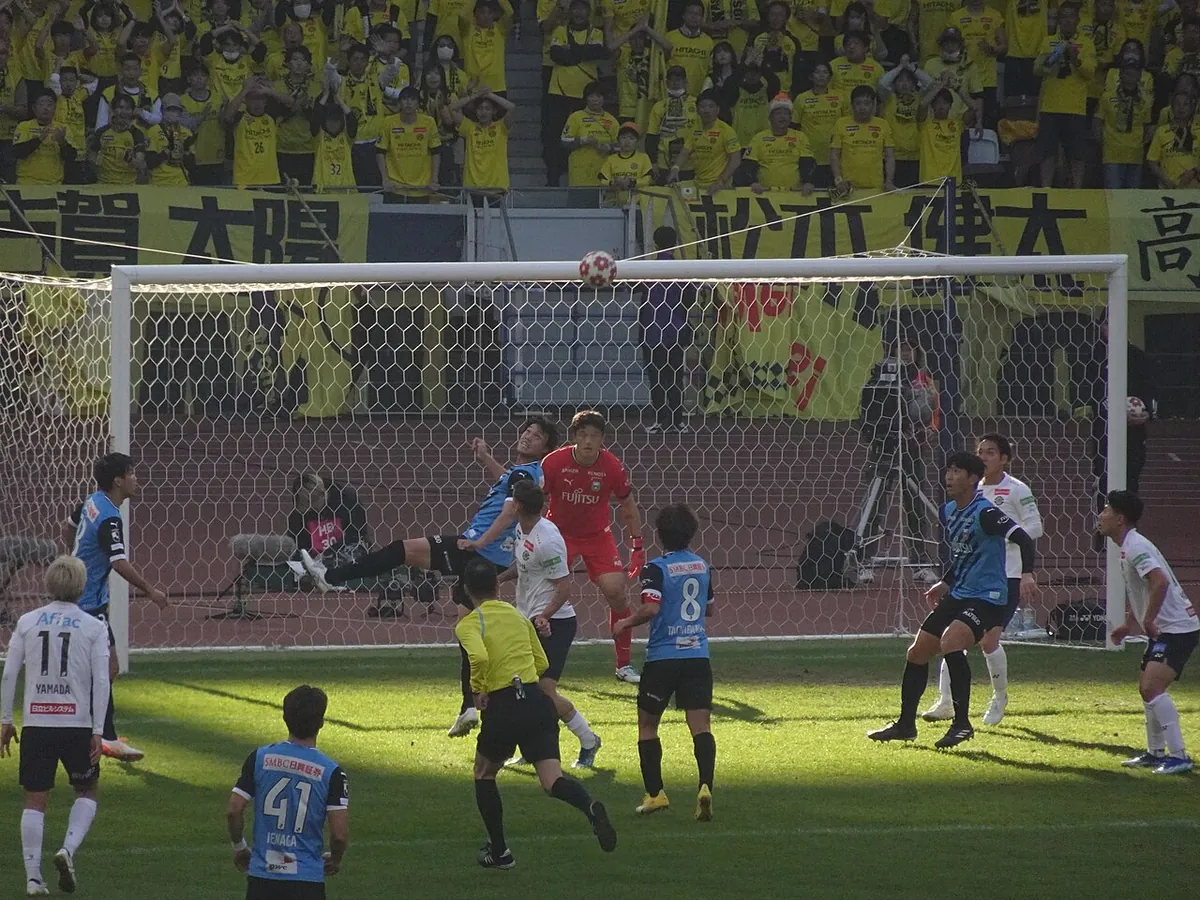
Goalkeepers have special handling permissions inside their own penalty area and distinctive responsibilities for the space around the goal. Outside that area, ordinary handball restrictions apply. To understand the position, follow both the decisions made before an opponent shoots and the contribution to the team's possession afterwards.
Position changes the difficulty of a save
Moving forward can reduce the visible shooting angle, but going too far may leave space for a chip. The final stretch of a hand is only one part of the action. Replay the moments before the shot to see whether the goalkeeper was balanced, appropriately positioned and able to see the ball clearly.
Coming for a cross requires a traffic assessment
The goalkeeper must judge the flight alongside the movement of attackers and defenders. Claiming the ball can end the attack, while an unsuccessful advance may leave the goal exposed. Staying on the line is not automatically timid; the decision depends on reach, congestion and the defensive responsibilities of nearby teammates.
Distribution starts the next attack
In possession, a goalkeeper can provide an extra passing option behind the first line of pressure. Short distribution requires accurate execution and available receivers, while longer passes depend on teammates contesting the landing area. Judge the condition in which the receiver gets the ball, rather than assuming one passing distance is inherently superior.