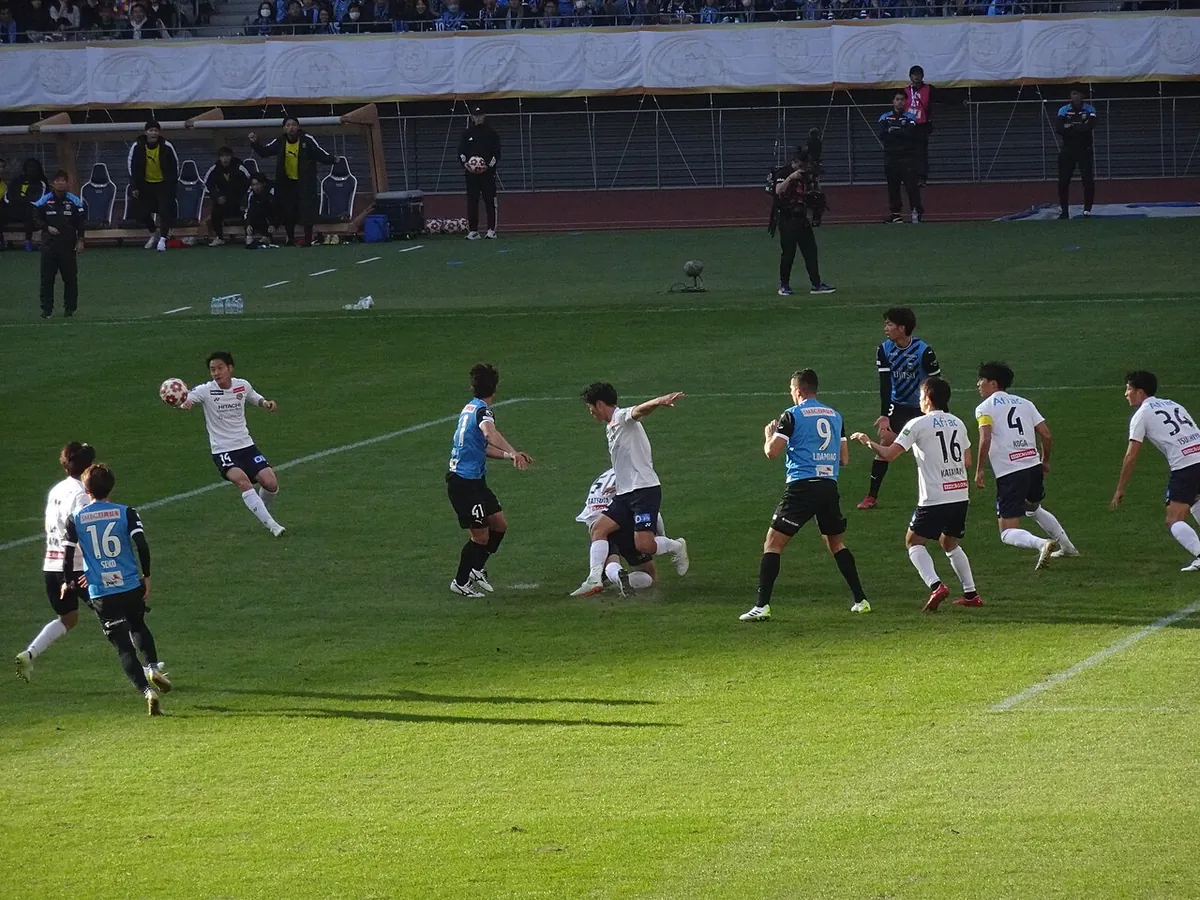
The first visible action in a high press is often a forward accelerating towards a defender. That run only becomes effective when teammates support it by closing receiving options and shortening the space behind. The real contest is over the opponent's next decision, not merely the current location of the ball.
Recognise the pressing trigger
A backward pass, a heavy touch or a receiver facing away from the attacking direction can offer an opportunity. The first presser may curve the run to screen a passing lane. Winning the ball immediately is not the only objective: forcing a predictable pass can give a teammate a better chance to recover possession.
Watch the supporting defenders
If the forward presses alone while midfield stays deep, an opponent may escape the first challenge into open space. Nearby players must adjust together without losing their ability to cover one another. The movements of the second and third defenders often explain whether the initial pressure has a realistic chance of succeeding.
Account for the space behind
Committing players high up the pitch increases the area that the remaining defenders must protect. A long pass or quick switch can bypass pressure and test the back line and goalkeeper. Teams therefore adjust the intensity and duration of a press according to fatigue, the score and the opponent's capabilities.