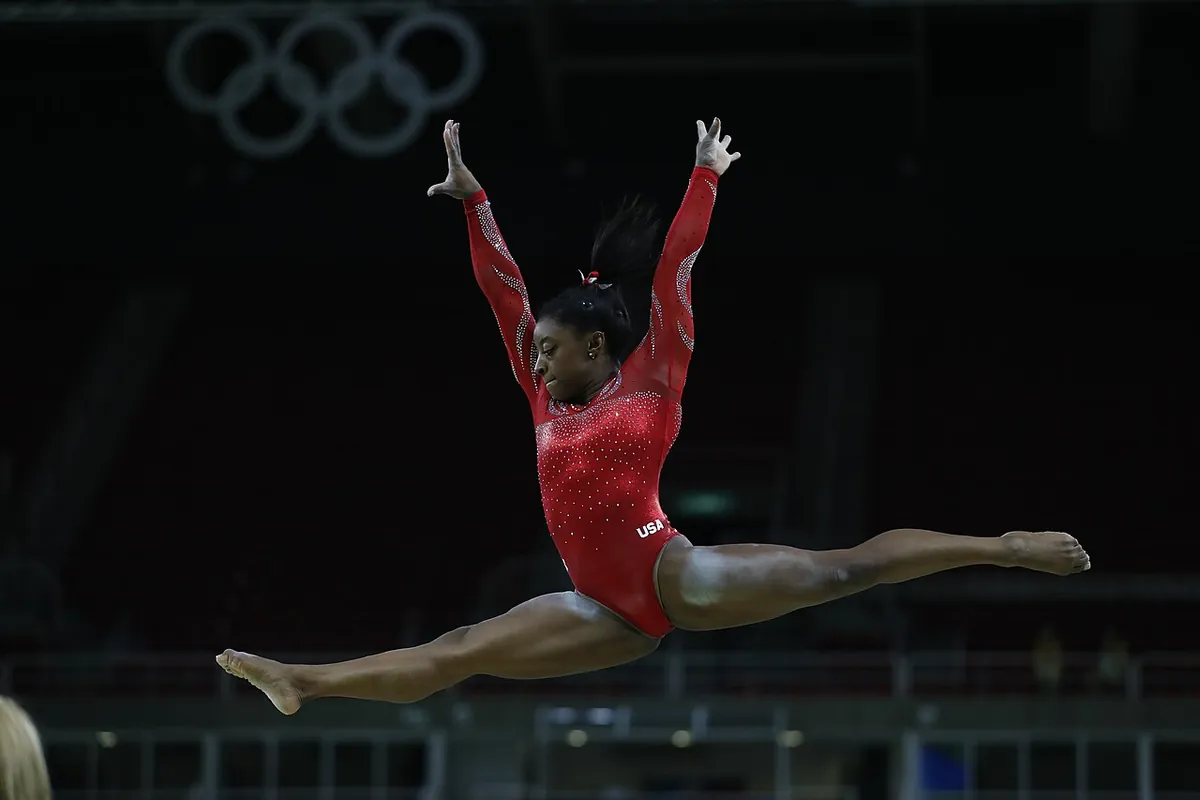
American artistic gymnast Simone Biles won women's team, individual all-around, vault and floor exercise gold at the Rio 2016 Olympics. Those established results provide the historical focus of this profile. They also demonstrate why striking difficulty must be understood alongside execution, apparatus demands and competition format.
Four medals, several different tasks
The team title depended on the squad's combined performance. The all-around required scores across four apparatus, while vault and floor titles focused on specific disciplines. These were therefore not four victories in an identical contest. Separating the events reveals how breadth across apparatus and strong specialist performances contributed different parts of the overall achievement.
Difficulty must remain recognisable and controlled
Biles's routines offer useful examples for observing flight time, body alignment and landing preparation. Higher difficulty creates potential, but elements must meet recognition requirements and execution still matters. Counting rotations alone cannot predict a score. Pair the intended content with the difficulty and execution components to understand how the performance was assessed.
Watch the routine around the headline skill
Highlights naturally isolate the most dramatic tumbling. A competition routine must place that content within a complete performance that meets the event requirements. Watch the links between difficult elements, direction and the closing landing. Official results establish the outcome; full footage shows how the challenges were managed across the routine rather than in one spectacular moment.