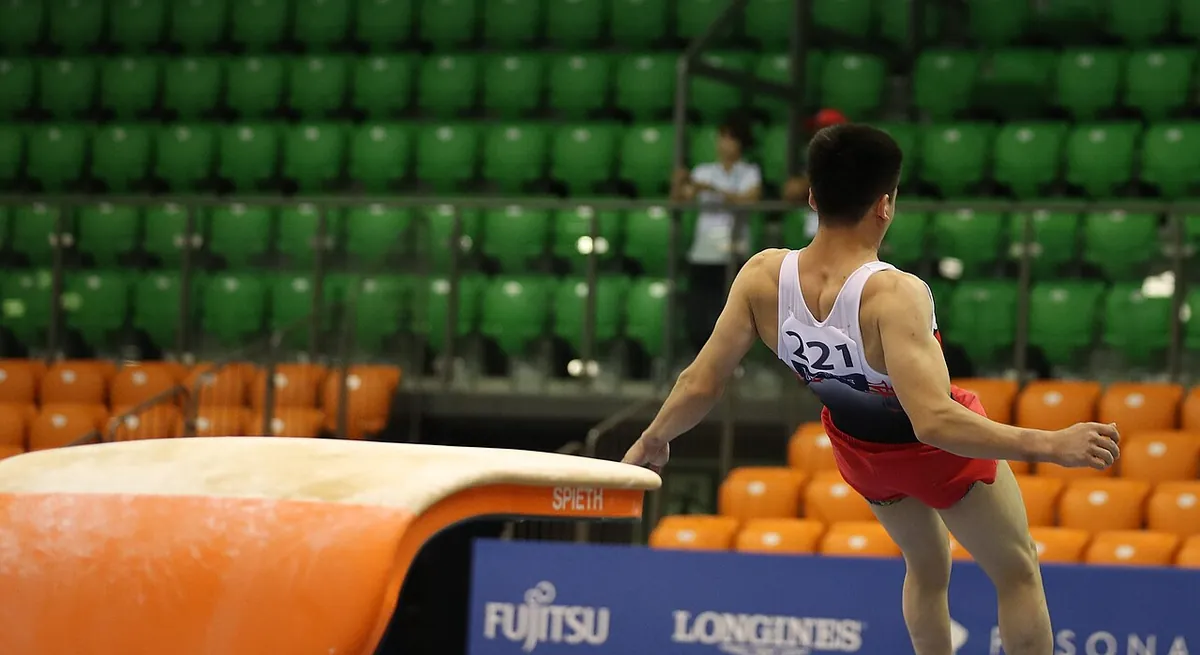
Vault is one of artistic gymnastics' most visibly explosive events. Much of the preparation happens before the gymnast reaches the apparatus, while the assessment also covers what follows it. Different entries and airborne elements carry different values. Establish the intended vault and competition requirements before comparing scores.
Before the main flight
The approach, board contact and body orientation influence the support phase and the flight that follows. The push must create sufficient time and height while directing the body into the intended movement. Watch for continuity rather than assuming that the fastest run produces the strongest vault. Speed needs to become usable, controlled flight.
A stable landing is only one component
Height, body position and completion of turns matter alongside the final steps. Some competition stages require particular numbers or combinations of vaults, so the published result must be read under that format. A cleaner landing on a lower-difficulty vault may score less, while substantial execution problems can erase the advantage of a harder attempt.
Do not let the final step hide the sequence
Replay the approach, board, support and flight separately, then watch the full movement again. A stuck landing does not automatically remove earlier faults, and a correction step does not make every preceding element worthless. Difficulty and execution together explain the score more clearly than a single image of the feet at the finish.