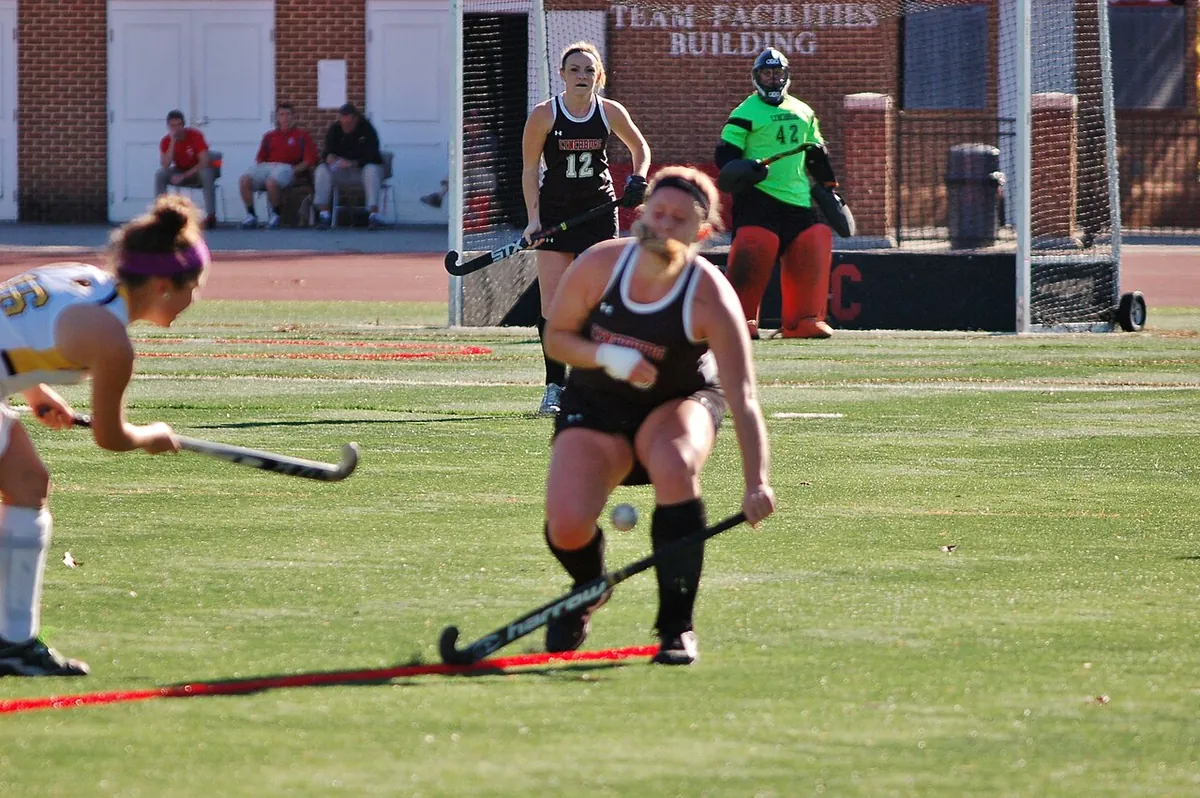
A field hockey carrier controls the ball close to the ground while reading defenders and teammates. Repeated changes of direction may shift an opponent's balance, but without a purposeful next action they can become extra touches. Evaluate a dribble by the passing or shooting conditions it creates rather than by appearance alone.
The body and stick create the change together
Stride, direction and stick movement can transfer the ball across the body and demand a defensive adjustment. A ball too far away becomes vulnerable; one held too close can restrict acceleration. Watch how the carrier keeps control within a protectable area while leaving room for a sudden movement.
Preserve awareness between touches
Looking at the ball can assist control but may hide a better passing route. Skilled carriers use the intervals between contacts to assess nearby positions. Once a second defender is attracted, releasing the ball may provide more benefit than trying to beat another opponent, particularly when a teammate already has space.
Teammates create an exit from the dribble
Width, forward support and crossing movements can provide choices beyond the first defender. Without those options, a successful individual action may lead straight into another crowded area. Follow the other attackers alongside the carrier to understand how personal technique becomes useful collective progress.