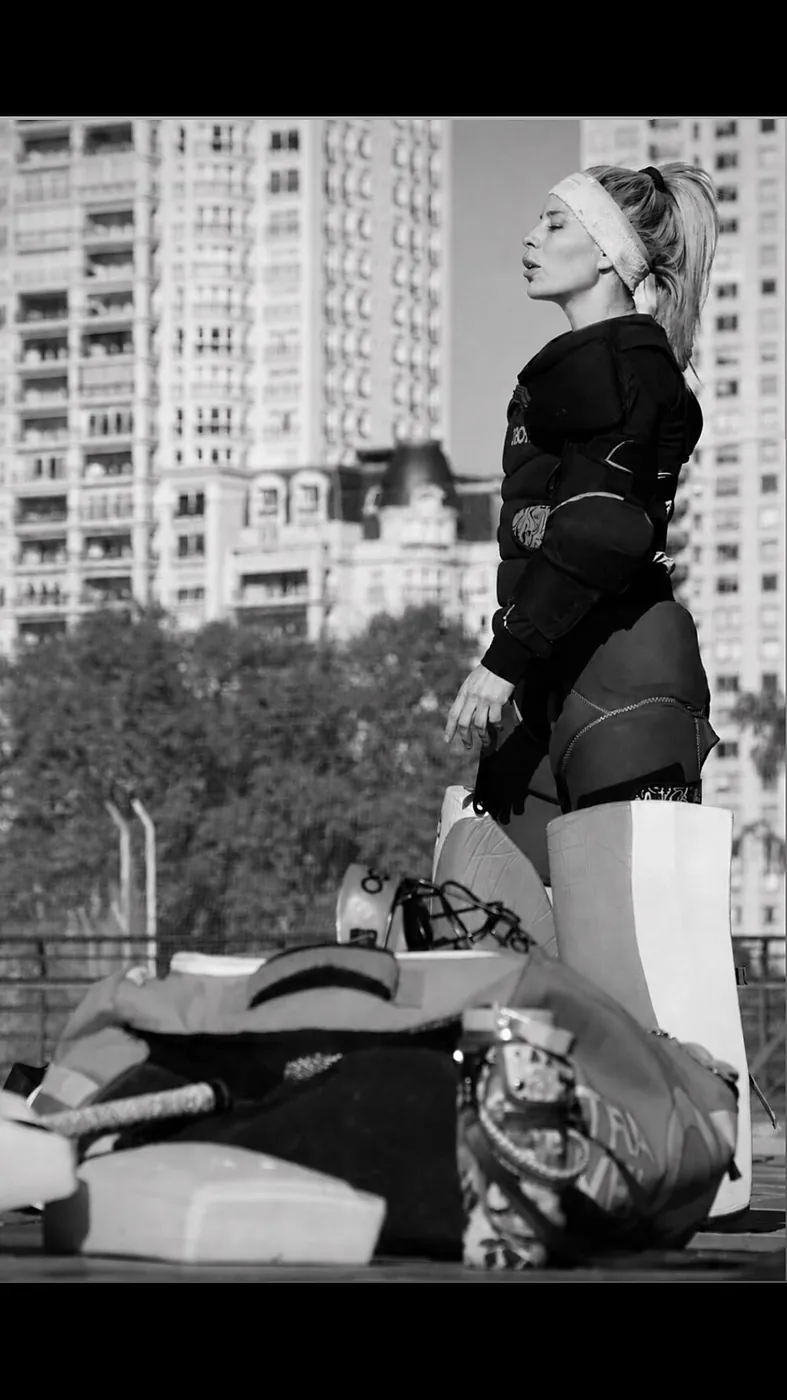
A field hockey goalkeeper wears substantial protection and has special permissions in defined situations and areas. Equipment does not replace judgement. Observe the position before a shot, communication with defenders and the location of the ball after the first save to understand the complete defensive responsibility.
The angle changes the area to cover
Different shooting positions require adjustments sideways and forwards. Advancing can reduce the visible target, while an excessive commitment may expose space behind. Judge more than the final reaction speed: review whether the goalkeeper was already balanced, appropriately positioned and able to see the ball before the attacker struck.
Close-range play requires a measured response
Passes and deflections within the circle can suddenly alter the expected path. Following only the original carrier can leave the goalkeeper poorly placed for the actual finish. Remaining balanced may be better than going down too soon. Watch when the goalkeeper closes actively and when waiting preserves more options.
The rebound determines whether danger continues
A saved shot that returns to an attacker may immediately require another intervention. Goalkeeper and defenders need to clear or control the dangerous area together. A spectacular first save is therefore not the same as a completed defensive sequence; the outcome remains uncertain until the following ball is made safe.