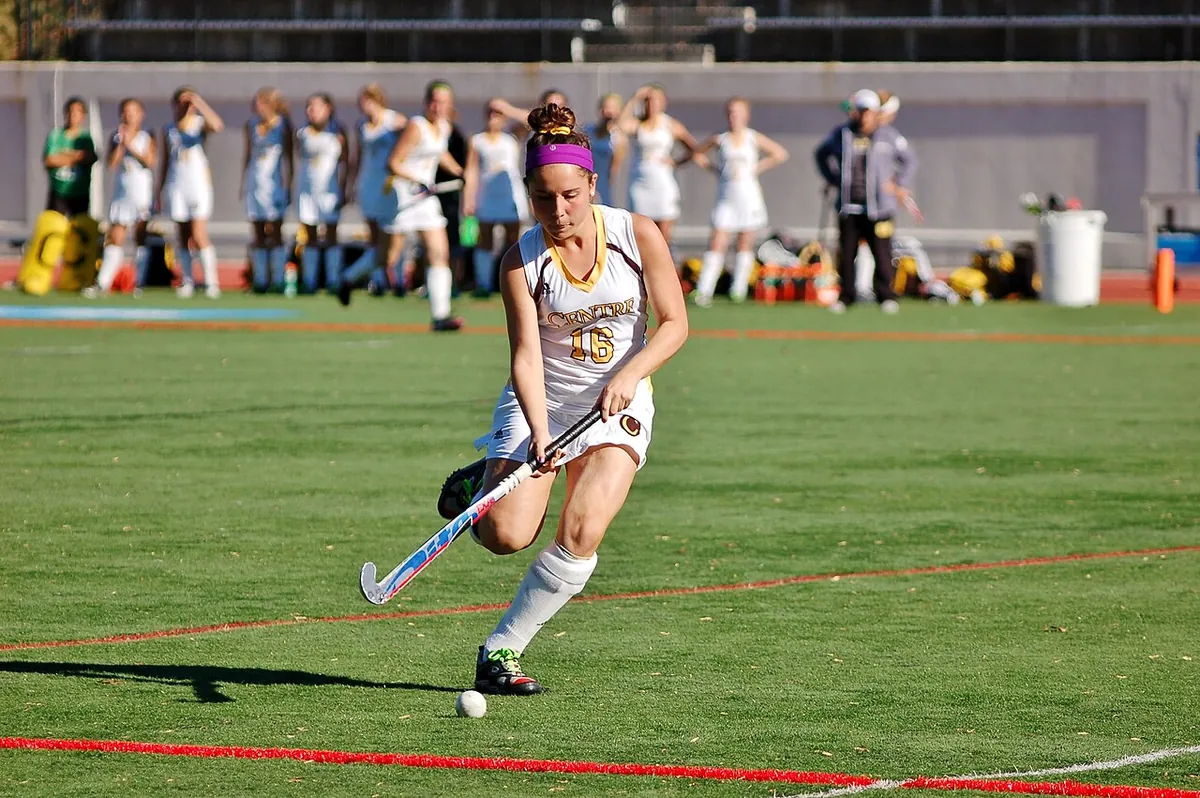
Some field hockey competitions use a shootout after a drawn match, according to the event's regulations. The familiar FIH procedure gives an attacker eight seconds from the prescribed starting position. This is distinct from a penalty stroke taken from a fixed spot, and the precise application and sequence belong to the competition rules.
The clock limits the attacking plan
The attacker needs to approach the scoring area and create an angle without waiting indefinitely for a perfect opening. A planned route is useful but must adapt to the goalkeeper. Follow the remaining time and the distance between the players to understand why an increasingly direct attempt may become necessary.
The goalkeeper tries to compress the space
Moving forwards and maintaining coverage can force the attacker to travel farther or shoot sooner. Losing balance too early may invite a change of direction. Both players are trying to make the other commit, so the contest concerns judgement and execution rather than a simple comparison of courage or running speed.
The procedure can alter the apparent result
Infringements, the expiry of time and other events lead to different outcomes under the shootout provisions. Some situations can require a retake or a penalty stroke. A ball eventually entering the goal is not sufficient evidence by itself; wait for the official decision and apply the event's procedure.