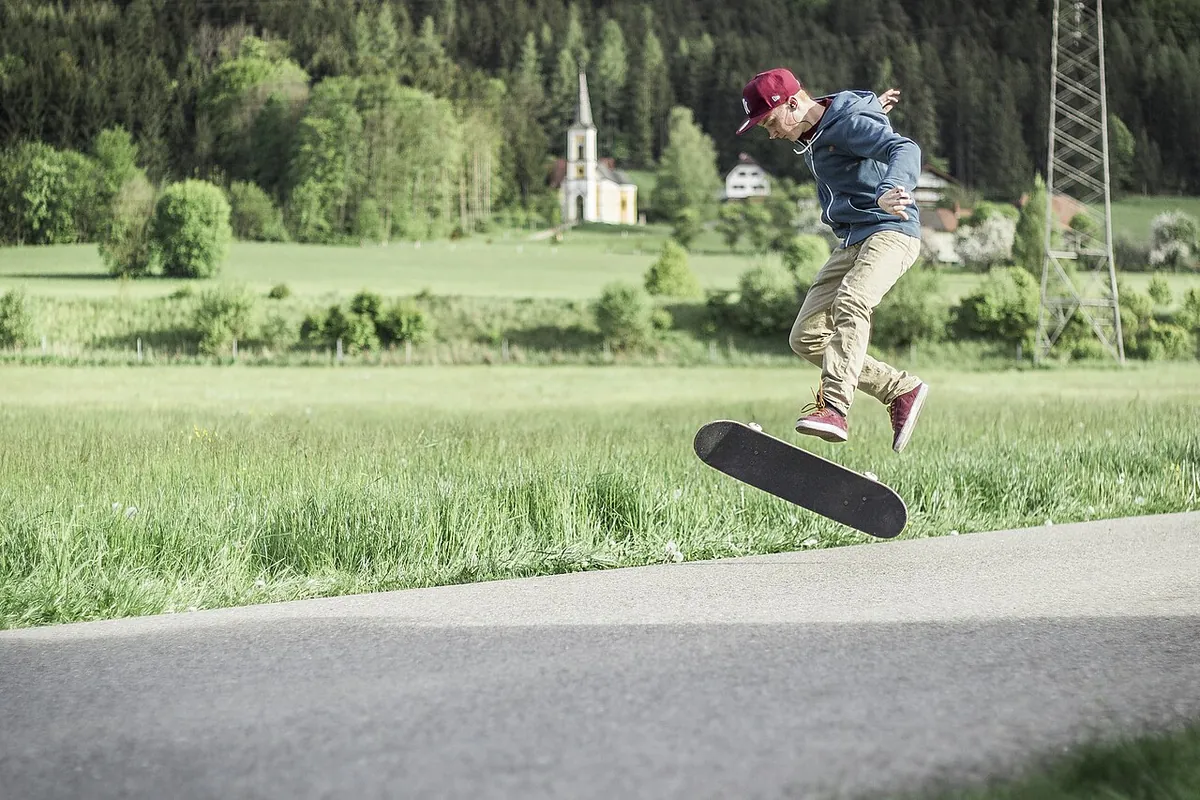
Street skaters often travel along rails or ledges in ways that look similar at first glance. The distinction between a grind and a slide begins with the part of the skateboard making contact. That is only the starting point: entry direction, stance and the method of leaving the obstacle create a much richer range of tricks.
Trucks or deck
A grind generally uses the trucks to contact the obstacle, while a slide uses a relevant part of the deck. Different contact points require different balance and board orientation. In slow motion, locate the contact first, then notice whether the board runs along the feature, across it or at an angle.
The entry and exit matter
Adding a flip, rotation or a different exit changes the overall requirements of an otherwise familiar contact movement. Obstacle height, length and slope also influence the task. A trick name therefore provides a category rather than a complete evaluation. Watch the full attempt and whether the rider controls both board and body throughout the contact.
Control continues on the ground
Leaving the rail or ledge requires the wheels to return to the ground in a usable direction. A misplaced landing, substantial speed loss or loss of balance can affect the quality of completion. Watching only the moment of travel along the feature misses the entry and landing, two stages that often decide whether the attempt succeeds.