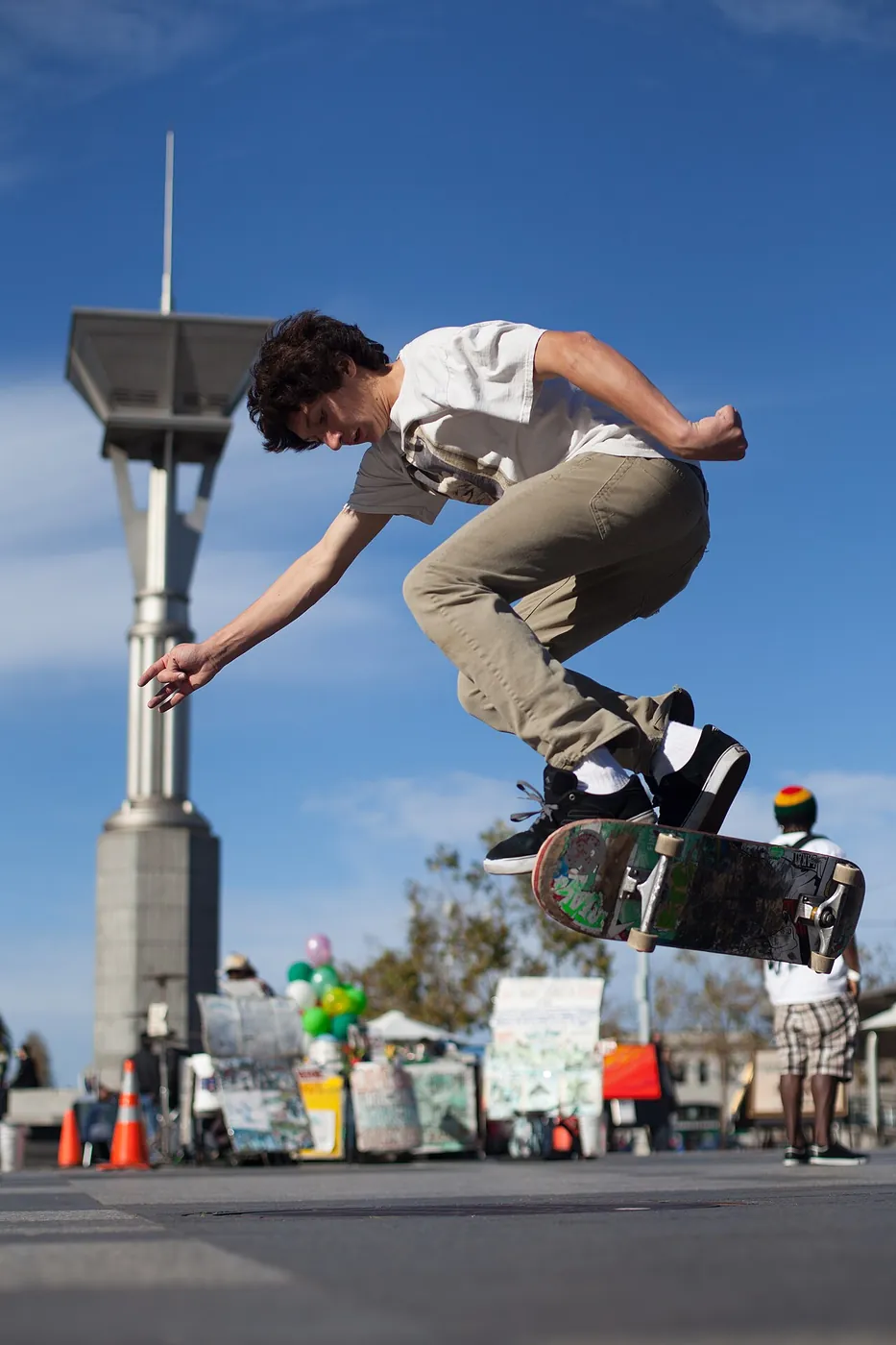
The ollie is a foundational skateboard jump in which coordinated foot and body movements bring the rider and board off the surface together. This guide explains what a spectator is seeing rather than replacing instruction in a suitable setting. Different obstacles and heights change both the technical demand and the conditions in which the movement is attempted.
Rider and board leave together
The rear foot activates the tail while the front foot helps guide the board, with the body's jump timed to their movement. The brief airborne image hides a closely coordinated sequence. The feet then need to regain stable control of the deck so the rider can land and continue along the intended path.
A foundation for other tricks
Many flips and obstacle tricks build on related take-off mechanics while adding board rotation, body rotation or contact with a feature. Recognising that foundation helps distinguish what is rotating and around which direction. It prevents every airborne movement from being described as the same generic jump, while giving unfamiliar trick names a visual basis.
The landing completes the action
Height is only part of the performance. Foot placement, balance and the speed of the roll-away show whether control continues beyond the air. A foot touching the ground or a substantial recovery movement can affect completion. Follow the attempt from approach to roll-away rather than judging it through a single airborne frame.