Park skateboarding is compelling not only for individual aerial manoeuvres but for the organisation of an entire run. The rider needs to visit different features, preserve momentum and make one action lead into the next. A line is therefore an executable plan shaped by the course and the athlete, rather than a list of the hardest available tricks.
Use the transitions
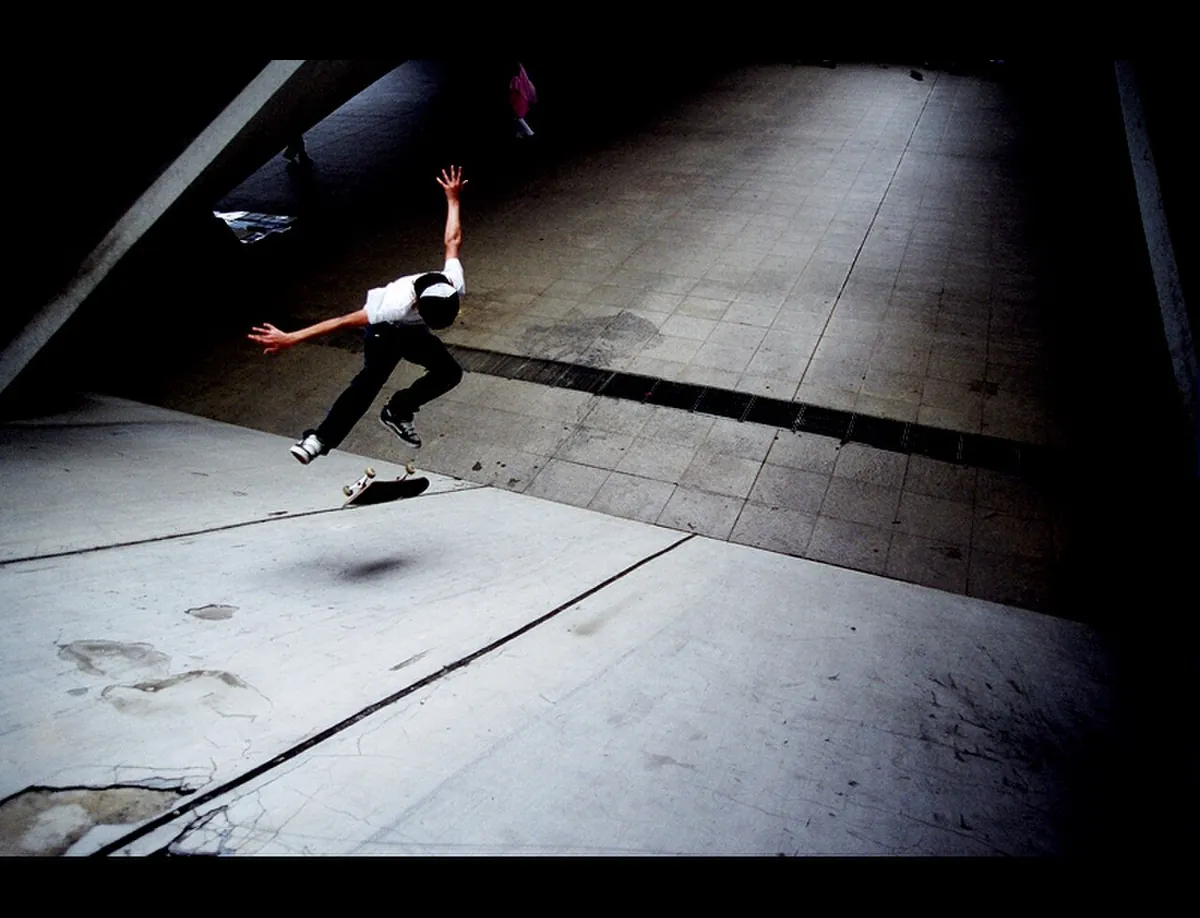
Riders coordinate body movements with the curved surface to sustain or increase speed instead of pushing with a foot at every opportunity. Approach angle and timing affect the height available at the next take-off. Watch where the rider compresses and extends, and how those movements relate to the shape beneath the wheels.
Land for what follows
Even a successfully landed trick can weaken the run if the exit direction makes the next section difficult to reach. Effective construction considers the landing before choosing the take-off. Tracking the rider's path explains why a manoeuvre that is not the highest or most conspicuous can still improve the run's continuity.
Show understanding of the course
Repeating similar actions in one area communicates something different from using several features with varied techniques. The exact evaluation follows the event's judging criteria, but a complete run asks for difficulty, control and variation to work together. Watching the full line before revisiting individual tricks gives a better view of the rider's understanding of the setting.