Olympic skateboarding includes street and park. Both value difficulty and quality of execution, but their course structures and technical organisation differ. Street draws on urban obstacles, while park uses connected transitions to support continuous movement. This guide uses the World Skate competition framework; time limits, rounds and score selection depend on the event's rules.
Street works around obstacles
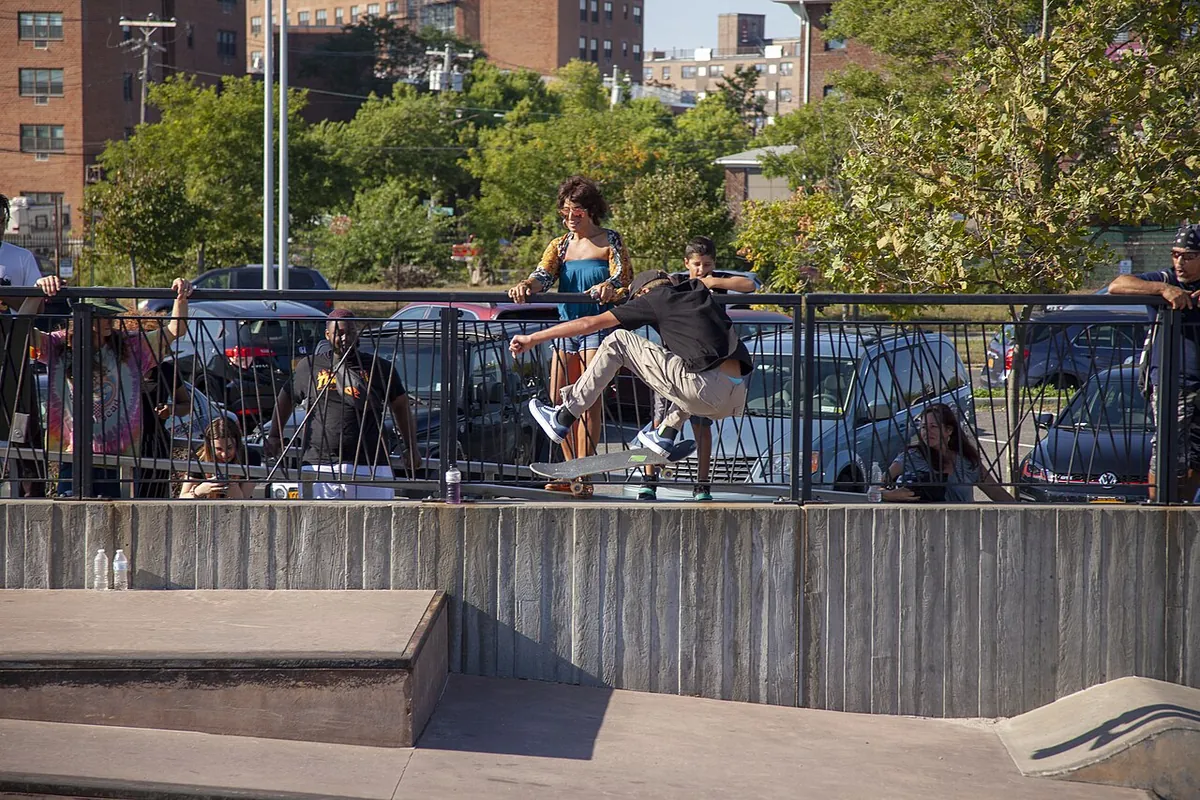
Stairs, rails, ledges and slopes provide the setting for jumps, flips, rotations and sliding or grinding contact. The height, length and approach angle of an obstacle influence the demands of a trick. A shared trick name therefore does not make every execution equivalent: the setting and the complete approach-to-landing sequence still matter.
Park connects the terrain
Park courses combine surfaces with different heights and curves. Riders maintain speed through movement and line choice, preparing enough height and direction for the next manoeuvre. Watch the whole route, including how many areas are used and whether a landing preserves the momentum required to continue without breaking the flow.
Similar principles, distinct formats
Both disciplines assess execution and difficulty, but their arrangements for runs, individual tricks and scoring are not interchangeable. A street best-trick attempt cannot simply be compared with an entire park run. Identify the discipline and the way that round selects its scores before interpreting why the athlete chooses a particular sequence.