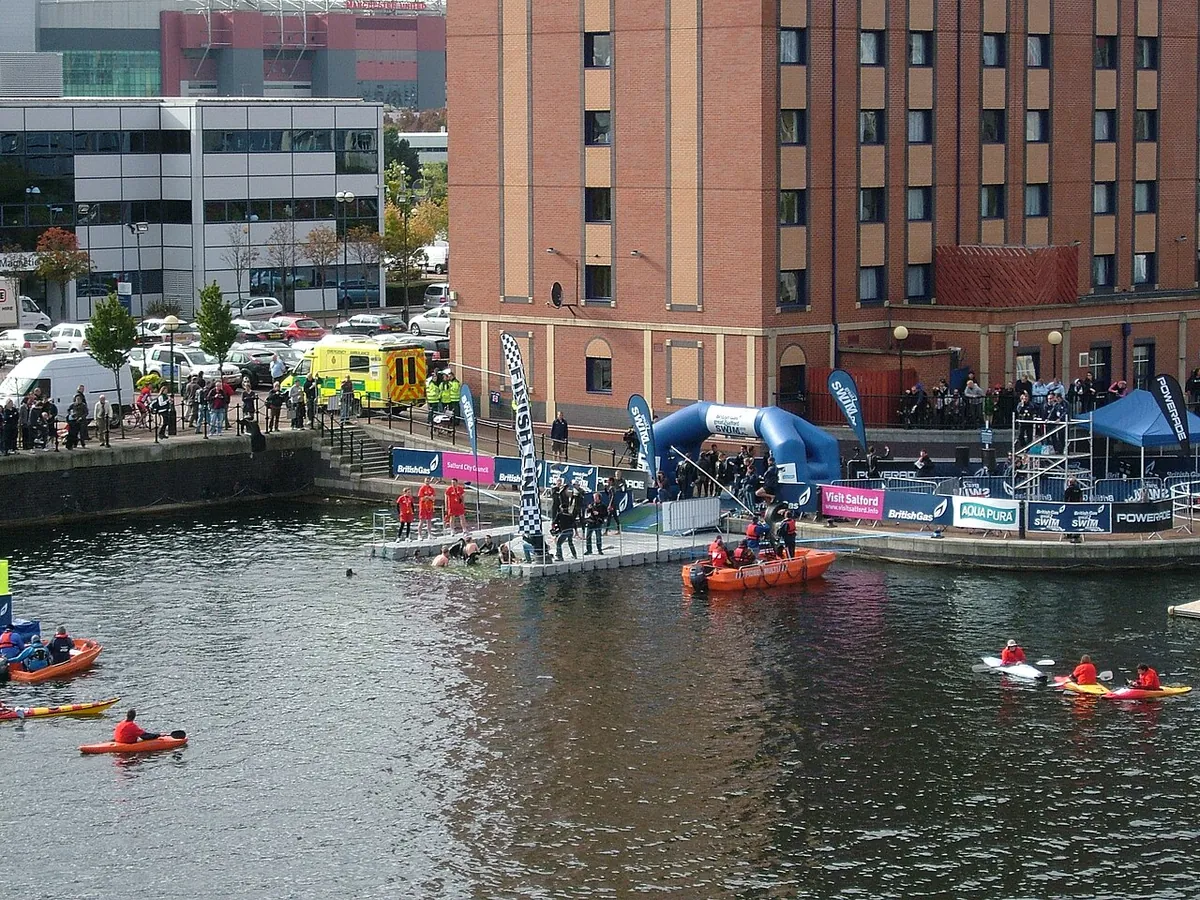
Open water swimming takes place on approved courses outside the conventional pool format. It is not simply a distance pool race moved outdoors. Competitors must recognise the route, negotiate turning points and select positions within a group. Swimming ability remains fundamental, but navigation and environmental conditions influence how that ability becomes a result.
Route choice within the group
Without a continuous pool-floor line, swimmers must check their direction against course markers. A wider or inaccurate route can increase the distance travelled. Group swimming also creates congestion around turns. Watch whether leaders take a direct route or a broader arc, then compare the group's shape before and after the turning point.
Conditions and event organisation
Water temperature, water quality, weather and rescue arrangements form part of event planning. Feeding arrangements also differ from pool competition, and swimmers may receive drinks at designated locations. Professional race tactics should not be treated as casual outdoor-swimming advice: the supervision, course management and support conditions are specific to the organised event.
Read the course alongside the stroke
A small deviation can accumulate into extra swimming distance, while group position affects the available route. A television image does not always show the true course clearly. Use the course map when interpreting movement across the water. Pool speed remains valuable, but open water performance also depends on sighting, route judgement and adapting to the actual surroundings.