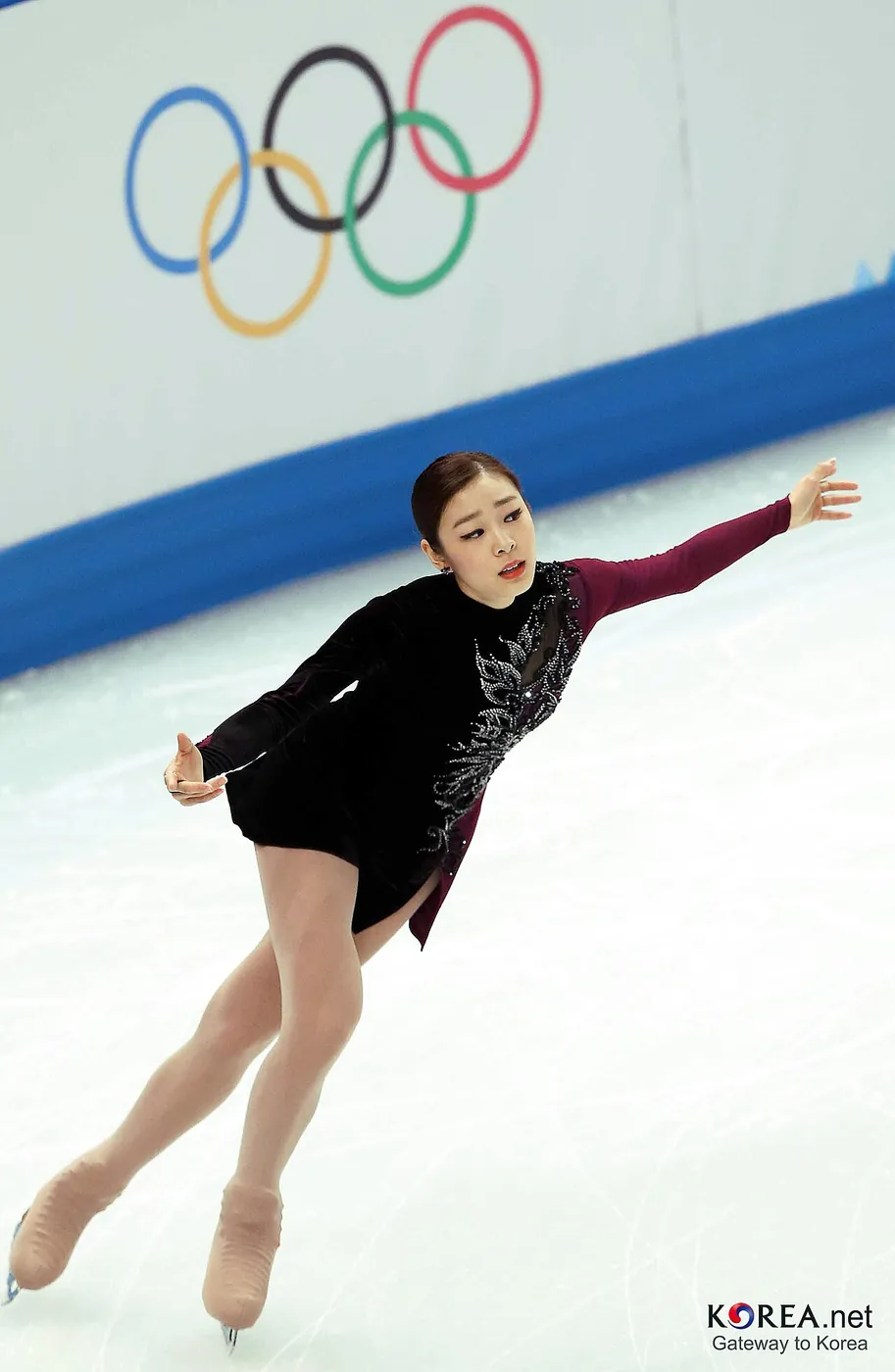
South Korean skater Yuna Kim is known for her women's singles achievements and distinctive performances. Her programmes offer a useful starting point for watching figure skating as a whole. Elements must be executed accurately, but speed, posture and musical organisation between them also determine continuity. A complete view therefore connects each technical moment to the structure surrounding it.
Vancouver and Sochi
Kim won women's singles gold at Vancouver 2010 and silver at Sochi 2014. The Vancouver result was South Korea's first Olympic figure skating medal. Naming the event and year preserves that historical context and avoids confusing scores produced under different seasonal requirements or versions of the judging framework.
From take-off to exit
When watching her jumps, first observe the speed on the approach, then the stability of the landing curve. Quality involves more than the number of rotations: take-off, airborne position, landing and continuation all matter. A clean element allows the programme to move forward without an obvious pause to recover balance or rebuild momentum.
More than a list of elements
Musical accents, placement of elements and the path across the ice combine to form a programme. Isolated jump clips can hide the athlete's management of energy and expression over the full performance. Watch an entire short programme or free skate, then consult the official score sheet to separate technical evaluation from programme-level assessment.