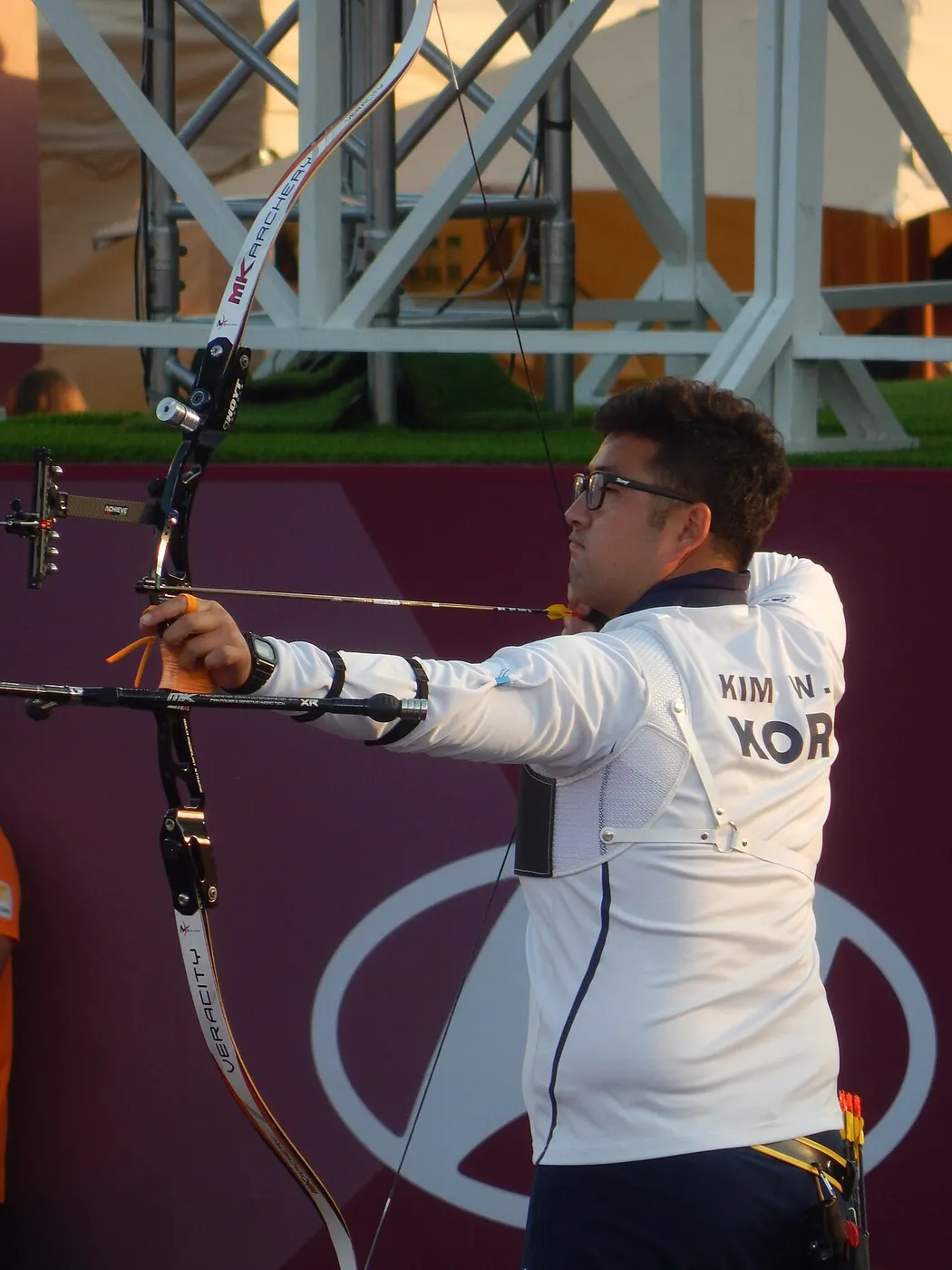
In a recurve match using sets, arrow totals determine the result of each set rather than simply accumulating into one final score. This makes performance at particular moments important. The explanation here follows common World Archery individual recurve matchplay; team formats use different set-point targets and should not be assumed to have identical conditions.
Compare three arrows first
In a typical individual set, each archer shoots three arrows and their totals are compared. The winner of that set receives two set points; a tied set gives each athlete one. The next set starts a fresh comparison, so winning one set by a large arrow-score margin does not create extra set points.
Reach the match target
An individual recurve match commonly goes to the first athlete to reach six set points. A tied match after the prescribed sets proceeds under the shoot-off rules. An athlete can finish with a larger aggregate arrow score yet lose the match if the points were distributed unfavourably across the individual sets.
Read the three scoreboard layers
A broadcast can display single-arrow values, the running total within a set and the accumulated set points. Each answers a different question. Start with the set score, then count the arrows remaining in the current set. That shows what is needed to win or tie it and explains why the same arrow value can have very different consequences.