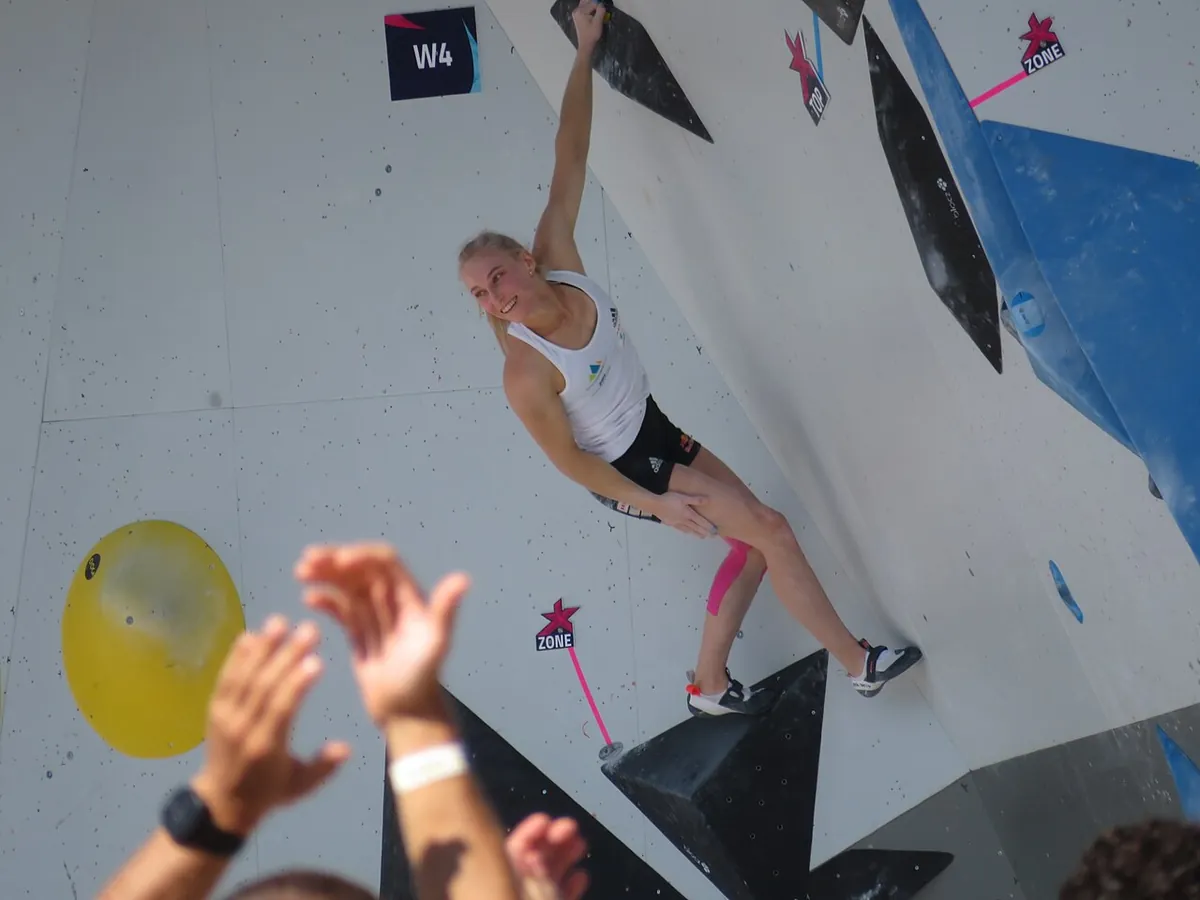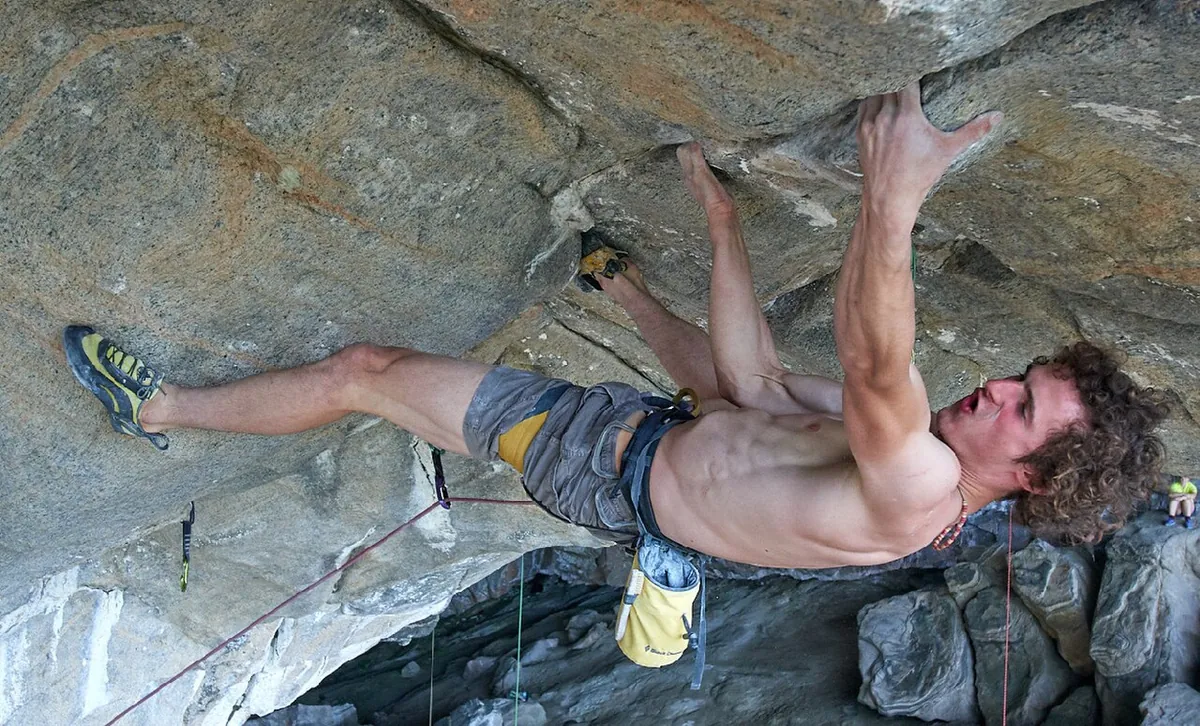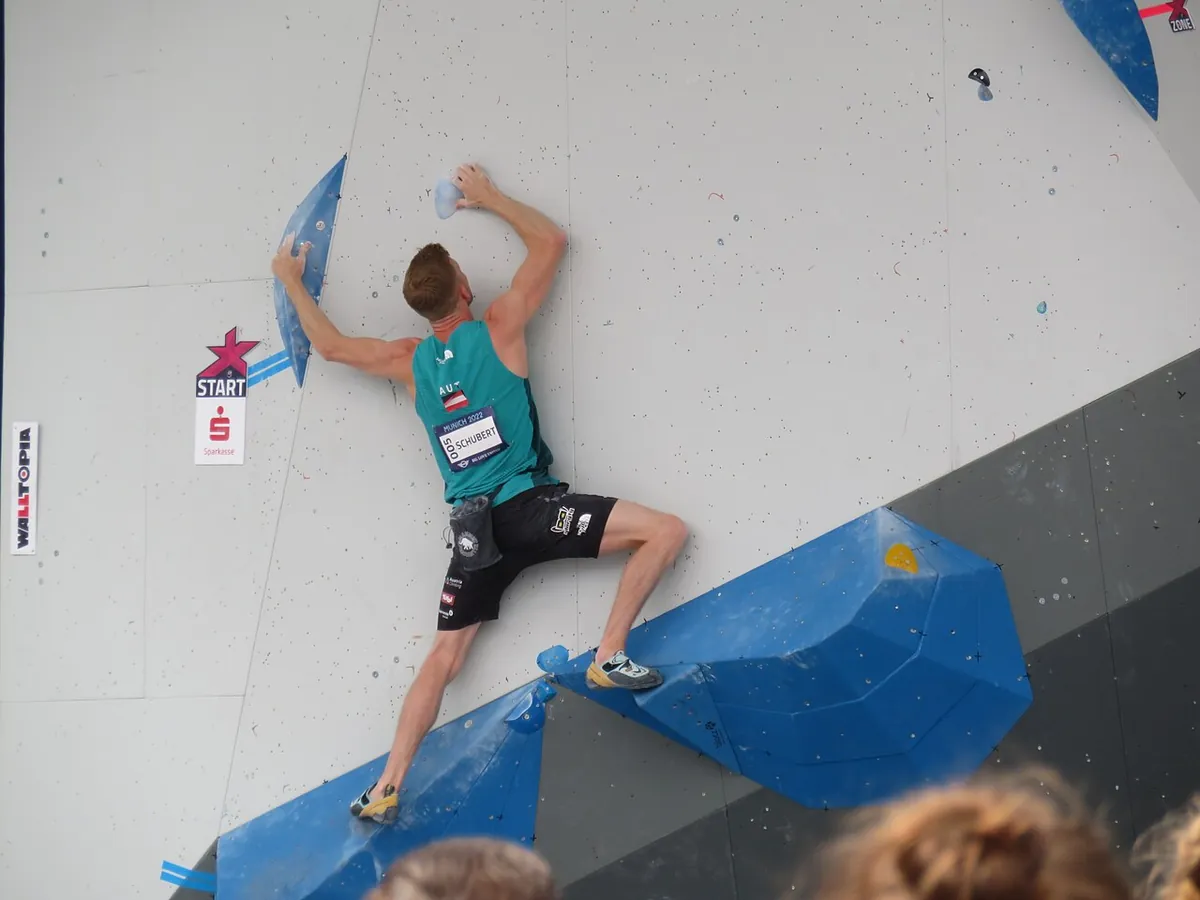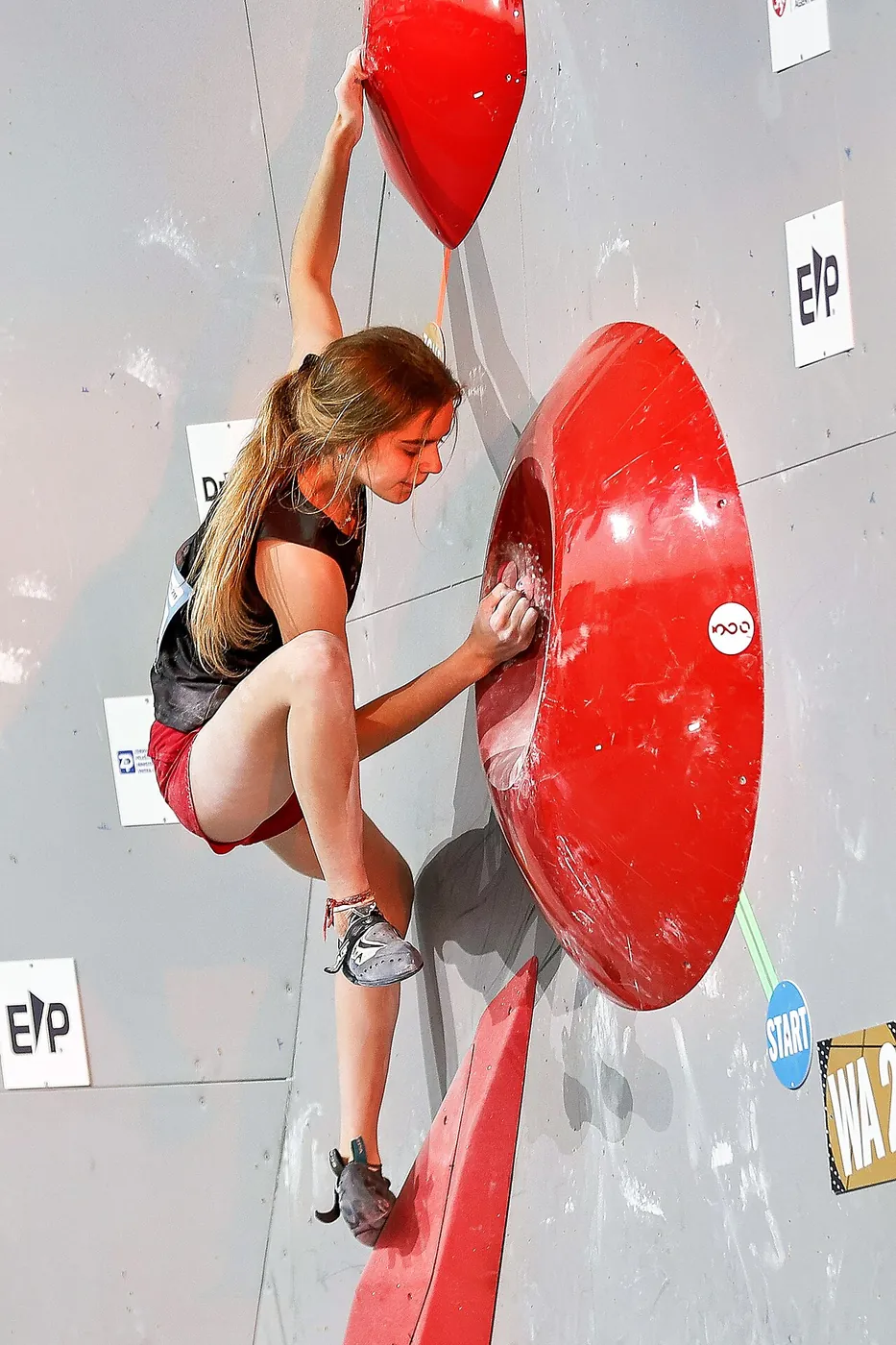
When climbers gesture, turn their bodies or study a section of wall, they are doing more than imagining an ascent. They are estimating grip direction, hand and foot order and the positions needed to connect them. Route reading turns visual information into a practical plan, reducing uncertainty before an attempt without claiming to remove it entirely.
Direction matters as much as size
The same hold can offer very different support depending on the direction of force. Athletes inspect usable surfaces, spacing and wall angle to infer where the body should go. Large volumes may also provide important support. The most conspicuous handholds are therefore only part of the route's available movement information.
Each position must lead somewhere
Completing one movement is not enough if it leaves the body unable to continue. Reading a sequence includes checking crossed hands, restricted hip positions and future footholds. Ground-level gestures help test these relationships. Compare the athlete's apparent plan with the actual attempt to see where the wall demands a revised solution.
Feedback updates the plan
Friction, reach and the timing of a dynamic move cannot always be judged from below. Boulder allows information from repeated attempts to reshape the solution, while lead requires more immediate adaptation during a continuous ascent. Observation and isolation procedures also vary by format. Route reading supplies a starting framework rather than a guaranteed answer.