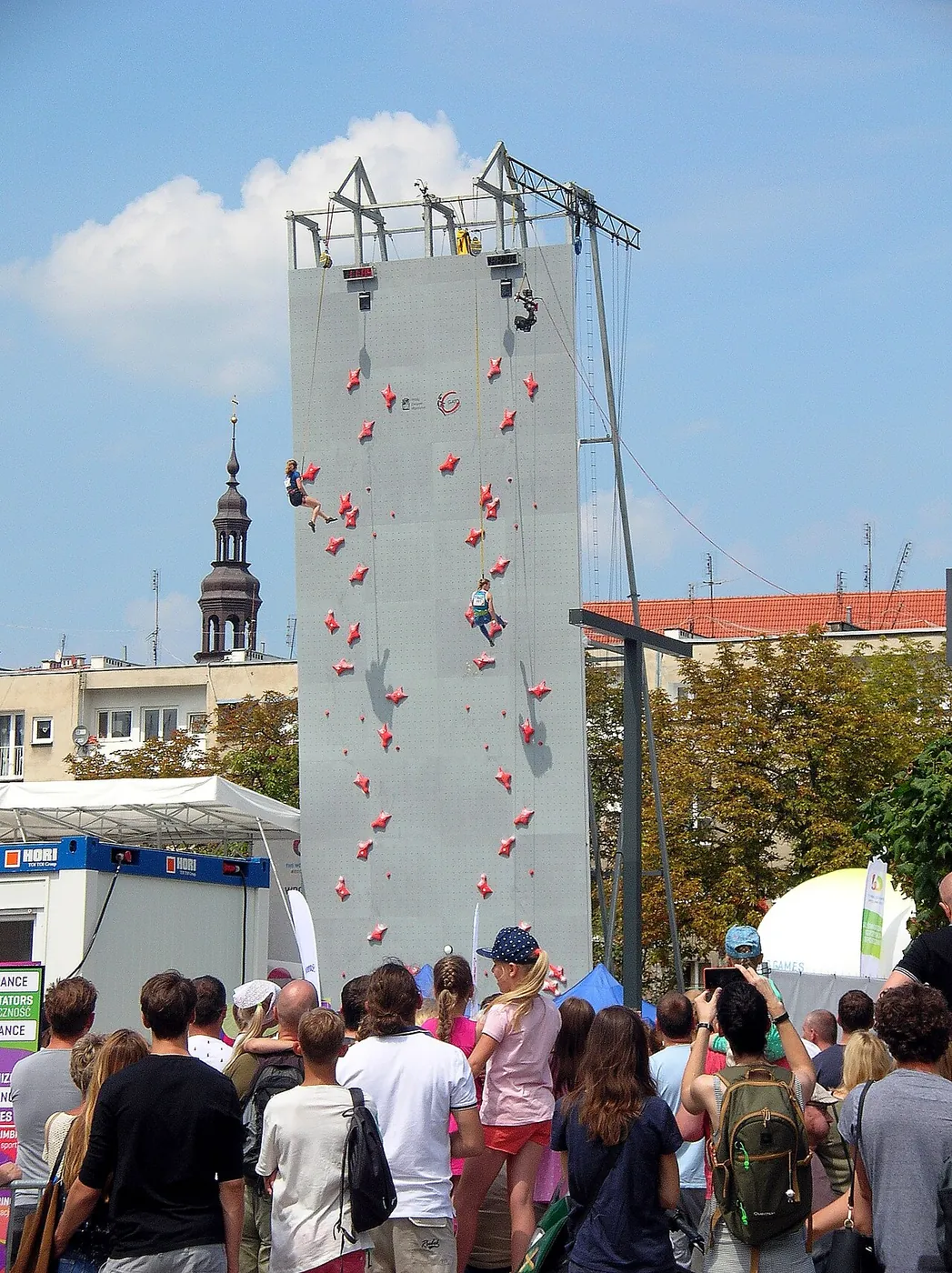
Speed climbing uses a standardised 15-metre competition route to measure how quickly an athlete can reach the top. The fixed layout creates a basis for comparing performances and makes precision central. Starting procedures, timing and the finish are governed by rules, while the exact progression through rounds should be checked against the event regulations.
One route, individual sequences
An identical wall does not mean every climber uses an identical movement pattern. Height, reach and physical strengths affect hand and foot combinations and rhythm. Training creates a high level of familiarity, but competition still requires accurate contacts. A small deviation can force the following movement away from its intended timing.
Start and finish both count
Leaving the start quickly is useful only within the starting rules. An infringement cannot be repaired by a faster climb afterwards. At the top, the athlete must also activate the finish correctly. Watch the recorded result rather than deciding the winner from which head or outstretched arm first appears close to the upper wall.
Head-to-head pressure
A qualification performance and an elimination race can ask different tactical questions. One centres on establishing a valid time; the other requires winning that particular contest. Athletes balance maximum speed with the risk of error. A strong climber's elimination after a slip reflects the single-race format rather than cancelling the technical ability demonstrated across a longer career.