Pair skating and ice dance both involve two athletes performing together, but they use different technical structures and judging priorities. Describing ice dance as pairs without jumps overlooks its independent movement language. Within the ISU framework, the clearest introduction is to identify what each discipline asks the partnership to perform and how those elements are connected.
Pair-skating elements
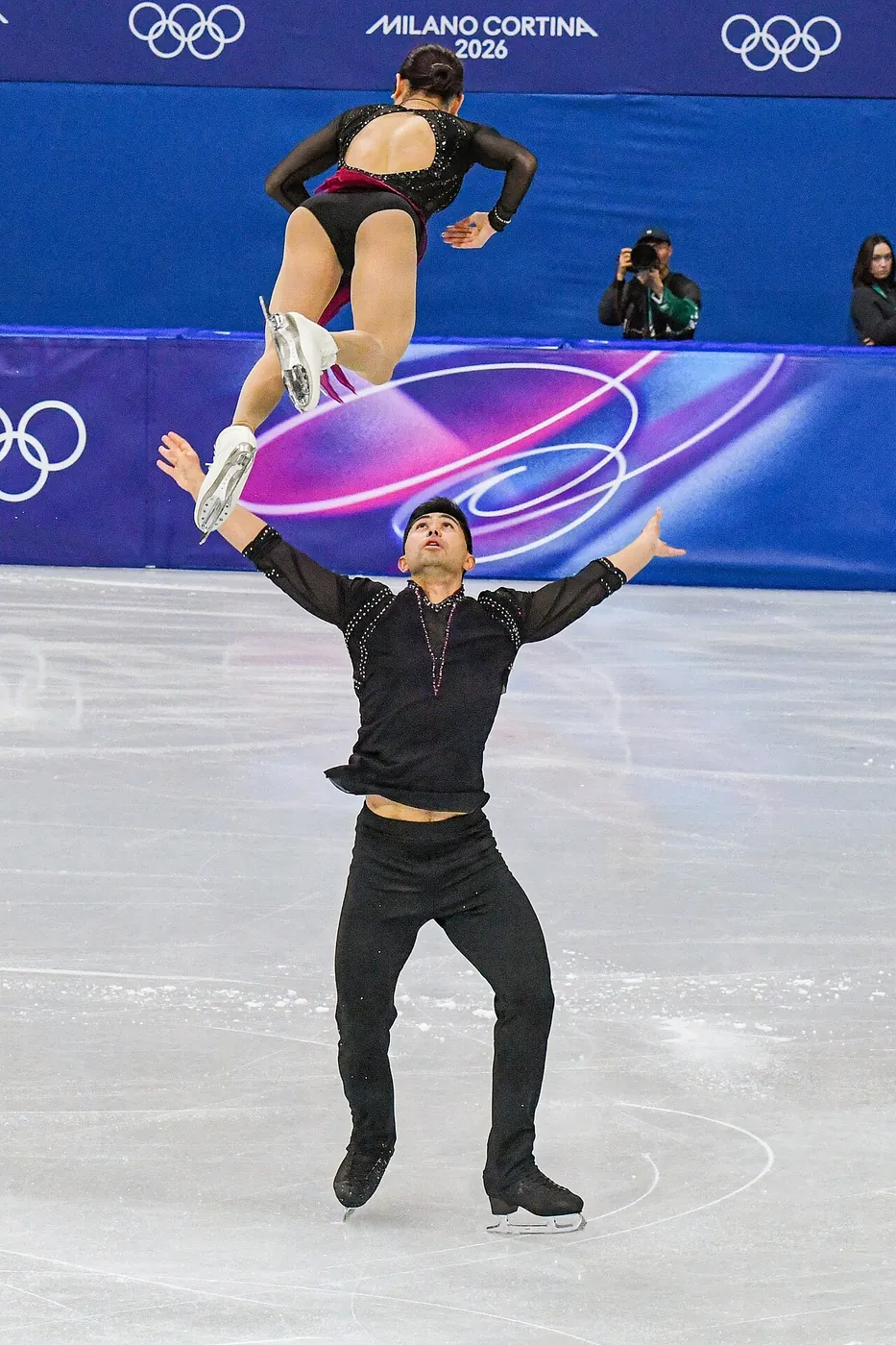
Pairs include side-by-side jumps, throw jumps, twist lifts, pair spins and other coordinated elements. A throw jump and a twist are different technical structures rather than interchangeable airborne moments. Watch who provides the take-off or support, who lands and how the partners maintain timing when they are skating independently alongside one another.
Ice dance has its own vocabulary
Ice dance places particular emphasis on steps, rhythm, partnership and dance lifts within its own restrictions. Twizzles, complex holds and changes of speed are useful viewing points. A dance lift should not be compared with a pair lift solely by height; both need to be understood through the requirements of their respective disciplines.
Coordination is continuous
Partners can have different heights, stride lengths and physical strengths while producing a shared rhythm. Look for consistent spacing through turns, smooth changes of hold and transitions that preserve speed. Effective partnerships often make difficult adjustments almost invisible, which is precisely why they reward attention beyond the most conspicuous highlight.