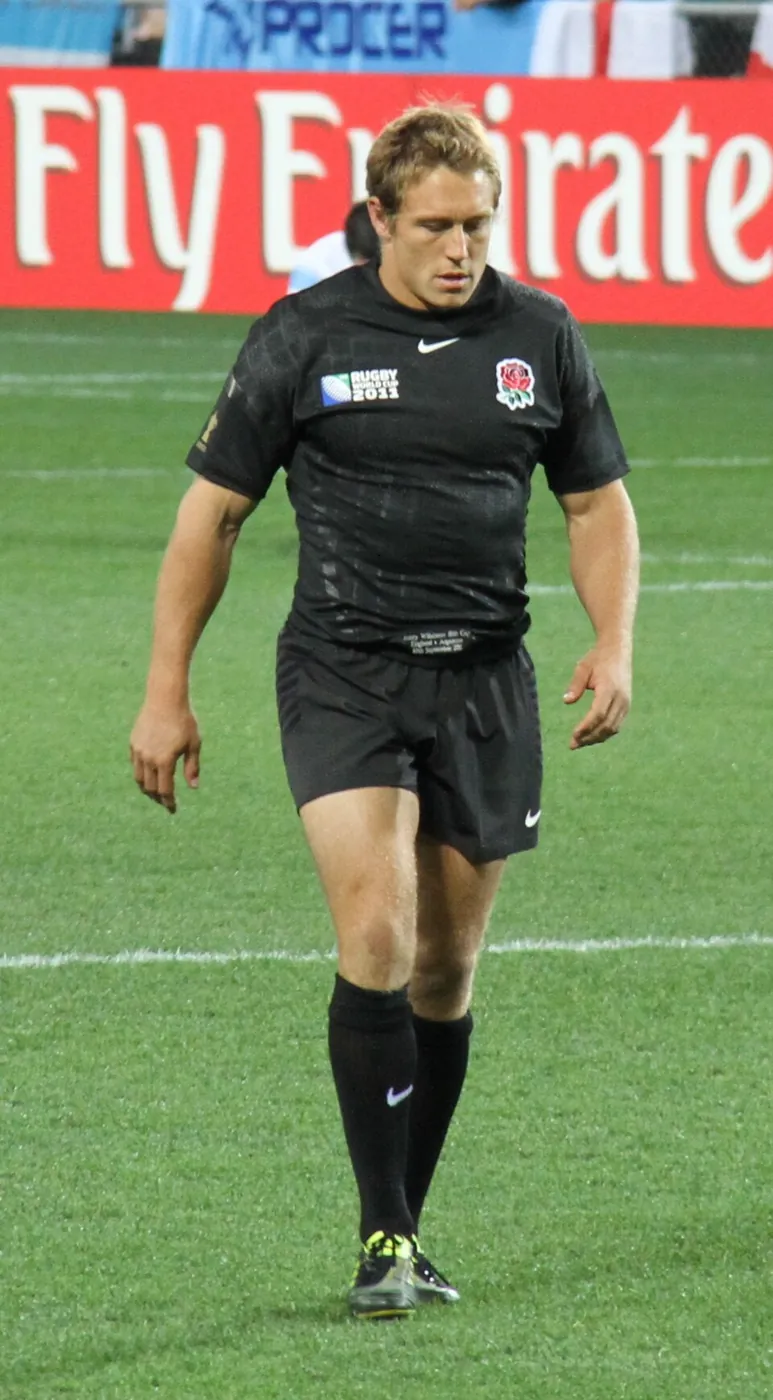
Jonny Wilkinson's drop goal in extra time helped England defeat Australia in the 2003 Rugby World Cup final. He later entered the World Rugby Hall of Fame. That decisive moment is part of a longer process: teammates had to retain the ball and establish a position from which the kick could be attempted.
A playmaker chooses between different outcomes
A fly-half frequently weighs a pass, a carry and a kick. Each changes possession or field position differently, so distance alone cannot measure the quality of a kick. Watch how Wilkinson's choices respond to the defensive alignment, supporting players and time available, rather than assuming one option is always more adventurous.
A drop goal needs a workable position
The ball must bounce before being kicked, and the action takes place while defenders can close the space. Angle, distance and balance affect the challenge. The famous final kick was therefore not detached from the preceding attack: the team created conditions in which the individual execution became possible.
Replay the phases before the highlight
Begin several passages before the score and follow how possession is protected, the position becomes more central and support is organised. This preserves the contribution of teammates and provides a better explanation than the final kick alone. The memory contains both a distinctive individual action and the collective preparation that supported it.