The word rugby can refer to different codes, and rugby union, rugby league and American football do not share one set of rules. This introduction concerns World Rugby's fifteen-a-side union framework. Players can carry the ball forwards and kick for territory, but a hand pass must not be thrown forwards towards the opponents' goal line.
Support develops behind the carrier
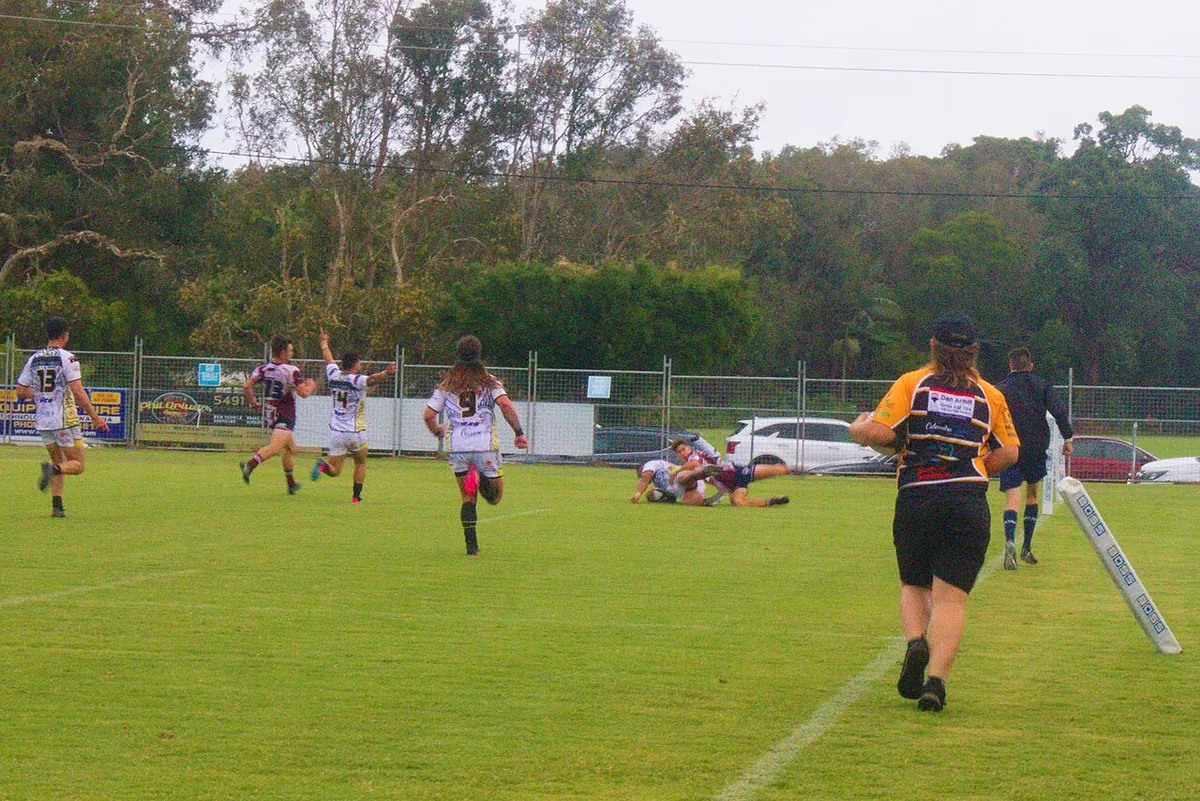
The passing restriction encourages teammates to provide receiving options behind or alongside the carrier. This creates the familiar staggered attacking shape: one player engages defenders while a supporting receiver prepares to continue. Watch the distances between the carrier and those supporting players to understand why some passes remain available and others disappear.
Contact follows defined restrictions
Defenders may tackle a ballcarrier within the rules, but dangerous contact and illegal actions are penalised. Once a tackle brings players to ground, responsibilities concerning release, getting up and entering the contest apply. A crowded contact area is therefore more than a strength contest; position and the state of the ball matter.
Progress often develops across several phases
After one carry is stopped, support can make the ball available again for another attack. The defence must reorganise at the same time. Start by tracing the ball between successive contact points to see how support, distribution and recovery turn individual carries into an extended passage of territorial pressure.