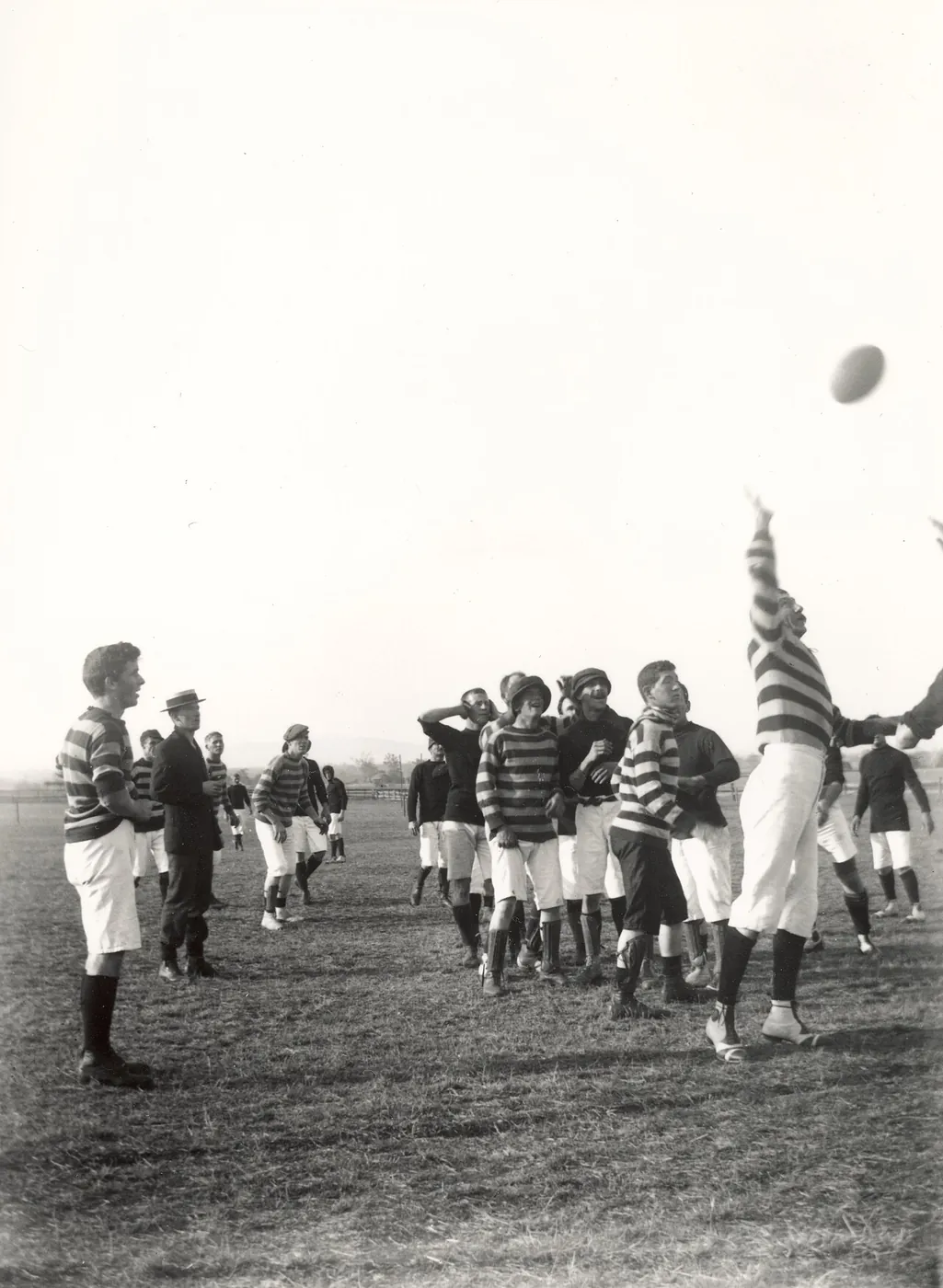
When the ball goes into touch in rugby union, a lineout is a common restart, with the throw and location determined by the preceding circumstances. Players assemble near the touchline to contest possession. This guide describes the viewing structure; the full rules govern the exact numbers, spacing and procedures.
The throw and jump must agree
The thrower may target different parts of the line, while the receiver and supporting players coordinate timing. Movement can disguise the intended destination, but accuracy remains essential. Watch the preparation before the ball leaves the hands, then compare the flight with the point and moment at which the jumper arrives.
Winning the ball opens several choices
The team may quickly pass towards the backs or form a lawful collective drive. These routes pose different defensive problems: one tests wider coverage, the other nearby organisation. A lineout therefore contests more than one catch. The attacking side is also arranging the shape of the next few seconds.
Understand why the ball went into touch
A kick into touch may deliberately seek territory or relieve pressure, but its value depends on the circumstances and applicable rules. Neither every touchline exit nor every long kick should receive the same interpretation. Review the preceding action to identify what area or restart the team was trying to obtain.