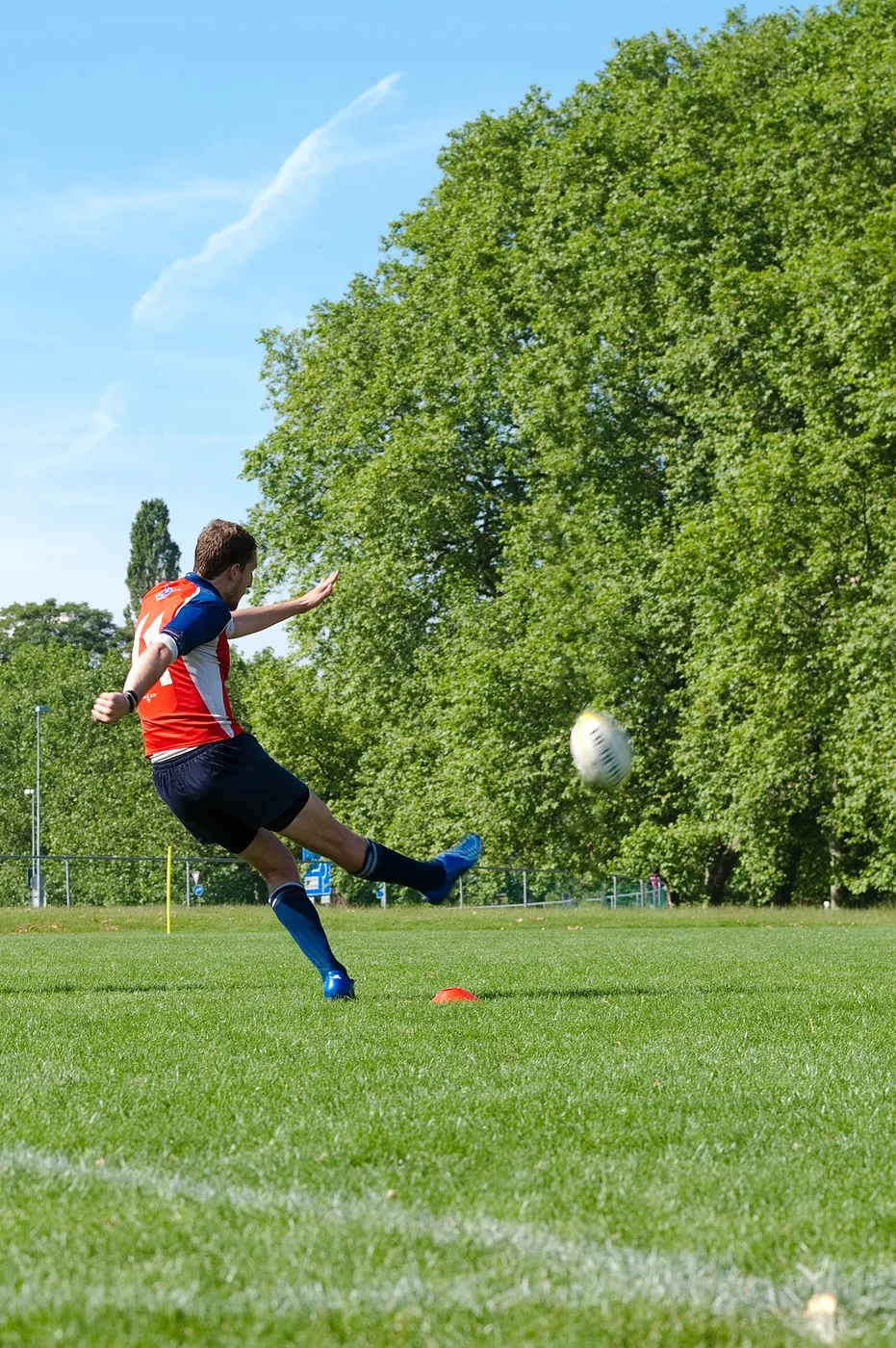
Rugby union provides several scoring routes: a try, the conversion that follows it, a penalty goal and a drop goal. Knowing their values helps explain more than the scoreboard. It shows why a team in one position may continue carrying while another chooses to seek points by kicking at goal.
A try requires a lawful grounding
An ordinary try is worth five points. The ball must be grounded legally in the opposition in-goal area; carrying it across the line alone is insufficient. Control and the place of contact can affect the decision. Watch the final relationship between ball and ground to understand why an official may need confirmation.
The grounding location affects the conversion
After a try, a successful conversion adds two points, with its position related to where the try was scored. If it remains safe, moving towards a more central grounding can improve the subsequent angle. That potential benefit must not override the immediate need to secure the try without losing possession.
Kicking can change the strategic calculation
A successful penalty goal or drop goal normally scores three points. At a penalty, distance, score and time influence whether a team seeks immediate points or another advantage. A drop goal occurs in open play. These values help explain why a late kick can be preferable to extending a series of carries.