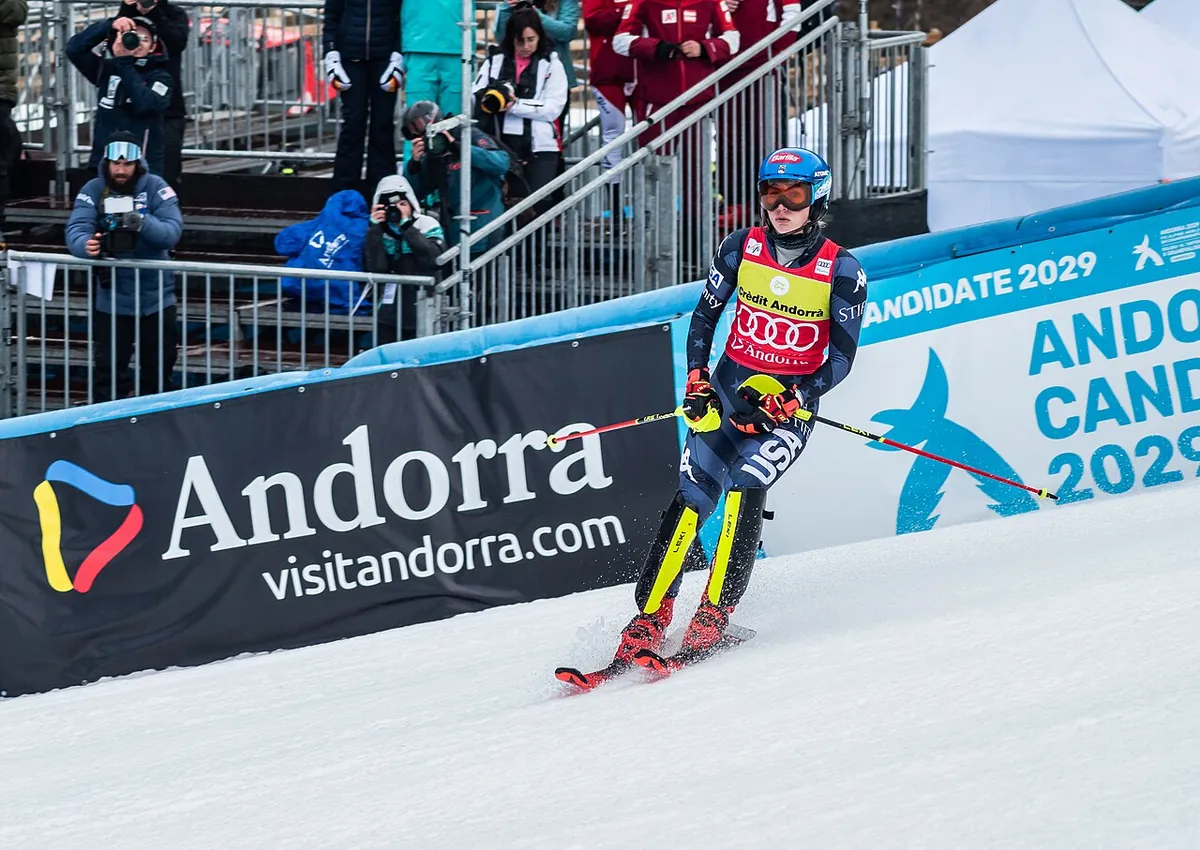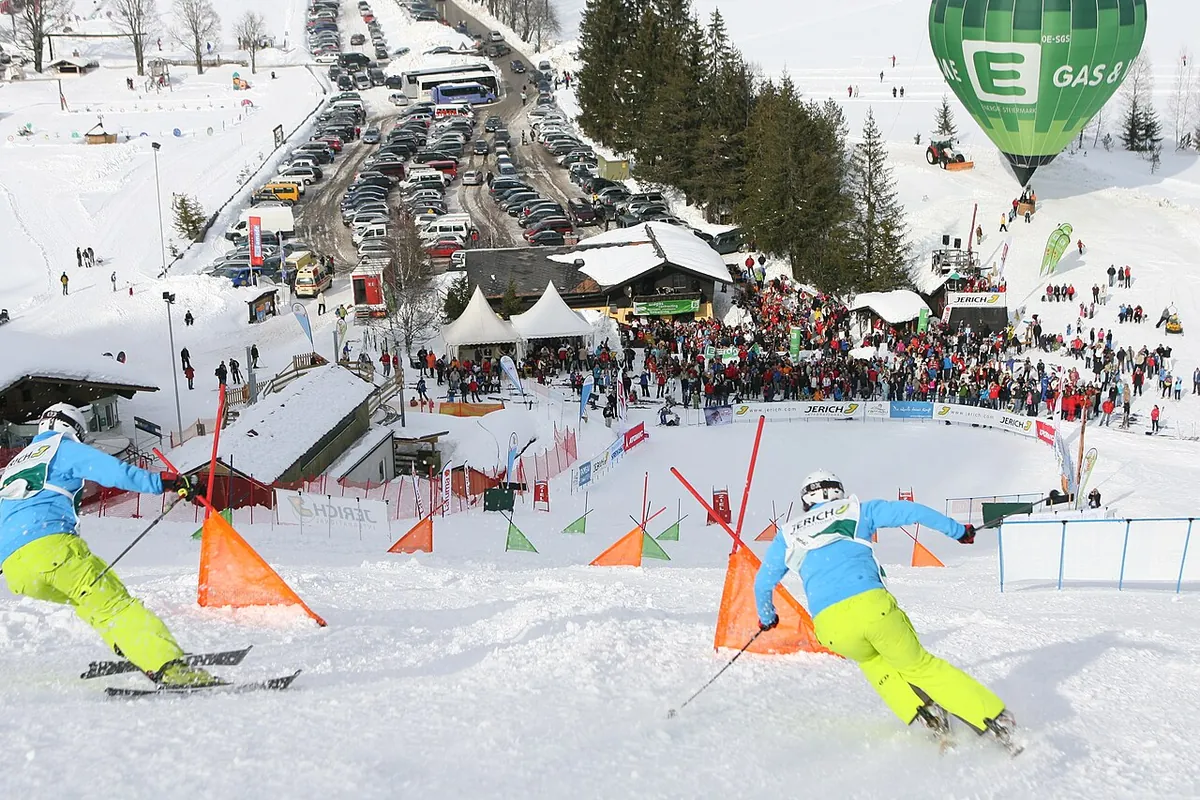
Before racing, alpine skiers study gates, gradients, snow and important terrain features. Inspection is more than becoming generally familiar with the slope: it translates a route into an executable plan. Different disciplines have different inspection and training arrangements. The shared principle is to reduce uncertainty while recognising that the actual run will still demand observation and adjustment.
Understand the terrain first
A course may contain steep sections, flatter gliding areas, traverses and changes in slope. Racers identify places where speed can become difficult to manage and exits that influence the next section. A seemingly ordinary gate beside a compression or crest may be crucial, so gate memory needs to be connected to the underlying terrain.
Gate combinations establish rhythm
Spacing and lateral offset determine how early a turn must begin. In a sequence, the line through one gate often needs to make room for the next. Watching a course preview before the race helps explain why an athlete tightens the line at a particular point or loses speed after an initially aggressive approach.
A plan must remain adaptable
Light, wind and surface conditions can change between inspection and competition. The racer cannot simply replay a memorised sequence regardless of the feedback from the skis. Effective preparation supplies a framework within which adjustments are possible. The strongest execution combines a clear intended line with timely responses to the grip and speed actually encountered.