Giant slalom sits between the speed events and the dense turning rhythm of slalom. It asks the skier to carry substantial speed while maintaining complete, linked turns. The arc traced between gates results from body position, ski flex and the reaction of the snow. That combination makes the discipline especially useful for observing how modern alpine technique works.
The outside ski
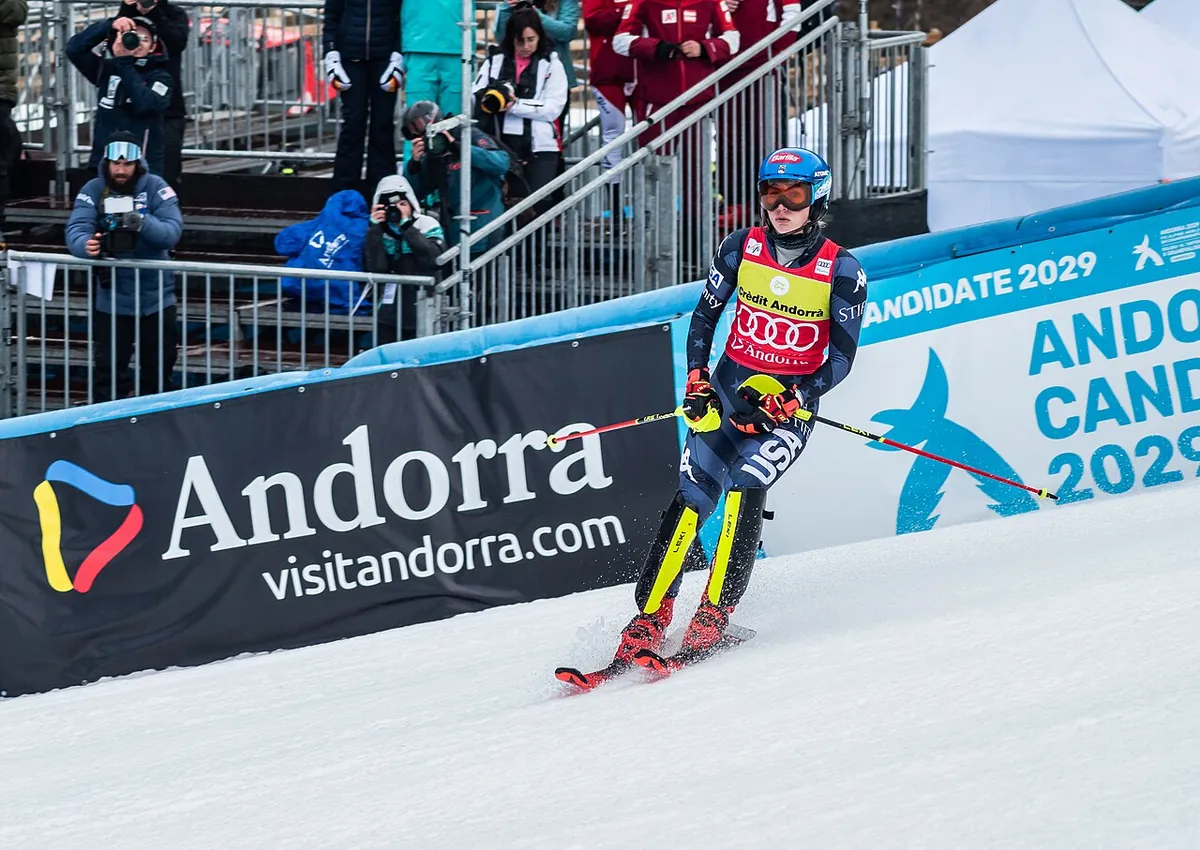
The outside ski usually provides the main support through a turn. Appropriate balance and edge angle allow it to trace an effective path. A body leaning towards the inside does not mean the athlete simply places weight there. Watch whether the skis hold a clear arc or require substantial sideways correction as they pass through the turn.
The transition sets up the next arc
Pressure must be released at the end of one turn before support is established on the opposite side. Although brief, this transition determines whether the next line can begin on time. Staying in the previous turn too long can push the next entry late, turning a local mistake into a repeated timing problem.
Conditions influence the response
Hard snow, softer surfaces and developing grooves change grip and feedback. Later starters may encounter a different surface from earlier ones. When assessing a loss of speed, consider these visible conditions rather than assuming a lack of strength. A newly set second-run course also makes adaptation an important part of the contest.