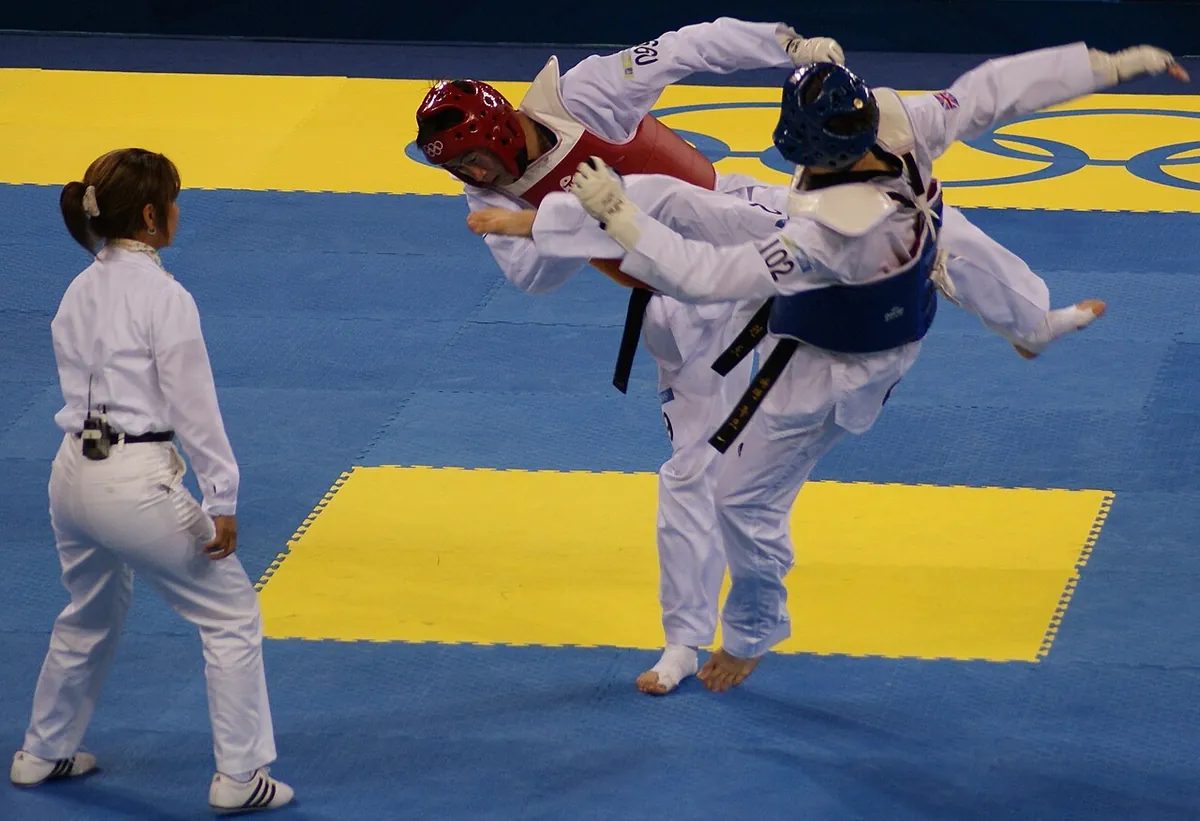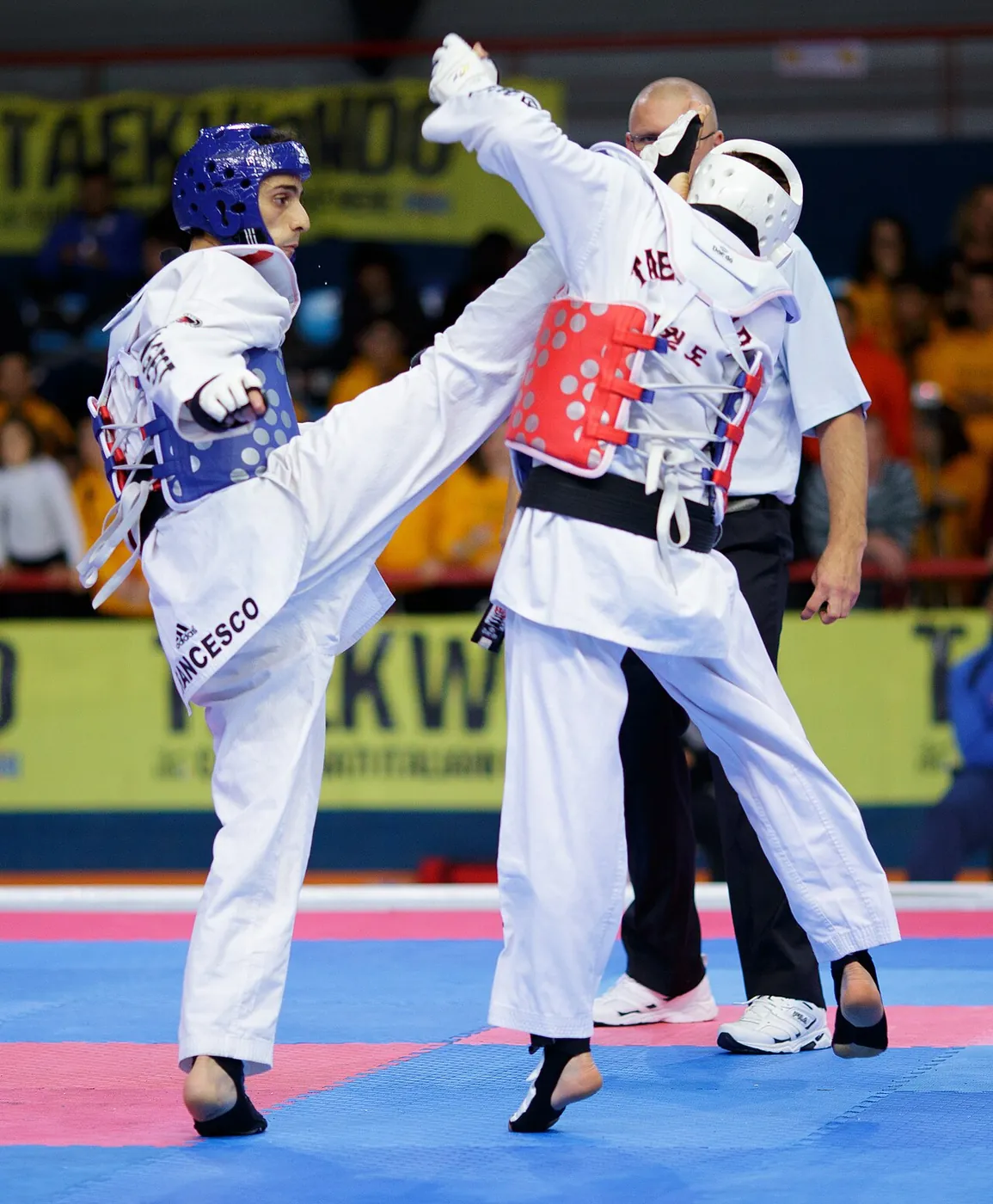
Raised front legs, stance adjustments and brief advances or retreats are common in taekwondo. They help influence the space an opponent can enter rather than merely filling time before an attack. WT restrictions on actions and inactivity also matter, so similar-looking preparations should not all be assigned the same tactical purpose.
Range determines what is available
A kick can be too distant to connect or too crowded to develop effectively. Athletes adjust their feet and body positions to enter useful range while limiting the opponent's opportunities. Watch the space between the leading feet and who forces a stance change. A scoring chance may begin with a small adjustment rather than a sudden powerful movement.
Waiting has limits and context
A waiting athlete may invite entry or manage risk, but continuing inactivity remains subject to the rules. Judge tactical value through effective contact, score and time, not kick count alone. The same apparent hesitation can mean something different for a leader and a trailing athlete. Establish the situation before explaining the timing of an attack.
Reach must become an actual opportunity
Height and leg length can affect range, but an opponent's positioning can reduce that advantage. Relative position, initiation and balance afterwards offer more evidence than a pre-bout comparison of physiques. Body dimensions are one factor; they do not establish who will successfully turn distance into points.