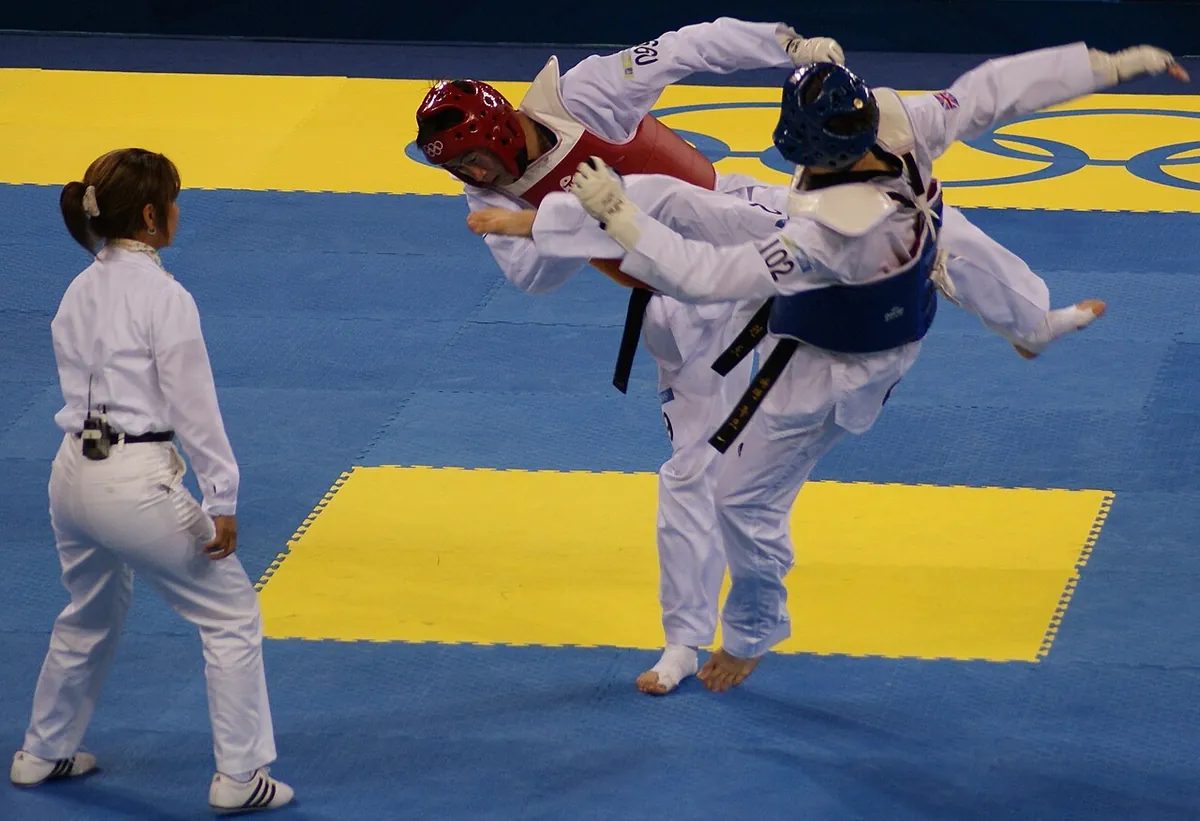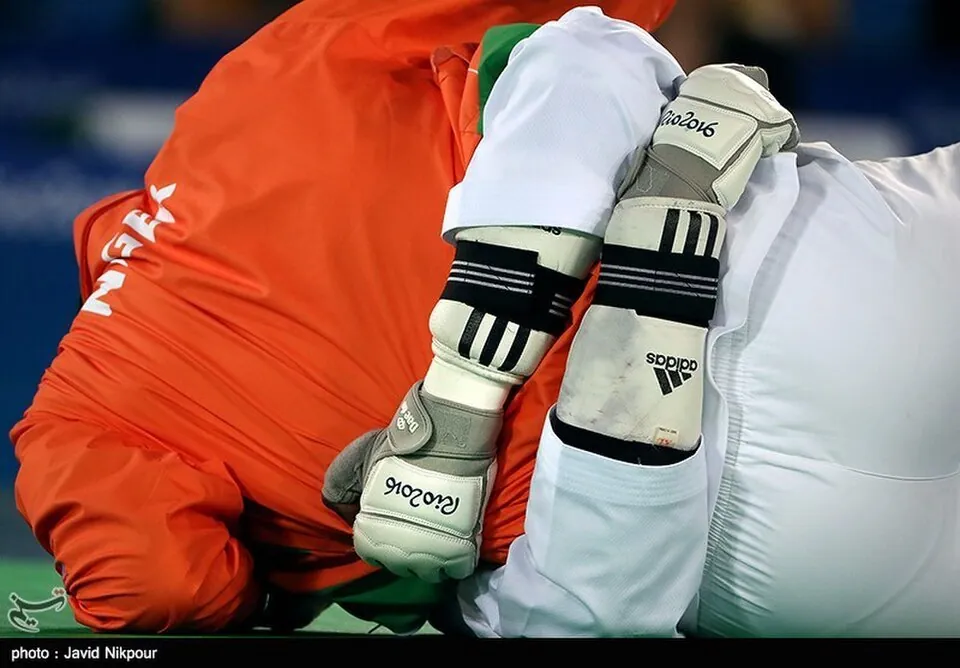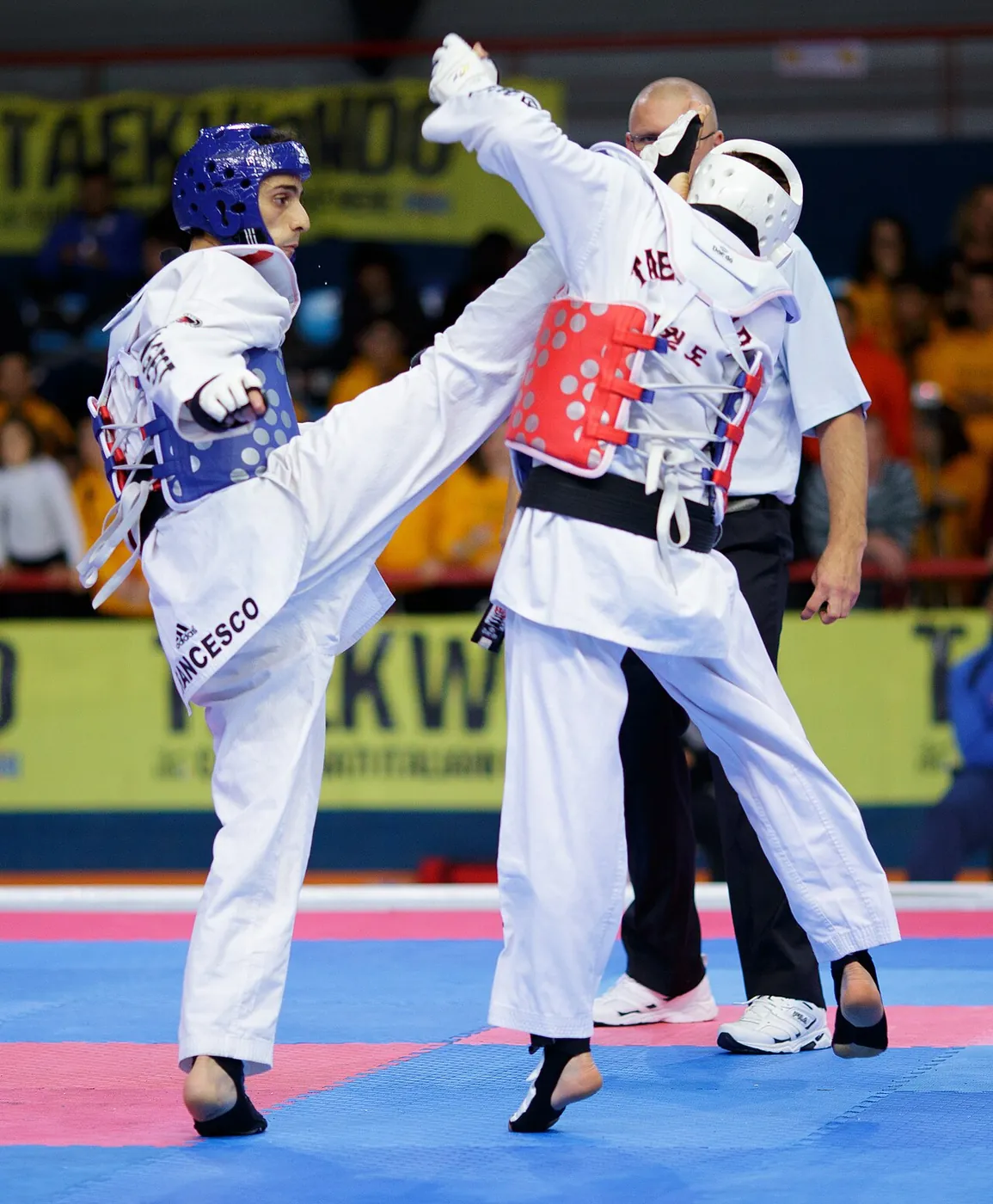
Turning techniques frequently feature in WT taekwondo highlights. The applicable rules can give them different scoring value from ordinary techniques, but that potential must be realised through legal execution. Divide the sequence into initiation, turning, contact and recovery to understand the competitive task beyond its visual impact.
Maintain judgement while the body turns
The target can retreat or move sideways as the attacker rotates. Speed of turning is therefore only part of the problem; range and timing remain essential. Observe the positions before initiation and whether the action actually reaches a valid target. A smooth-looking technique may produce no score if the opponent has already moved beyond its useful range.
Recovery shapes the next exchange
After the turn, the athlete needs balance and a workable stance. An awkward finishing position can create exposure to a reply or boundary pressure. Higher potential value does not make the technique appropriate every time. Score, remaining time and the opponent's location influence whether the risk fits the situation.
Recognition and contact are separate checks
A large visible rotation does not automatically satisfy the formal definition of an eligible turning technique. Completing that turn without valid contact also does not guarantee points. Check the movement category and contact outcome separately, consulting any official review. This explains how two visually impressive actions can receive different results.