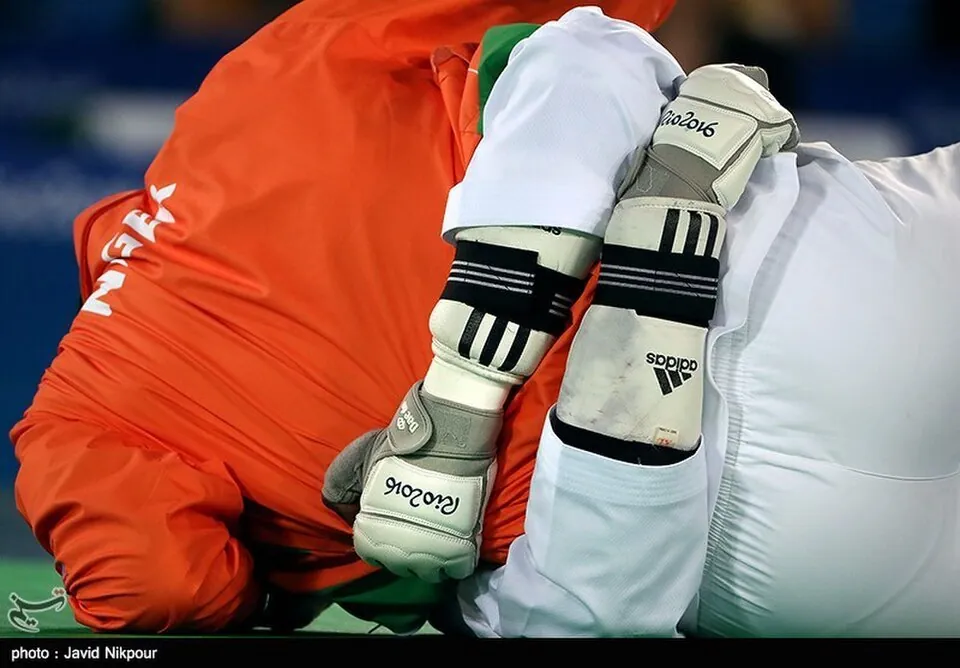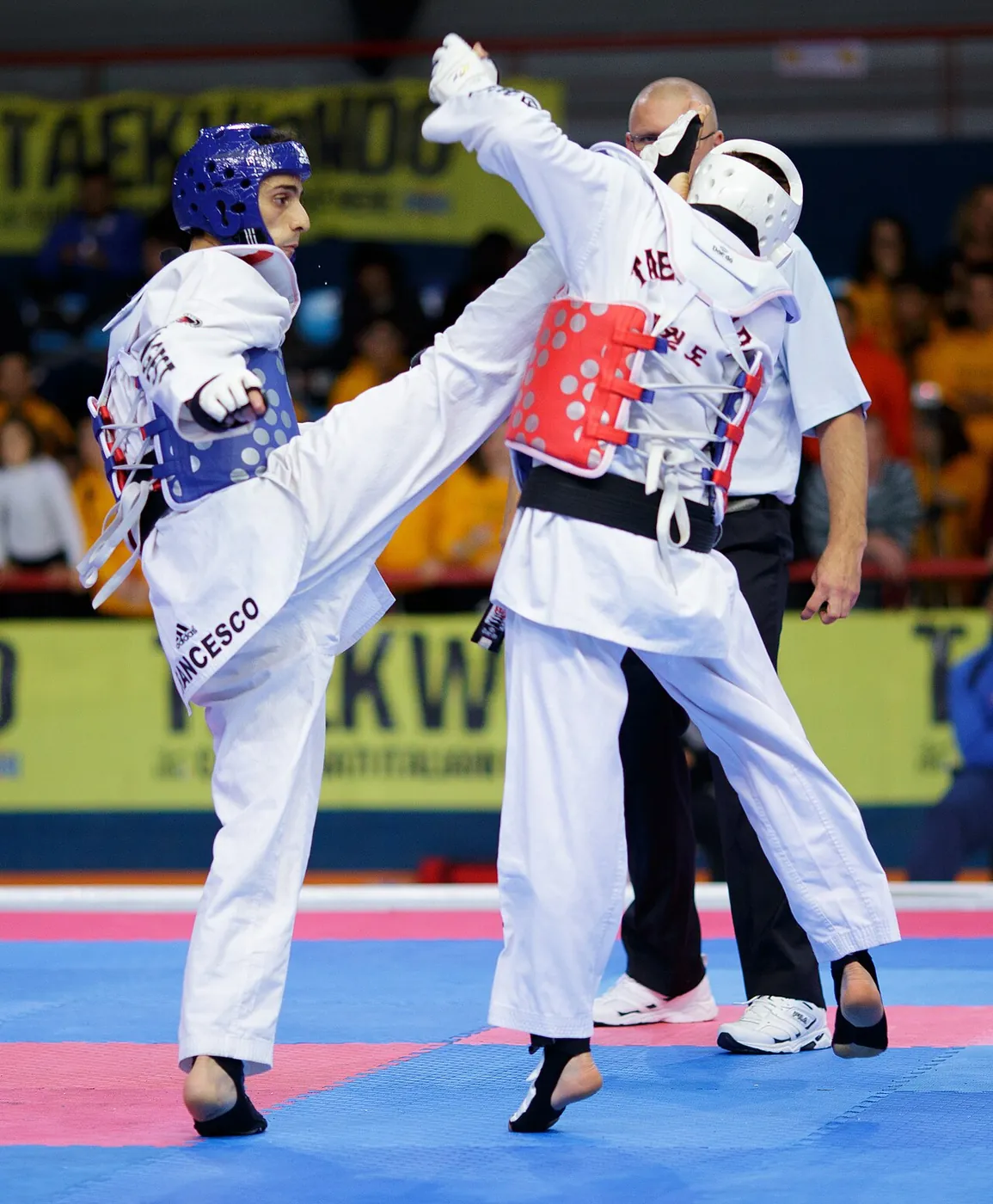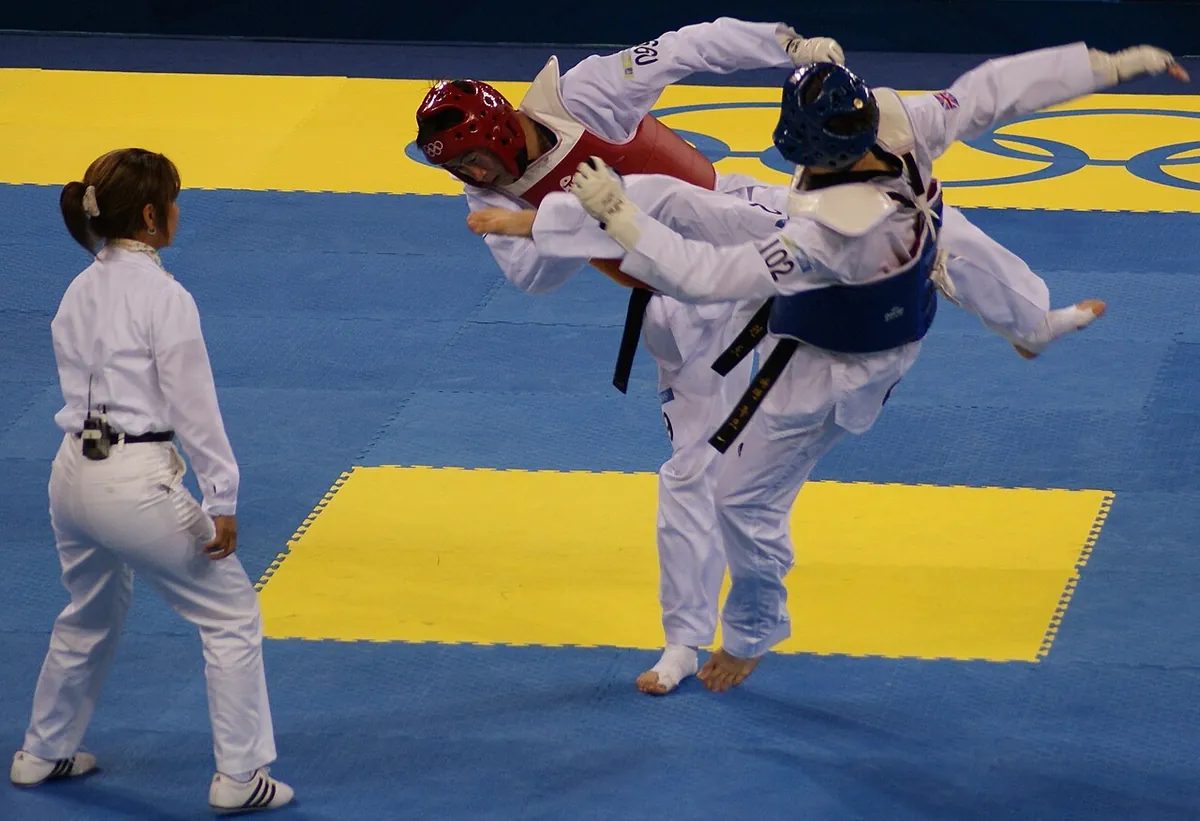
This guide concerns World Taekwondo sparring. Scoring depends on permitted techniques, valid targets and the applicable technical conditions, with different restrictions for the head and trunk. Exact values and procedures depend on the event's rule version. ITF formats and poomsae assessment should not be treated as interchangeable with this framework.
Identify the target and technique
WT sparring permits regulated punching and kicking techniques to the trunk, while head contact has different restrictions. Turning techniques can have a different value from ordinary actions under the applicable rules. First ask whether the action is legal and where it connects. The number of kicks or the apparent drama of a movement does not establish its score.
What electronic equipment contributes
Protective equipment and associated sensors help register qualifying contact, while other decisions can involve judges or video review. An absent score cannot always be explained from one image, and a displayed score may later be adjusted through the rules. Separate physical contact, equipment registration and the final adjudicated result.
Similar totals can have different sources
Direct scoring contact, eligible turning-technique value and an opponent's penalty can all change the display. The size of an increase alone may not reconstruct the exchange. Check the referee's signal, target and movement together. Identifying the source of points also prevents every scoreboard change being incorrectly counted as a successful kick.