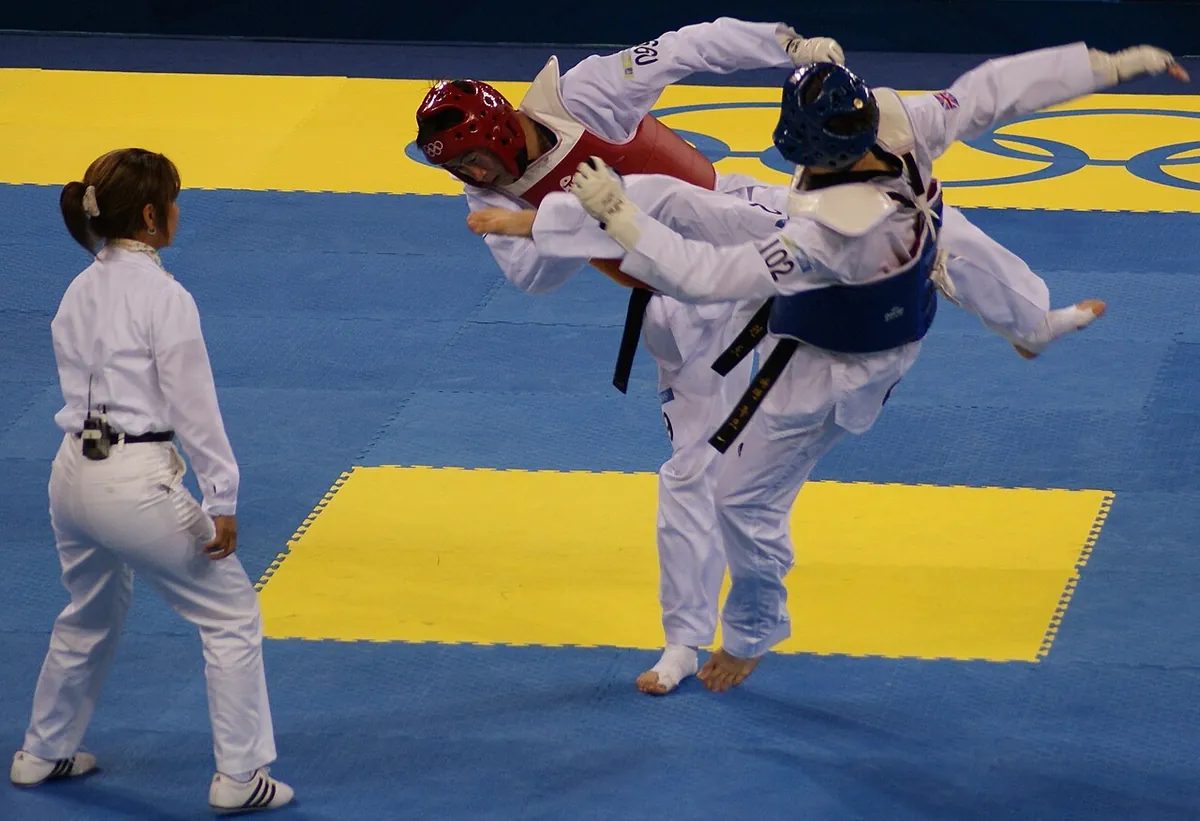
Taekwondo appeared as a demonstration sport at Seoul 1988 and Barcelona 1992 before becoming an official medal sport at Sydney 2000. That chronology helps interpret athletes' careers. Demonstration results and official medal-event results should not be combined indiscriminately in the same Olympic medal total.
A new stage, not the sport's beginning
Official medal status provided an Olympic platform and brought increased attention to categories, qualification and scheduling. Taekwondo already had a substantial history and international competition before Sydney. The change concerned its Olympic programme status, not the invention of the sport or the beginning of all organised taekwondo competition.
Rules continued to develop
Electronic protection, video review and scoring arrangements can alter the visible rhythm of different eras. Establish the equipment and rules behind early championship footage before comparing it with a later contest. Kick frequency or a higher points total alone cannot establish that one generation of athletes was inherently stronger than another.
Set a clear boundary for medal statistics
An official Olympic medal table should begin with the relevant medal-event editions, while earlier demonstration achievements are labelled separately. This distinction preserves statistical accuracy without dismissing the sporting value of earlier participants. When a profile discusses Seoul or Barcelona, identify the event status before stating the result so that different honours remain understandable.