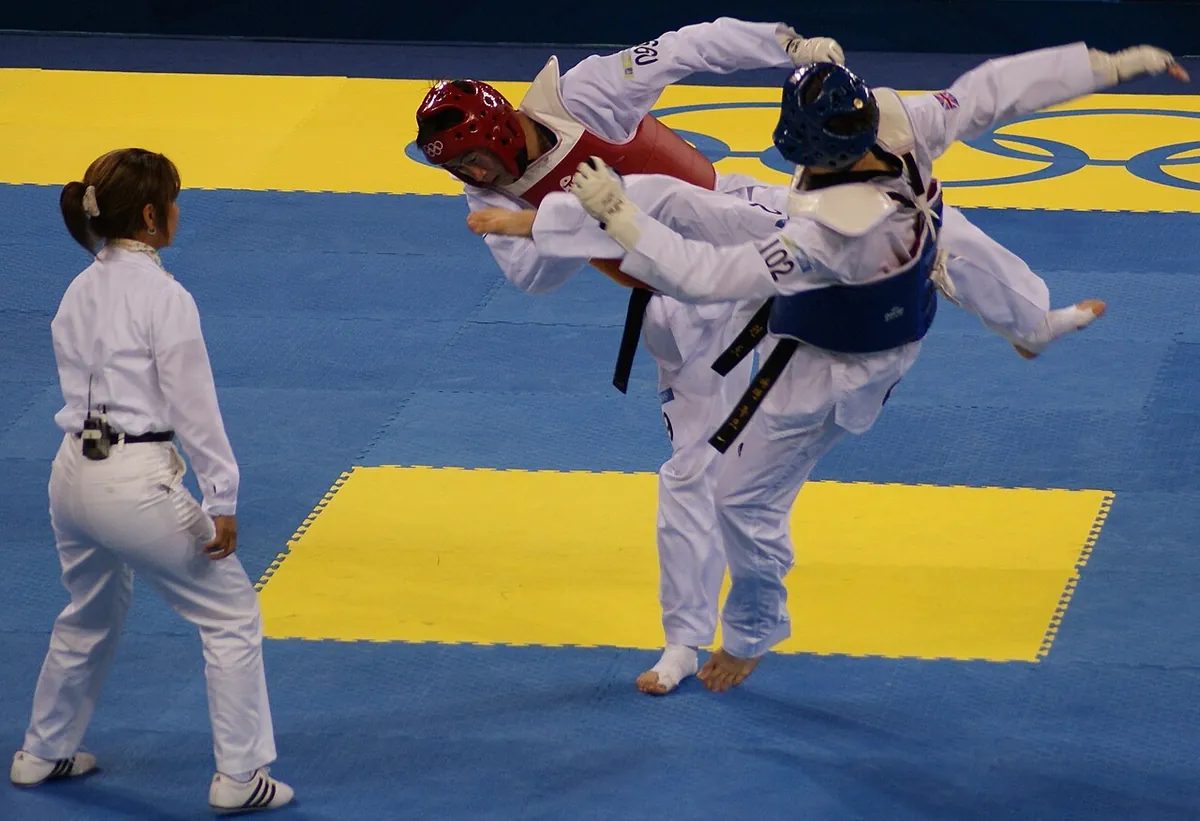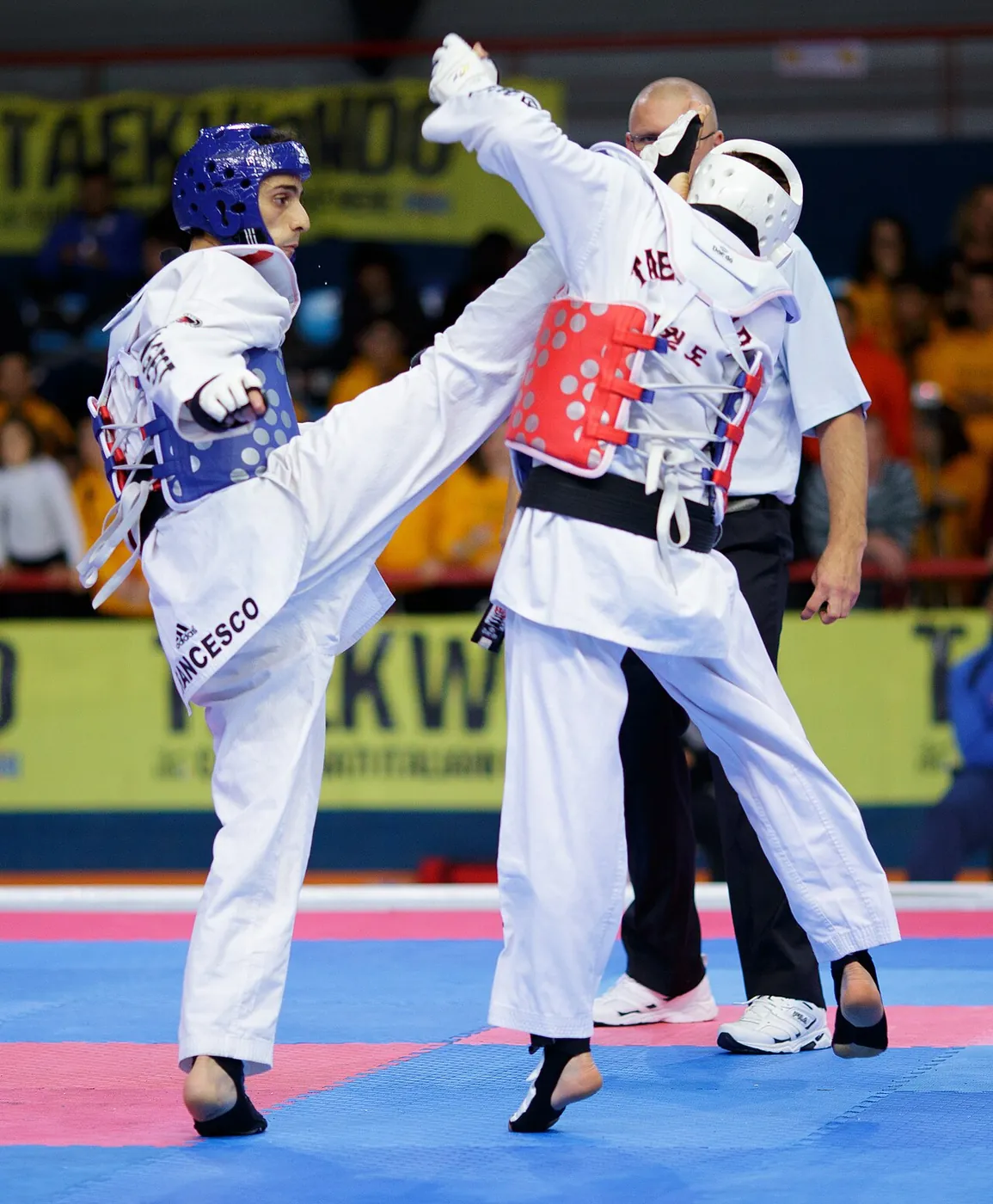
WT taekwondo uses penalties to address infringements as well as awarding points for effective attacks. Assuming a scoring error whenever no clear hit appears can therefore misread the contest. First check whether a referee issued a penalty and how the event's rules apply it, then interpret the change in score.
The boundary alters available movement
Near the edge, retreating space becomes limited and further movement can lead to a rule consequence. The other athlete can apply positional pressure but must still act legally. Watch movement along the boundary, attempts to return inside and the action that produced the exit. The final location of a foot alone does not explain the entire situation.
Similar pictures can have different causes
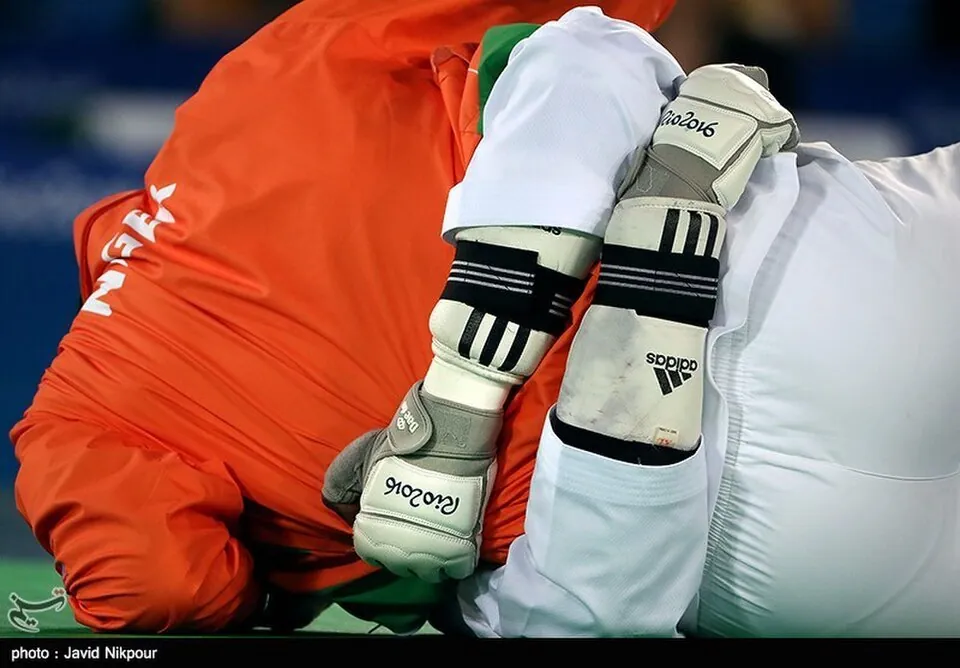
Falling, holding or inactivity can involve different conditions and exceptions under the rules. Two outwardly similar exchanges may differ in their preceding actions. Find the stated reason before discussing a decision. Not every pause is a penalty, and not every physical contact is necessarily an infringement of the competition rules.
Track the official consequence
Record who was penalised, when it happened and what the official response was, then examine its effect on the round. A gesture towards one side does not automatically identify the recipient of points, and an appeal does not prove the original decision wrong. Match the signal, display and final ruling before describing the event.