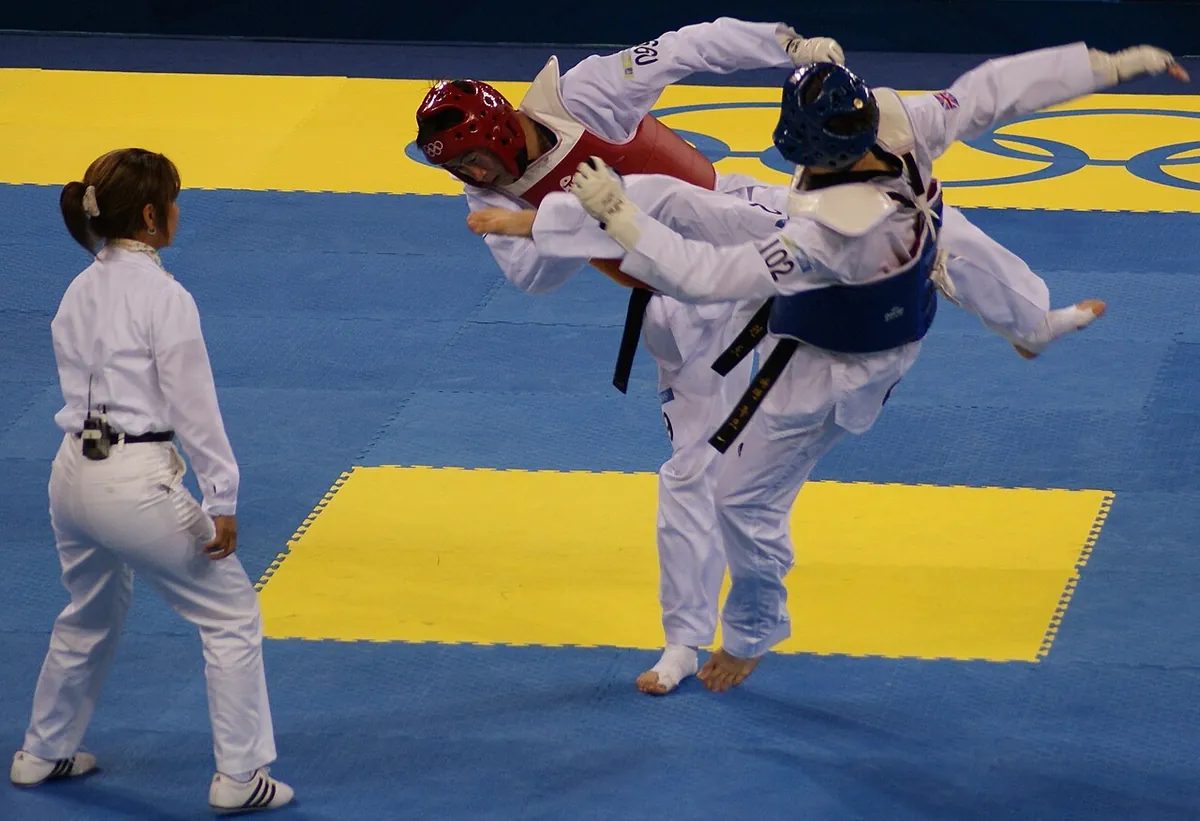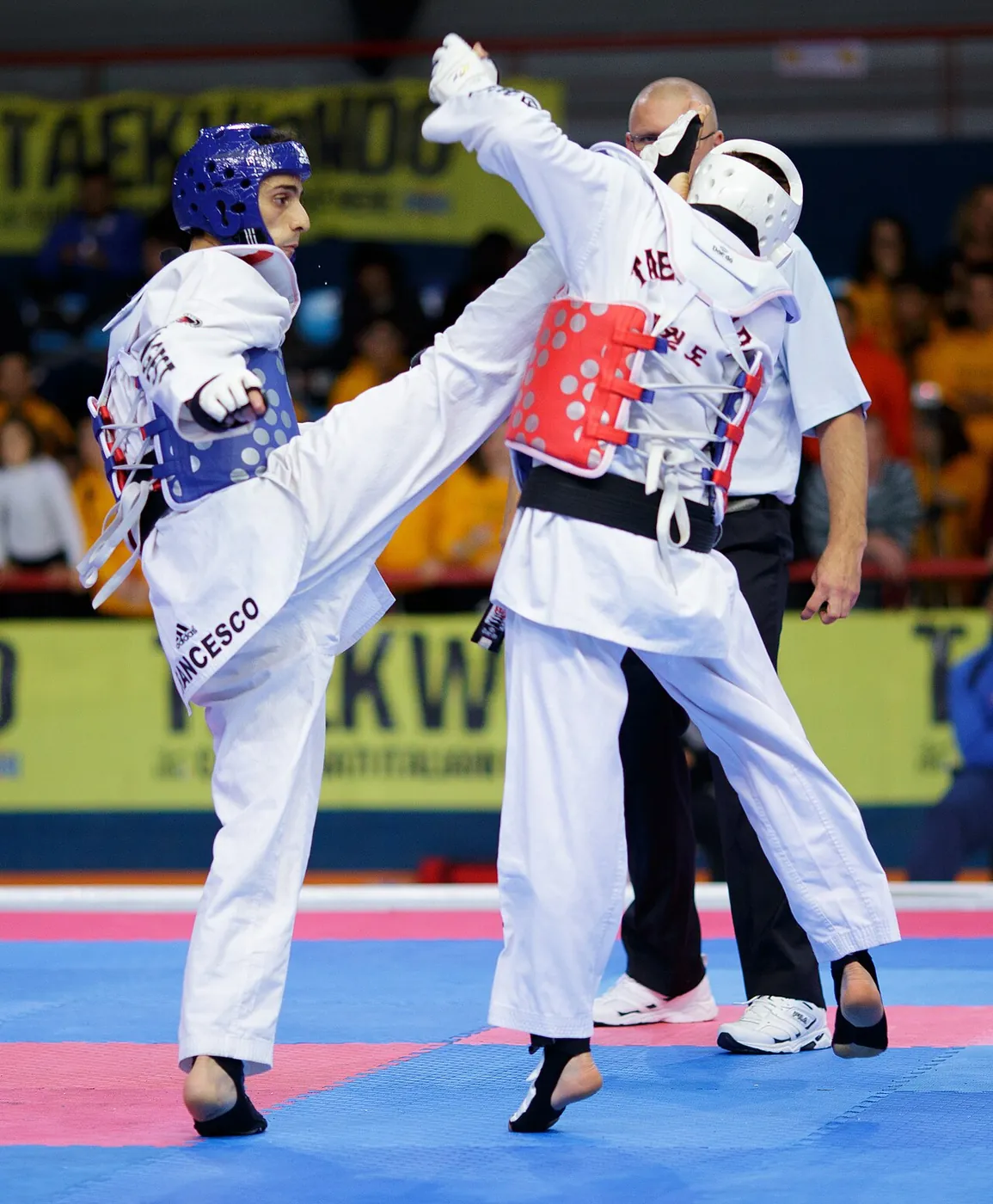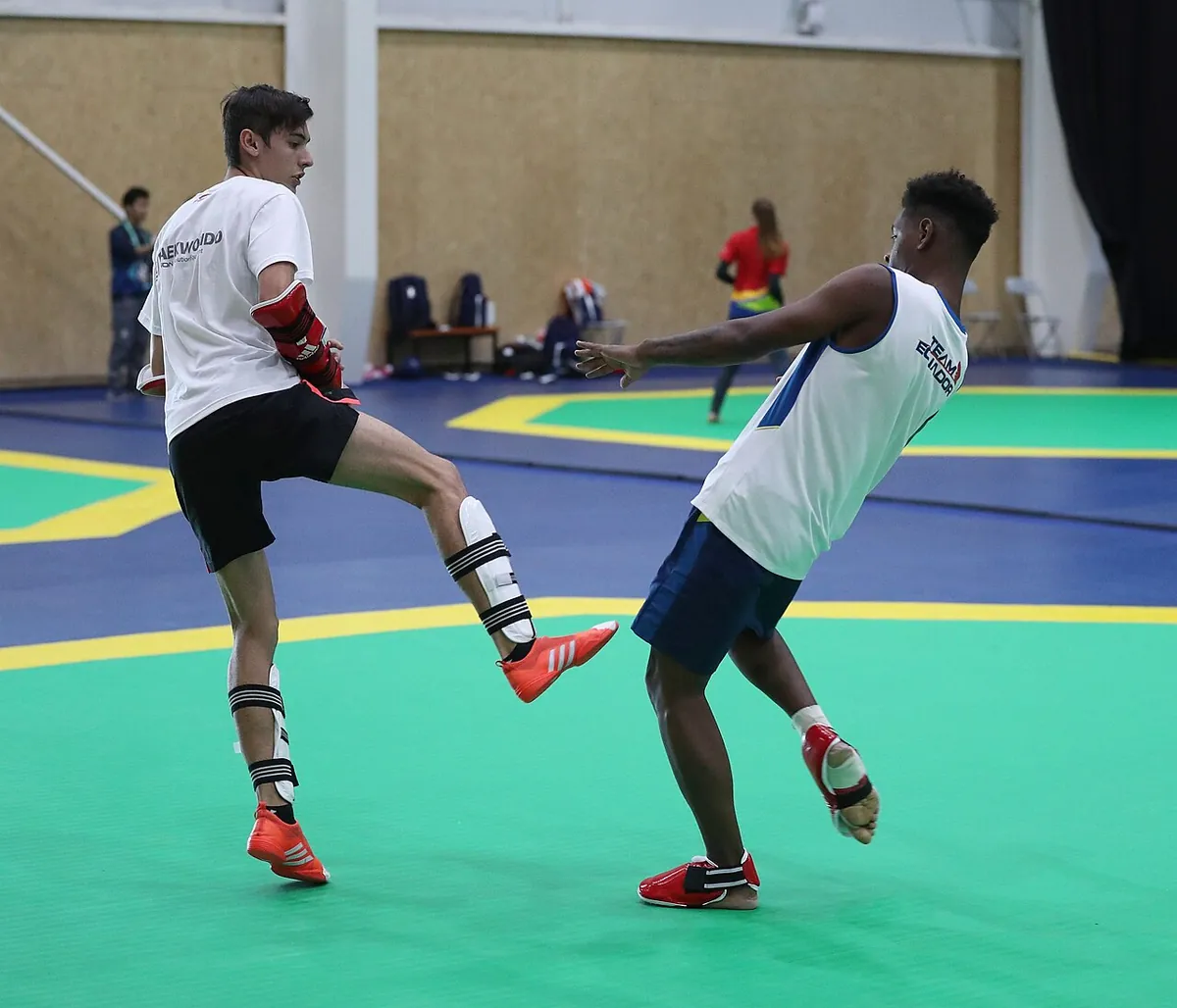
Taekwondo includes poomsae as well as head-to-head sparring. WT maintains separate poomsae rules, with categories such as recognised and freestyle poomsae subject to event regulations. Recognising the distinction prevents sparring point values or electronic-contact assumptions being applied to a performance that is judged through a different framework.
What the performance is assessed for
Poomsae places importance on accuracy, expression of power, rhythm and the relevant presentation requirements. Athletes do not score by making contact with an opposing competitor. Observe direction, posture and changes of rhythm, then read the scoring structure for the particular category rather than treating the routine as an imagined fight.
Different competitive objectives
A sparring athlete responds to a live opponent; a poomsae athlete completes a performance within a defined or choreographed structure. Both involve control, but kick height alone cannot rank one above the other. Profiles should identify the athlete's actual discipline, because a sparring championship is not automatically a title covering every form of taekwondo.
Pairs and teams add coordination
When poomsae is performed by a pair or group, shared rhythm and consistency can become additional viewing priorities under the relevant rules. A coordinated appearance does not establish that every member's technique is faultless. Examine individual quality and collective timing separately. Team poomsae should not be mistaken for a relay of independent sparring bouts.