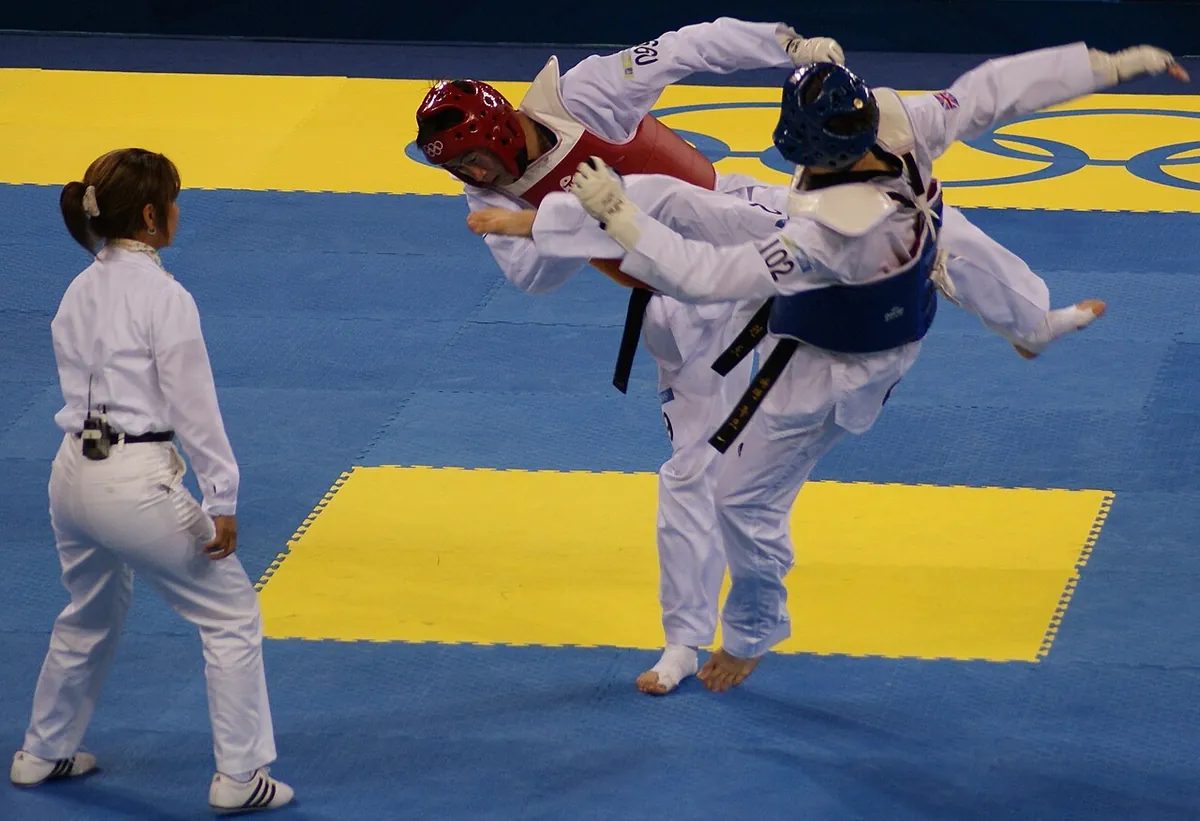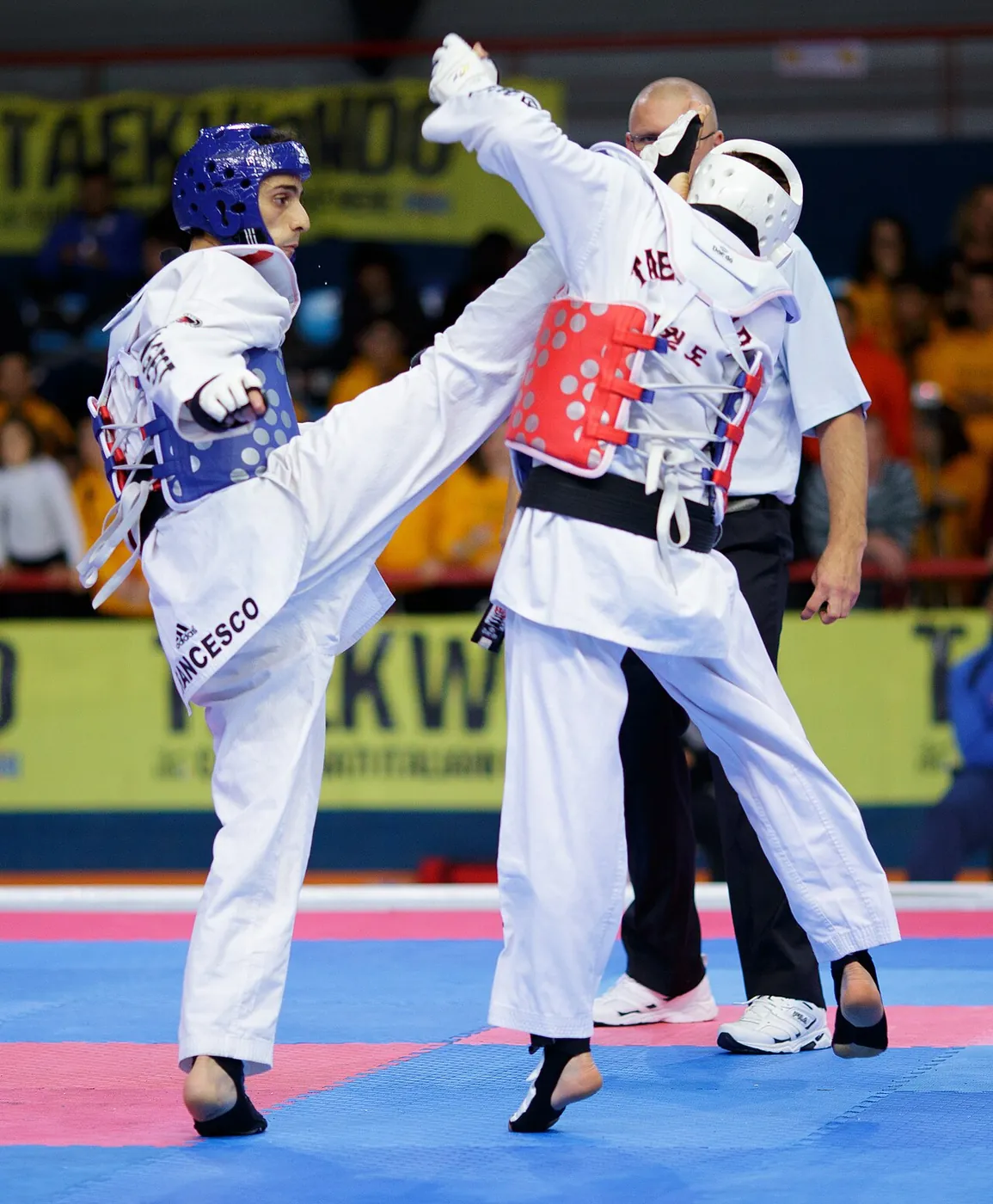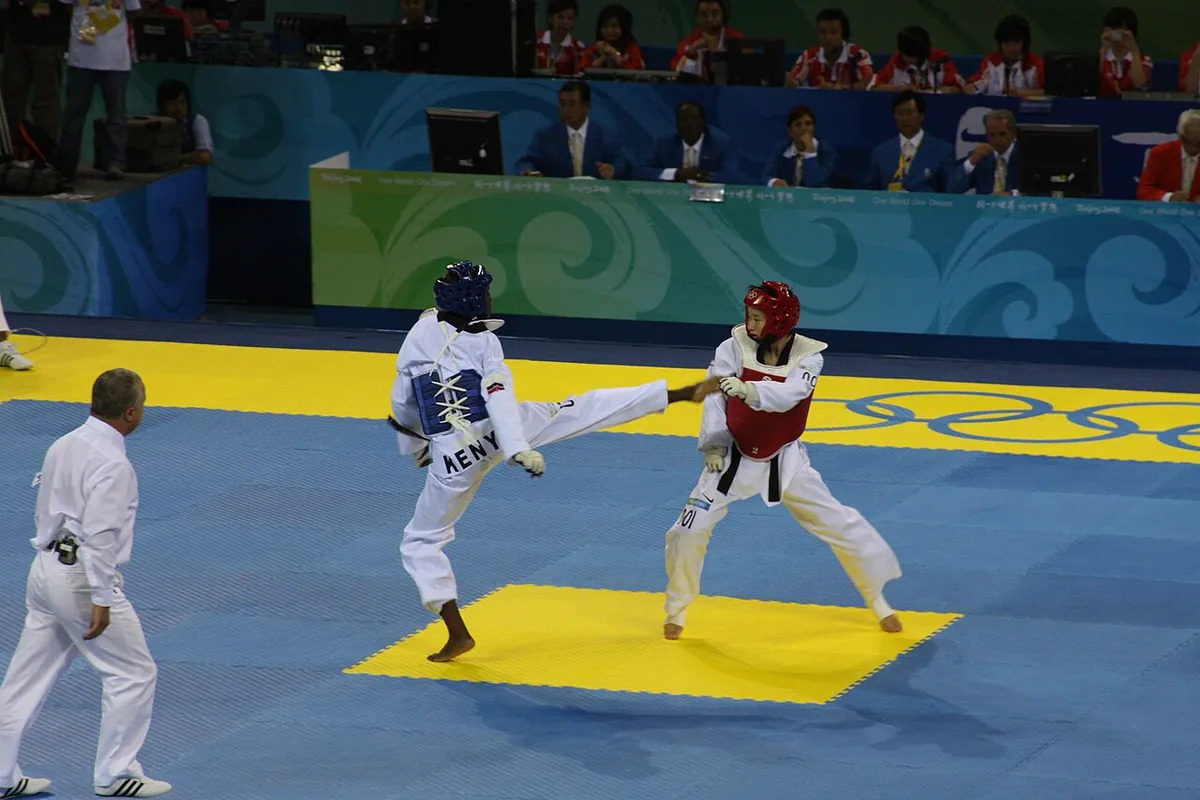
Chinese taekwondo athlete Wu Jingyu won women's 49kg gold at Beijing 2008 and London 2012. Retaining the years and category is important, as later scoring systems and equipment should not be imposed unchanged on those contests. Her competition footage offers a clear entry into lightweight range management and connected attacking actions.
Two Games, two competition settings
Beijing and London brought different opponents and competitive circumstances. Winning at both is a verifiable achievement without requiring invented psychological or training stories. Pair the actual results with observable actions to explain the performance. Historical labels also prevent later changes to the sport from obscuring what the athlete was required to accomplish at the time.
Speed must find the right opening
Fast kicking becomes effective only when distance and timing support it. Begin with both athletes' positions, then notice the small movements before the attack and whether Wu regains a usable stance afterwards. The full exchange gives a clearer explanation than an isolated scoring highlight because it includes the preparation and consequence of the action.
Keep the wider career accurate
Two Olympic titles do not mean that every Olympic appearance ended in gold. A fuller profile should list the actual result at each edition, distinguishing a championship from participation or a particular stage reached. Those differences show how a long career develops rather than allowing an oversimplified headline to distort its strongest established achievements.