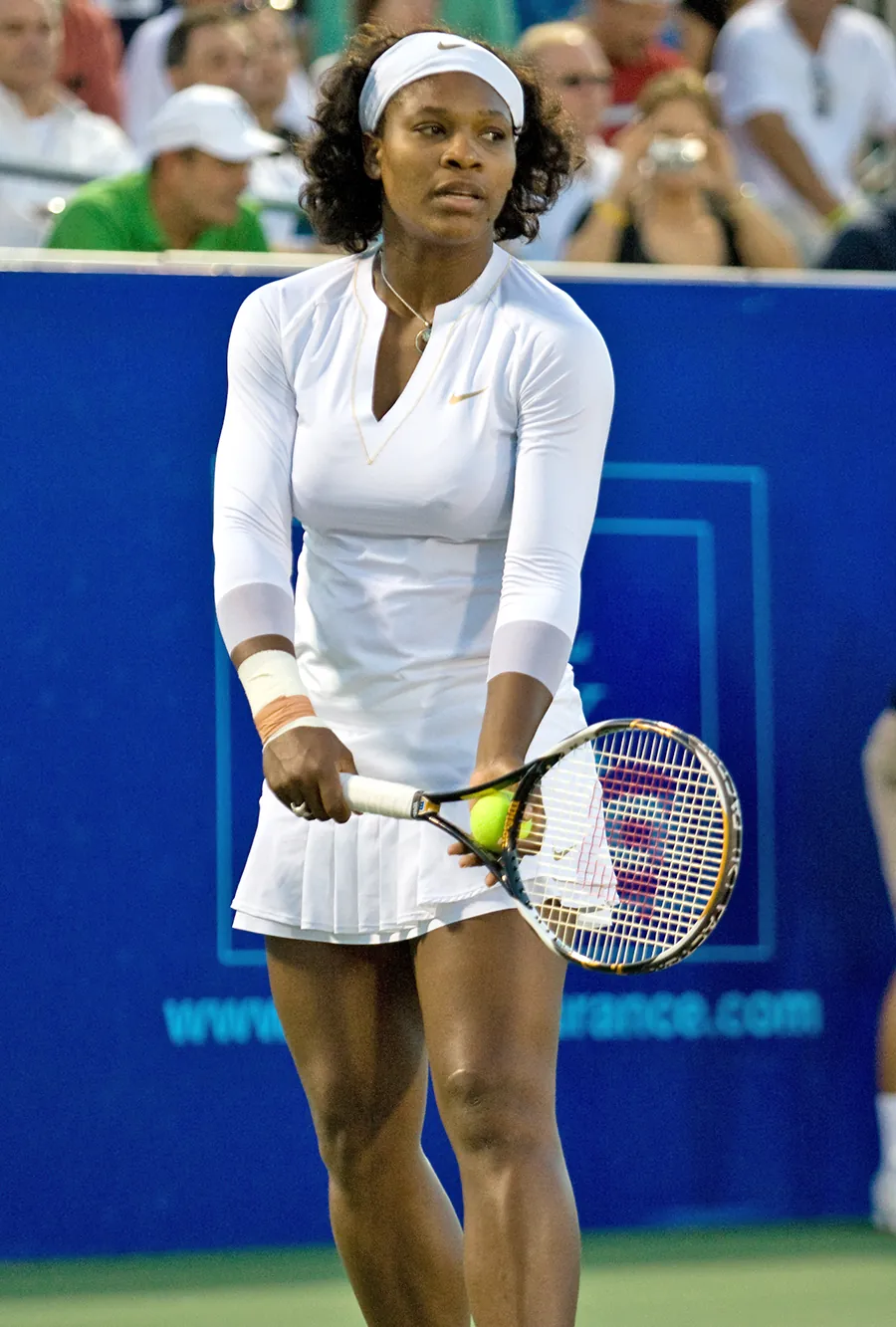
Serena Williams won twenty-three Grand Slam singles titles and also achieved major doubles success with Venus Williams. Powerful striking is an obvious feature of her game, but it is more revealing to examine how force interacts with placement, preparation and point construction. Physical capability alone does not explain the choices that create an advantage.
The serve establishes the first opportunity
A serve can score directly or move the receiver away from a useful position for the next ball. Similar preparation with different directions makes anticipation harder. Watch the following groundstroke as part of the service pattern: the initial delivery often determines the space available and the attacking player's next location.
The return challenges the expected structure
A receiver has little time to identify speed, spin and placement. An assertive return can immediately disturb the server's advantage, but it needs control as well as intent. The starting position and size of the preparation help explain how a player manages to strike effectively within that limited reaction window.
Power needs direction and continuation
Repeated hard shots into a predictable area can allow an opponent to adjust. Depth, changes of direction and timely forward movement turn pace into pressure. Follow how Serena establishes a rhythm and then chooses to finish the point. That sequence makes the relationship between execution and judgement more visible.