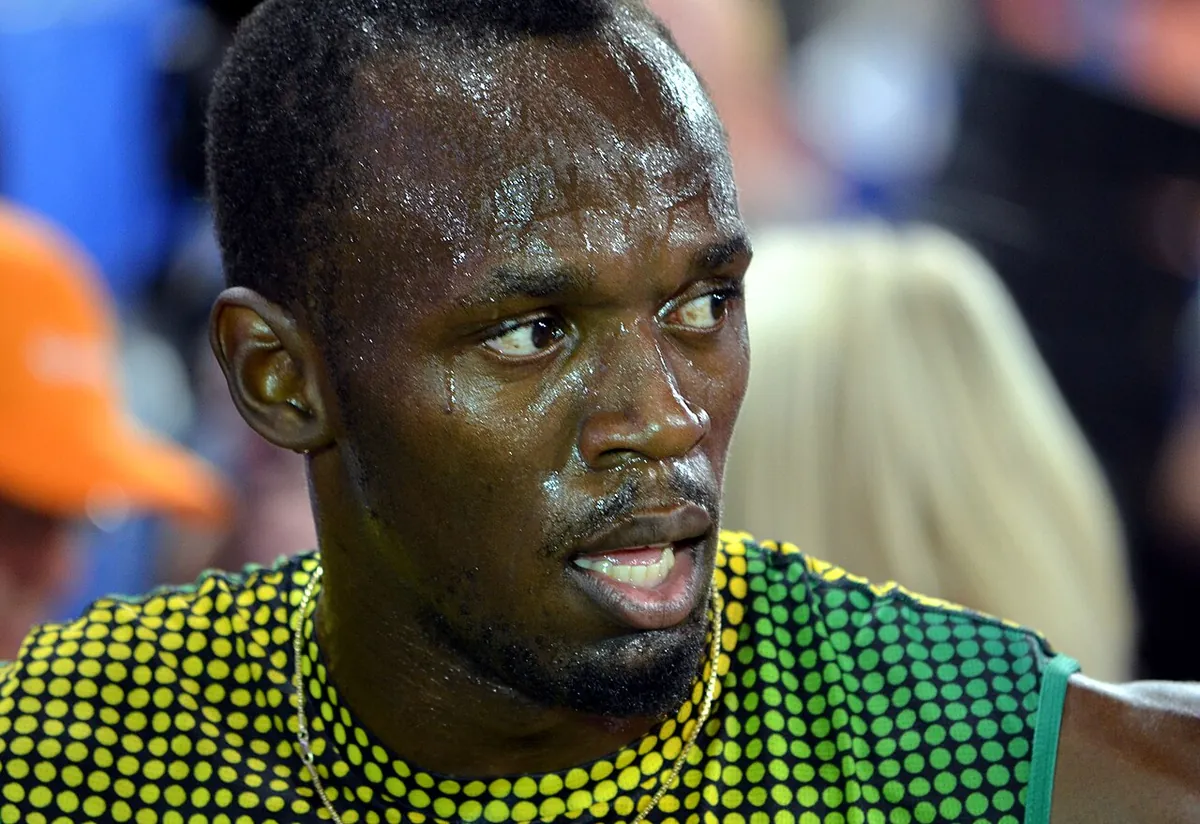
Jamaican sprinter Usain Bolt won the men's 100m and 200m at the 2008, 2012 and 2016 Olympic Games. These completed historical results provide a firm starting point for his profile. Understanding them requires more than celebrating the finish: the entire sprint shows how an advantage develops.
Two events across three Olympic cycles
The 100m demands acceleration and high speed, while the 200m adds a bend and a longer period of speed maintenance. Championship rounds introduce further demands before the final. Bolt's repeated success therefore represents different competitive tasks completed across multiple cycles, rather than one exceptional race repeated without changing circumstances.
Body dimensions and technical coordination
Bolt's visible stride length attracts attention, but useful stride length depends on frequency, support and coordinated movement. Watch his transition from the blocks towards upright running and the way he maintains form later. Height alone cannot explain sprint performance, and the movement of one successful athlete is not a universal technical prescription.
Look beyond the celebration
Highlight reels often concentrate on the finish and celebration. Full races reveal when Bolt gained ground relative to neighbouring runners. Separate the early, middle and closing phases, and compare the gaps rather than assuming that victory meant leading throughout. Results establish what happened; race footage helps explain the process behind that outcome.