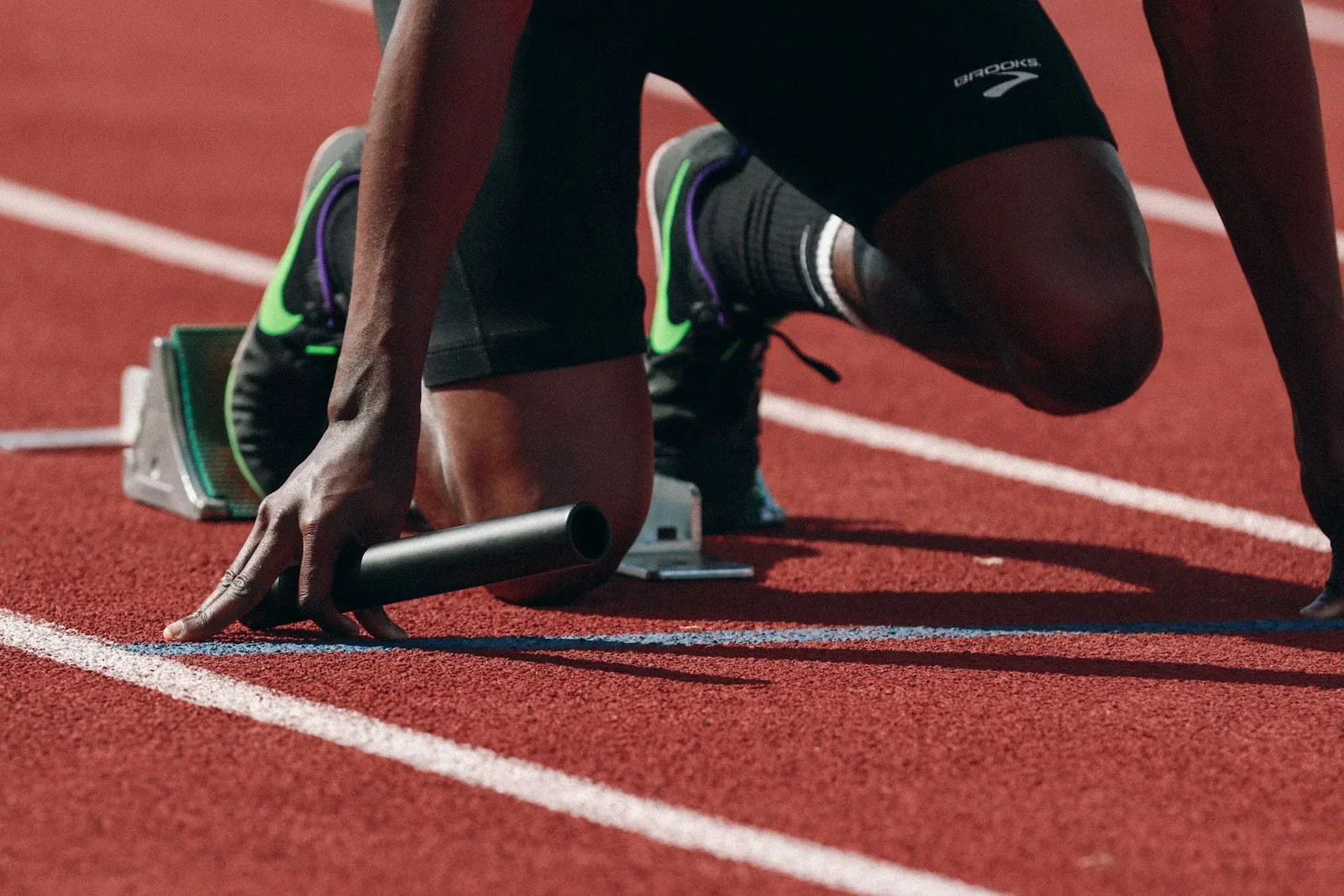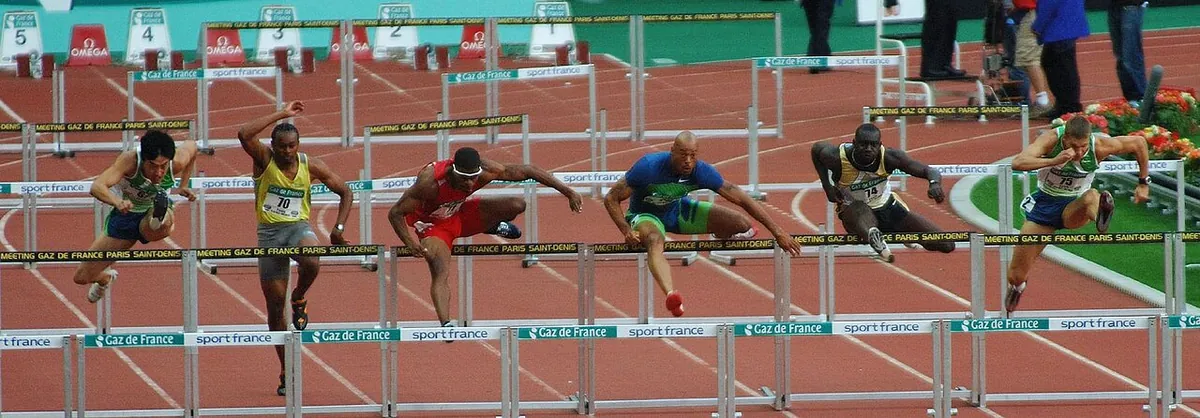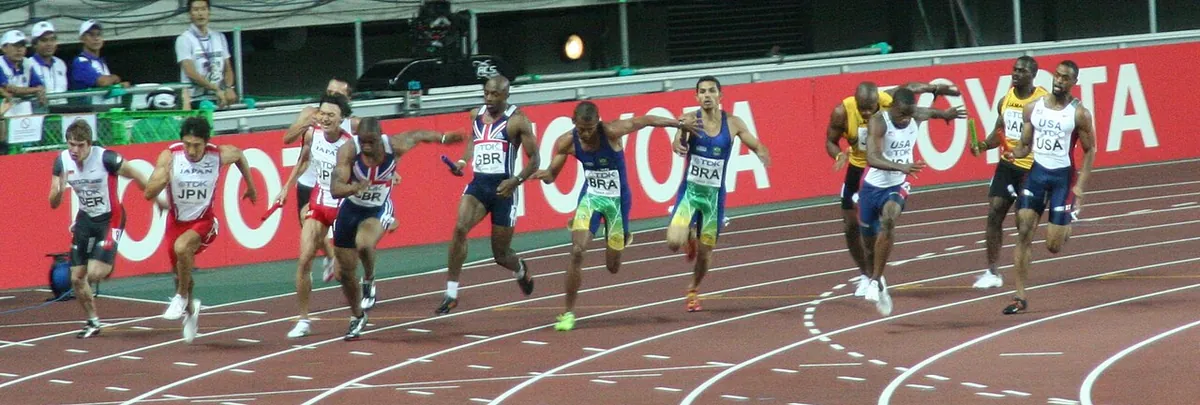
The 100m is a sprint run in separate lanes, but it is not one unchanging burst of effort. Body position and speed evolve throughout the race. Under World Athletics rules, the start and finish also have precise meanings that help explain the result.
From the blocks to upright running
A quick reaction is different from effective acceleration. After leaving the blocks, the runner must build speed through successive contacts with the track while gradually becoming more upright. Once at speed, stride length and frequency work together. Neither a longer stride nor faster-looking legs alone proves that an athlete has superior technique.
What happens near the finish
In the closing metres, a changing lead often reflects different rates of slowing rather than continuing acceleration. Coordination remains important as fatigue increases. The finish is judged by the torso reaching the finish plane, not by an outstretched hand or foot. A photograph should therefore be read alongside the official result.
Watch the gaps between runners
Choose two neighbouring lanes and track when their relative positions change. One runner may gain early, another in the middle, and another through better late-race maintenance. Camera angles can distort those gaps. Separating the developing race from its eventual outcome prevents the mistaken assumption that the champion led during every phase.