The result of a sprint seems straightforward: whoever reaches the finish first wins. Understanding the race, however, takes more than reading the final order. Athletes leave a crouched position, gradually raise their bodies, establish speed and try to maintain their movement through the line. These connected phases have different demands. They help explain why one runner can lead early while another closes the gap later. Watching a changing speed profile is more revealing than imagining a hundred metres run at one constant pace.
The start: reaction and acceleration are different
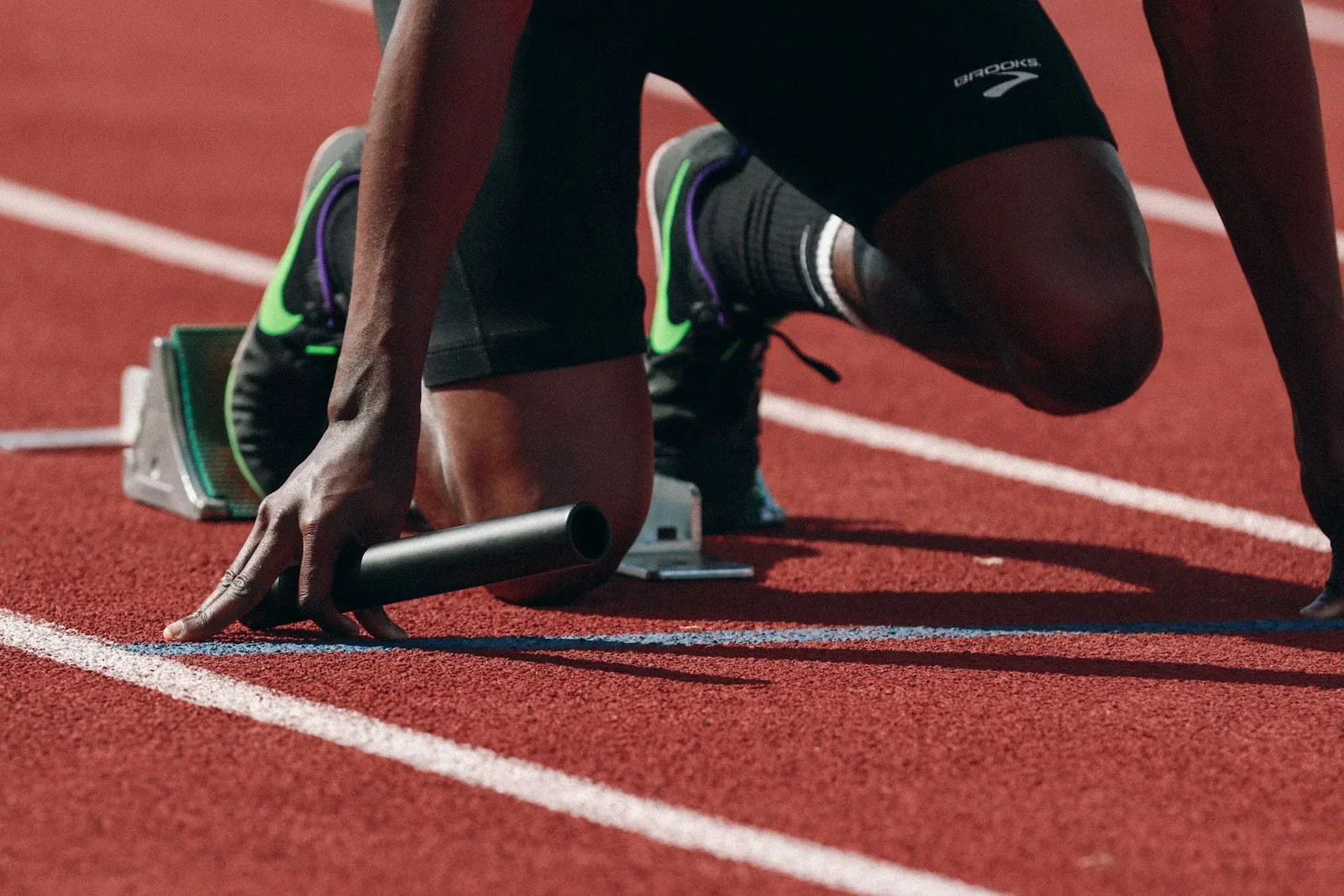
After the signal, a sprinter must turn a response into forward movement. A quick reaction can help, but it does not explain everything that happens over the first few metres. Force applied against the blocks, the position at block clearance and the following steps all influence the transition. In slow motion, separate the moment movement begins from the effectiveness of the first steps. Official start rulings are also distinct from technical analysis: they belong to the officials and the prescribed competition procedures.
Acceleration: posture changes gradually
The shift from the blocks to upright sprinting is not an abrupt switch between two unrelated positions. Body angle, stride length and rhythm change as speed develops. A leading runner who appears more upright has not necessarily stopped working; the race has entered another phase. Watch the changing distance between neighbouring runners. Who continues to pull away, and who is closing steadily? Those relationships usually reveal more about acceleration than a single photograph of foot placement.
Upright running: bigger movements are not automatically faster
At higher speeds, stride length and frequency need to work together for the individual athlete. A large stride or forceful arm action can look impressive without providing a direct measure of performance. Instead, follow the continuity of one runner’s movement. Look at the stability of the head and trunk, the relationship between the arms and legs, and whether the pattern changes under pressure. These are useful ways to watch a race, rather than a personalised prescription for how someone should train.
The finish: complete the distance
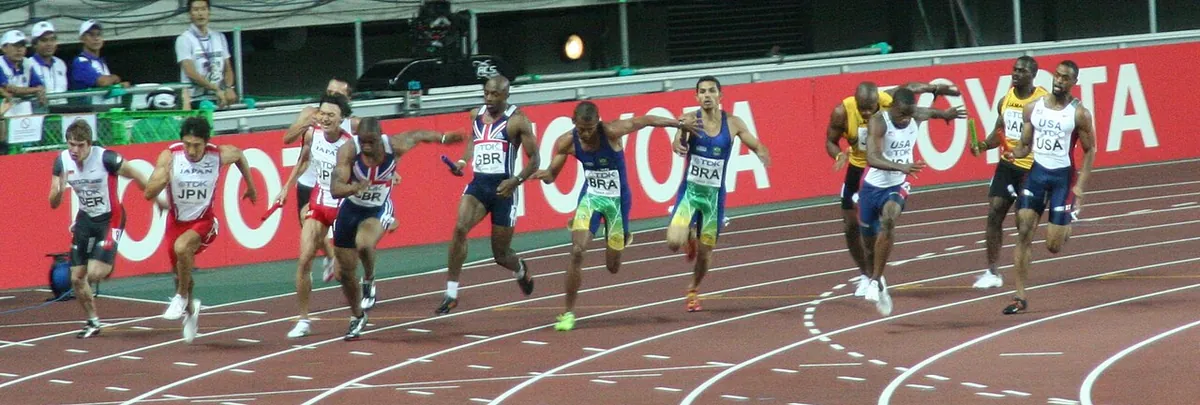
Near the line, the remaining metres still matter. In a close finish, the official timing and finish judgement take precedence over an impression based on a hand, head or foot. An oblique television camera can exaggerate or conceal a gap. Link the final image to the preceding stretch of the race: the decisive difference may have developed well before the last movement, through one athlete maintaining speed more effectively than another.
On a second viewing, follow one athlete
Use the first viewing to understand the overall race and result. On the second, track one athlete from the signal to the finish. Notice when the gap to an adjacent runner changes and when it stabilises, then compare another athlete’s progression. When comparing separate races, also consider wind, competition rounds and other conditions. One time alone cannot establish that form has improved or declined. This approach adds detail to a very short contest without requiring complicated calculations.